






























































The Final Nail in the Coffin
Former American Secretary of Defense Donald Rumsfeld’s phrase “unknown unknowns” best captures the near impossibility of predicting what comes next. That said, the ongoing Iran-United States ceasefire, offers a brief window of opportunity to take stock: A highly precarious, at best partial, cooling-off period in a region that remains very much in turmoil.
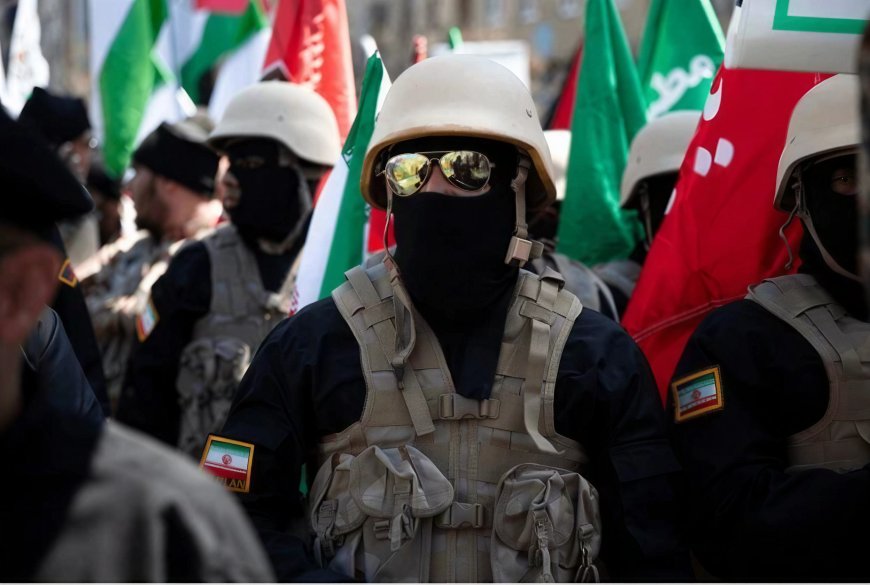
The ceasefire between Iran and the United States points to three sobering realities.
First, there is no guarantee that the ceasefire will hold for the full two weeks.
Second, if it collapses before that period ends, what follows remains uncertain.
Third, even if it does last the full two weeks, the period beyond the ceasefire will likely remain unpredictable, whether through war itself or the long shadow it will leave behind.
Israeli operations in Lebanon continue unabated. Both Washington and Tel Aviv have made it crystal clear that neither regards Beirut as part of the ceasefire equation. Tehran, for its part, has dispelled any near-term prospect that commercial traffic through the Strait of Hormuz will return to even a semblance of normalcy.
Reading between the lines of what the war has revealed so far, eight insights stand out.
Insight 1: Pakistan Is Leveraging Its Access to the Americans, Iranians, and the Gulf Emirates to Raise Its International Standing
Pakistan, somewhat surprisingly, has emerged with more diplomatic capital than any other country directly or tangentially involved in this conflict.
Pakistan’s quasi-military, quasi-civilian regime, led by Prime Minister Shehbaz Sharif and Army Chief Asim Munir, exercised smart diplomacy by capitalizing on Islamabad’s strategic asset: Its sound ties with three key sets of actors, namely Iran, the Gulf emirates and monarchies, and the United States.
That access allowed Islamabad to serve as a principal channel for communication and information-sharing between Tehran and Washington, giving both warring parties an interlocutor through whom, at the very least, to convey their respective policy positions. A domestic political win for Pakistan’s ruling civilian-military duo and their backers is inherent in that diplomatic success.
Insofar as India and Pakistan, in equal measure, remain each other’s sworn enemies, Islamabad’s mediating role has prompted heads to turn in New Delhi. On paper, New Delhi looked like the more plausible intermediary for three reasons: First, like Islamabad, it maintains good relations with the three key sets of actors; second, it carries greater geopolitical weight; and third, it holds an established place in Western foreign policy circles as an Indo-Pacific bulwark against an ascendant China.
In India, questions are already being asked about why Prime Minister Narendra Modi did not take on a more hands-on role during this crisis. By seizing the limelight, Pakistan ended up owning the moment and capturing the headlines.
Islamabad has been currying favour with the current American administration in an intentionally sycophantic fashion, a pattern that has helped keep it in President Donald Trump’s good graces.
Trump has referred to Munir as his favourite Field Marshal. Equally crucial, Shehbaz’s nomination of Trump for the Nobel Peace Prize carries added salience because Trump openly covets the honour and appears oddly fixated on receiving it.
Shehbaz, of course, is the younger brother of Nawaz Sharif, the former Pakistani Prime Minister and the far more recognizable figure within the Sharif dynasty. The Sharif family has tapped into its personal associations with leaders from the Gulf emirates and monarchies to place Pakistan at the centre of diplomatic efforts around the conflict.
All of this is unfolding with Imran Khan still at the centre of Pakistan’s fault lines. The former World Cup-winning cricket captain turned politician turned Prime Minister was removed from power in 2022 via what his supporters describe as an American-backed, military-orchestrated parliamentary no-confidence motion.
Since 2023, he has been imprisoned through a succession of court cases. Parallel to Khan’s perils, anti-American sentiment is running high in Pakistan, and public sympathy is leaning strongly toward Iran. Under military patronage, the Sharif family-led Muslim League and the Bhutto family-led Peoples Party, Pakistan’s other major dynastic force, are calling the shots.
Asif Ali Zardari, widower of the slain former Prime Minister Benazir Bhutto, is serving as the titular President in a power-sharing arrangement that many argue has a basic objective: Keeping the anti-American Khan out of sight and out of mind.
Pakistan’s ruling elites have also made a strategic calculation. By presenting themselves as a conduit for reducing hostilities in the Middle East, they are seeking to restore credibility abroad after years of having a tainted image. That also has value at home, stirring national pride and patriotic fervour at a time when Pakistan is managing its own ongoing escalations with neighbouring Taliban-controlled Afghanistan.
Insight 2: Israel Is Exhausting What Remains of Its Shrinking Credibility Among Its Liberal Democratic Allies
Israel has reinforced a now-established view across much of the international community, including among its traditional liberal democratic friends, that diplomacy is dispensable. Tel Aviv is operating on the premise that international humanitarian law is de facto null and void and can therefore be violated with near-total impunity, in line with the Trump administration’s stance.
Under Benjamin Netanyahu, the Israeli Prime Minister wanted by the International Criminal Court for alleged war crimes and crimes against humanity against Palestinians, domestic calculations are driving and accelerating a policy of regional escalation.
Beirut has indicated that it is prepared to move toward recognition of, and normalization with, Tel Aviv, contingent on Israel dialing down its campaign in Lebanon. Such an opening is the best opportunity Israel has received from a civilian Lebanese government in recent memory and may prove to be the best one it receives at all.
In the name of escalating military action against Hezbollah, Israel is subjecting Lebanese civilians to relentless bombardment, with over 15,000 killed and more than a million displaced from their homes, while disregarding the diplomatic path of political engagement with Beirut.
Israel’s chosen course is leading to the Gazafication of southern Lebanon and, eventually, will do so to the country as a whole: An extension of the same policy that has already inflicted irreversible damage on Israel’s already sinking global reputation and, in the process, has certainly not made Israelis any safer.
In late 2025, the United Nations Independent International Commission of Inquiry concluded that Israel had committed genocide in Gaza. Leading genocide scholars and international human rights groups have also reached that same conclusion with precision and confidence.
The evidentiary record of the Israeli government committing mass atrocity crimes is now in broad daylight, and those who still claim otherwise are not engaging in evidence-based analysis. Israel is, as things stand, a leading state violator of international law in the contemporary system, alongside Russia for its illegal aggression against Ukraine.
For most Western democracies, saying so explicitly is politically difficult for more than one reason. But the bottom line is that failing to say it out loud reeks of rank hypocrisy and has driven trust in the Western-led world order into the gutter.
The factual record is what it is: Hamas, by and large, still retains operational control of Gaza. If Israel’s campaign in Gaza is to be judged an achievement, it amounts to killing roughly 60 times more Palestinians than the 1,200 Israelis Hamas murdered on October 7, 2023.
More troubling still, Netanyahu has shown no appetite for course correction as Israel expands the same logic of destruction into Lebanon.
The question now is whether that destruction will come to even a temporary cessation, with negotiations between Tel Aviv and Beirut scheduled in Washington in the coming days. Talks between Washington and Tehran are also taking place in Islamabad, and whether that has any impact on the Israel-Lebanon discussions remains an open question.
Insight 3: The Iranian Regime Absorbed the Full Force of Military Assault From Its Adversaries Without Disintegrating
Iran has not been pushed to the point of strategic collapse. From the outset, the joint American-Israeli campaign rested on a dubious assumption: That hostile aerial barrages, combined with the elimination of senior Iranian civilian and military leaders, would cause the Islamic Republic to fold in on itself. Regime change was treated as a likely certainty.
Supreme Leader Ayatollah Ali Khamenei was among those killed early in the campaign. But military degradation and assassinations are one thing. Regime breakdown or state collapse is something else entirely. The war has shown how shallow the thinking behind the American-Israeli strategy was and how little scenario-analysis-based war gaming informed it.
Washington, with Israel in the driving seat, badly underestimated the nature of the Iranian regime. The idea of resistance is sacrosanct to the regime’s DNA. Iran’s geography, topography, and civilizational self-conception, rooted in the historical pride that it has never been conquered by foreign powers, were factors that should have figured far more concretely in the calculus.
The thinking in Trump’s neoconservative orbit seemed closer to a Venezuelan-style play: Move fast, remove the leader, and assume the system beneath him would either crack or bend from the top down. Iran never was, is not, and cannot be understood as another Venezuela.
An extremely defensible case can be made that the Islamic Republic is one of only two modern states, Afghanistan being the other, in which theocratic authority sits at the apex of an authoritarian state structure. What is crucial to understand is that this system also rests on a dense and resilient civilian-military architecture that reaches well beyond the clerical establishment into the public service bureaucracy and the Islamic Revolutionary Guard Corps.
Bowing to sworn enemies was never a genuine prospect for what is a highly sophisticated machinery of government that has been meticulously designed under Iran’s first two Supreme Leaders, Ayatollahs Khomeini and Khamenei, since the 1979 Revolution.
The position of Supreme Leader is inherently autocratic in nature. That, nevertheless, does not lessen the significance of this point: Since the creation of the United Nations system, there has been no comparable case of the leaders of sovereign states deliberately and publicly moving to, and succeeding in, assassinating the sitting head of another sovereign state.
A consequential issue is the precedent this has set. Once the targeted killing of a foreign head of state or head of government is treated as thinkable, let alone as a question of legality, other powers will take note. The Russian President could one day invoke the same logic to justify targeting the Ukrainian President. Others could do the same elsewhere.
It may not be far-fetched to suggest that the war has probably produced a new conclusion among the powers that be in Iran. Tehran may now regard its decision to remain a threshold state under the nuclear framework negotiated during former American President Barack Obama’s administration as a strategic misjudgment, the costs of which it is now bearing.
That conclusion may not remain confined to the Islamic regime. It may also gain traction among parts of the domestic opposition, many of whom have every reason to despise the regime for its human rights abuses and record of mass killing before the war. Reported death tolls from the late 2025 to early 2026 crackdown range from roughly 2,500 to 30,000, depending on which source one chooses to believe.
Some of the regime’s domestic opponents may now decide that the immediate priority is to withstand the American and Israeli assault, and that settling accounts with the regime can come later. Any expectation that war from abroad would naturally trigger a mass uprising capable of bringing down a weakened regime at home rested on a superficial reading of Iran.
A regime can be feared, hated, and bitterly resented, yet still remain able to crush popular mobilization. The Islamic Republic retains loyal cadres, an entrenched security apparatus, and a proven willingness to use repression and the heavy hand of the state on a large scale. Under such conditions, public frustration will likely not automatically translate into mass revolt.
Insight 4: The United States Is Positioning Itself as the Sole Author of Its Own Decline
Middle powers, from Europe, Canada, and Australia to states lower down the middle-power spectrum, now have ample reason to ask whether the United States can still be dealt with, even after Trump, as a good-faith actor. That reassessment has moved beyond the hypothetical and is beginning to show itself in policy.
Canada, for instance, spent years under former Prime Minister Justin Trudeau describing China in adversarial terms. Under current Prime Minister Mark Carney, Ottawa has moved back toward engagement with Beijing under the pressure of economic necessity and the growing unpredictability of its neighbour and, historically, its most dependable ally.
Anyone inside the United States who opposes Trump but still believes the world will simply snap back into place once he exits the stage needs to step outside that frame of thinking. The international environment has changed, it has changed for the worse, and it has changed in ways that will not be easily reversed.
Washington has been the chief engine of this worsening world order. Across the developing world, Western rhetoric about a rules-based order, democratization, and the protection of human rights will carry little to no force after years of selective enforcement dressed up as universal principle.
That crisis of credibility did not begin with this war. Gaza had already pushed it to the brink. This war may well have driven the final nail into the coffin.
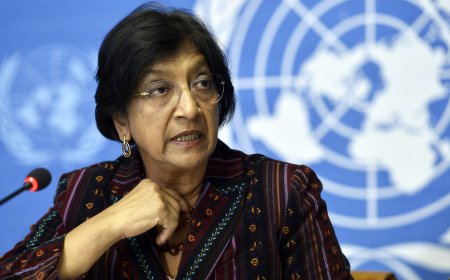
Anyone serious about preserving what remains of the United Nations system should also be clear-eyed about how irrelevant it has been throughout this war. The institution has not been entirely absent, but it has been timid, peripheral, and far less relevant than in earlier crises.
Those countries that want to think tangibly about a different international order, one less dependent on hegemons and less willing to indulge increasingly hostile states such as Israel, should understand that the work cannot be deferred.
The big-picture lesson that keeps asserting itself is that American military intervention in the Middle East has repeatedly generated wreckage without yielding durable success, either for the West or for the countries on the receiving end.
If there were a Nobel Prize for states that specialize in turning bad situations into catastrophes, or in becoming the mass producer of the very disorder they claim to be fixing, the United States would deserve it for the havoc it has repeatedly unleashed across the Middle East.
Afghanistan, Iraq, Libya, and now Iran remain central to that record. Beyond the region, Vietnam and perhaps Somalia as well fit the same general pattern. A post-Trump administration may restore some degree of surface-level normalcy in international affairs. There is no guarantee that the structure beneath it will recover as easily.
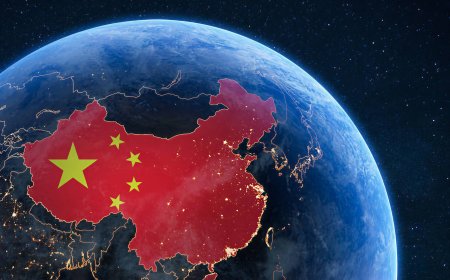
Insight 5: China Is Starting to Emerge as the Most Tolerable Global Hegemon
China now looks like the adult in the room.
To many in the Global South, it is beginning to be seen as the most bearable hegemon in a field of bad options. Russia used military force to seize Ukrainian sovereign territory. The United States has engaged in illegal aggression against Iran while also backing Israel’s genocide in Gaza.
China, by contrast, has so far tended to rely on economic coercion rather than direct military force to pursue its geopolitical objectives.
That does not make Beijing benign. It does, however, make China look, from the perspective of many non-Western states, less inclined toward military adventurism, less invested in regime-change politics, and more diplomatic and pragmatic than its rivals.
How Beijing approaches the question of Taiwan next year will be an inflection point that paints a more vivid picture of where the world, and those who lead it, truly stand.
Today, China is already utilizing the situation in the Middle East to further impair the integrity of the Washington-led rules-based order by presenting itself as a steadier alternative. By offering cautious support to Tehran through diplomatic backing and continued economic coordination, and by refusing the burdens of direct security responsibility, Beijing is expanding its influence without assuming the costs that have so often ensnared Washington.
Insight 6: Fossil Fuel Dependence Is Proving to Be a Risk-Management Liability
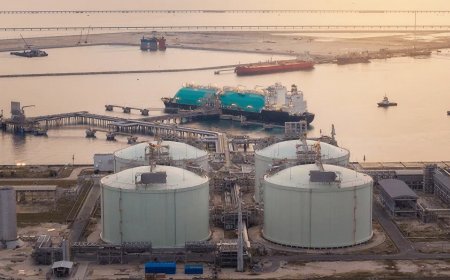
The Strait of Hormuz crisis has made it obvious that the world’s continued dependence on fossil fuels is both environmentally damaging and a categorical sign of weak long-term risk-management planning.
A global economy anchored to hydrocarbon chokepoints in the Gulf will remain exposed to war, price volatility, and maritime disruption. Governments should treat investments in locally produced, or imported if necessary, solar, hydro, nuclear, and wind energy as both environmental and macroeconomic objectives, and as part of an overarching preventive energy risk-management strategy: A way to ensure that they are not putting all their eggs in one basket.
Upfront costs for investments in non-fossil fuels are high, but the return on investment lies in greater energy security and stronger protection against geopolitical disruptions.
At the same time, strategic petroleum and gas reserves remain necessary instruments of state preparedness to cushion against these kinds of scenarios. For countries that are behind on this front, stockpiling both when global prices are low is advisable.
Insight 7: The Stability Narrative of the Gulf States Is Meeting the Limits of Geography
The image the Gulf states spent decades building has suffered a setback.
For years, the Gulf emirates and monarchies presented themselves as a kind of oasis in the desert: Prosperous, stable, orderly, globally connected, and secure, a destination for financial and human capital and entrepreneurial ambition, seemingly just far enough removed from, or cocooned against, the region’s troublesome convulsions to avoid being drawn into them.
That image was crafted with remarkable discipline, and few state-branding projects anywhere have been as successful. That image has been damaged, but much of it will probably endure. Underpinning much of this branding was the assumption that hosting the American security umbrella would shield these states from the region’s harsher realities.
Recent weeks, however, have exposed the limits of that assumption. The Gulf states are not insulated from the wars and rivalries of their neighbourhood simply because they have built glittering skylines, world-class infrastructure, sovereign wealth funds, and resilient economies.
Geography has a way of reasserting its claims. Regional conflict is displaying that it has a habit of travelling outward, even to those who want nothing to do with it.
Insight 8: The American President Is Executing Foreign Policy as the Quintessential Geopolitical Arsonist and Merchant of Mayhem
Finally, if this conflict has clarified anything, it is that Trump conducts foreign policy by impulse, on the fly, as the phrase goes. Although transactionality remains the governing logic of his foreign policy, the modus operandi is fixated on short-termism and defined by neglect of the long-term strategic damage his actions will ultimately unleash on both Americans and the rest of the world.
Little in his conduct suggests even a passing nod, let alone respect, for the laws of war. A recent tweet laden with genocidal intent, in which he threatened the destruction of Iranian civilization, only made that harder to deny.
It no longer feels far-fetched to say that this American presidency is beginning to resemble the world of political dramas like Designated Survivor or The West Wing, where discussion of the Cabinet invoking the 25th Amendment against a sitting President on the grounds of unfitness for office no longer belongs wholly to fiction.
Donald Trump is the biggest James Bond villain who somehow never made it to the screen, carrying out his deeds as the world wonders who, if anyone, its James Bond is.
Mir Aftabuddin Ahmed is a Canada-based Public Policy Columnist who currently serves as a Policy Development Officer with the City of Toronto. He can be reached at [email protected]. The views expressed are his own.

Mir Aftabuddin Ahmed
Mir Aftabuddin Ahmed is a Canada-based Public Policy Columnist with more than 140 published articles across Bangladeshi and Canadian media and policy outlets. He currently serves as a Policy Development Officer with the City of Toronto. He can be reached at [email protected]. The views expressed are his own.