

































































They Are Not In Power. They Are in Office.
Democracy should not borrow the language of rulers to describe public servants.

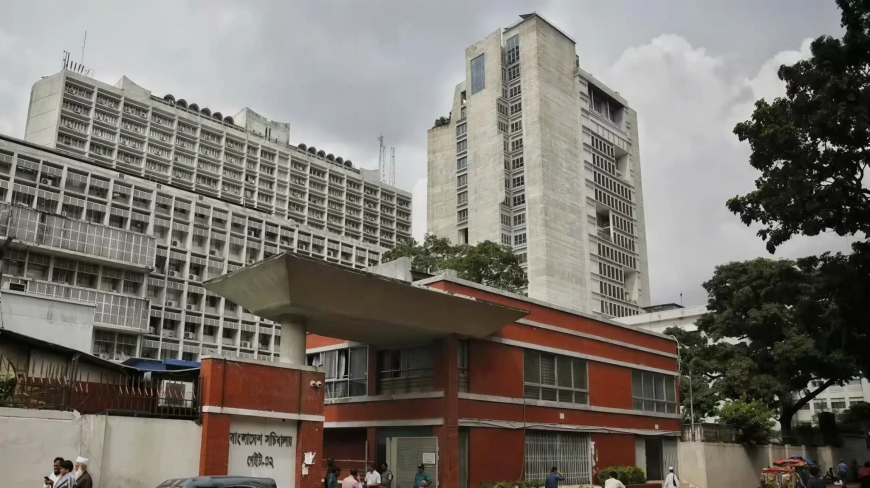
In Bangladesh, rules are often weakest at the moment a powerful name enters the room. A phone call, a note, or a request to “be flexible” can make process look negotiable. The logic is familiar: if the instruction comes from high enough, the rule must bend.
That belief is exactly why we should stop saying politicians are “in power.”
The phrase is so common that we rarely pause over it. A party comes to power. A leader holds power. A government loses power. It sounds like ordinary political language. But in a democracy, it is the wrong word.
Public office is not ownership of authority. It is the assignment of defined responsibilities, under defined limits. Bangladesh’s Constitution states that all powers in the Republic belong to the people and must be exercised only under the authority of the Constitution. The implication is clear: Public officials are not owners of power. They are temporary custodians of public responsibility.
Yet the phrase “in power” quietly says otherwise. It invites us to imagine public office as a command seat. Presidents, prime ministers, ministers, legislators, bureaucrats, and ruling parties begin to sound like people who have acquired the state, at least for a time, and may now use it according to their will.
This is not just semantics. Words do not merely describe political reality; they help shape it. They influence what citizens expect, what officeholders believe they are entitled to do, and what society learns to tolerate. Once public office is imagined as power, process begins to look like obstruction.
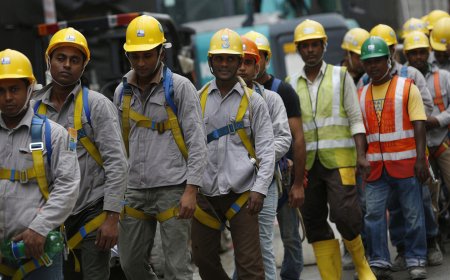
Consider the everyday logic of the “note from above.” A garment factory owner does not wish to comply fully with fire safety, building safety, or labour inspection requirements. Compliance is expensive. It may require safer wiring, wider exits, fire doors, structural repairs, worker records, or temporary closure.
In a competitive industry, every delay looks like lost money. Never mind that these rules exist because workers should not have to depend on the goodwill of owners, inspectors, or political patrons for their safety.
The “solution” is to produce a note, a phone call, or an informal instruction from someone influential asking inspectors to be flexible. Perhaps a gift was given. Perhaps a favour was exchanged. The economics are obvious: The cost of securing the intervention may be far lower than the cost of full compliance.
But the deeper problem is that no payment may have been necessary. The official may have intervened as a favour, simply because such intervention felt like an ordinary privilege of office. Those involved may know, intellectually, that safety and labour rules cannot be suspended this way. Yet the culture of power makes the violation feel acceptable: A legal requirement becomes a matter for personal intervention.
It cannot. No one, no matter how senior, has the authority to suspend safety, labour, or inspection rules by personal note or phone call.
The same contempt for process appears in ordinary encounters too. A driver is stopped by traffic police and asked for a licence, registration, fitness certificate, or other required document. Or the driver is told not to use a mobile phone while driving. The legal question should be simple: Was there a violation, and was the officer acting within the rules?
But in practice, the interaction often becomes a contest of status. The driver becomes offended. Why are you asking me? Do you know who I am? The familiar response follows: “Amake High Court dekhayen na” -- do not show me the High Court.
That phrase is itself a political philosophy. It means: Do not insist on procedure. Do not pretend that law matters more than status, access, or instruction from above.
The resentment is not invented. Bangladeshis often experience traffic enforcement as arbitrary, selective, or extractive. But distrust cannot become a licence to reject enforcement altogether. The answer to abusive policing is not influence, phone calls, or shouting down officers. It is clean process: Clear grounds for stops, documented violations, receipts, complaint mechanisms, and equal treatment before the law.
But process is often dismissed as a bureaucratic nuisance. It is not. Process is the instrument through which public authority is prevented from becoming private rule. The deeper danger of the language of power is that it weakens this safeguard. It teaches both citizens and officeholders that what matters is not whether a rule was followed, but who can override it.
At one level, a factory owner expects an influential note to soften an inspection. At another, a driver expects status to defeat a lawful traffic check. The settings are different, but the instinct is the same: Process is treated as something for other people.
This is not merely corruption. It is a misunderstanding of office itself. It is the belief that the person at the top is authorized to decide exceptions at will. That law flows downward from a superior individual, rather than upward from a constitutional order that binds everyone.
Some will argue that strict process is impractical. They will say that if we insist on every rule, nothing will get done. Roads will not be built. Projects will stall. Investment will slow. Files will gather dust. In countries with weak bureaucracy, they argue, authority must cut through procedure.
There is a tempting logic in that argument. It promises speed, efficiency, and visible results. But it is a dangerous bargain. Speed purchased by weakening institutions is not efficiency, it is disguised democratic decay.
Democracy does not collapse only when elections are cancelled or constitutions are suspended. It weakens earlier, when ordinary governing processes are politicized or bypassed: appointments are made for loyalty rather than merit, law enforcement is applied selectively, regulators wait for political instruction, and public agencies learn to obey names rather than rules.
When this happens repeatedly, the damage moves from individual decisions to institutions themselves. An institution is not strong because it has a building, a seal, or a legal mandate. It is strong only when its rules can withstand pressure from those with influence.
Once institutions lose that ability, they can no longer act as checks on those in office. Citizens experience the state not as a neutral system of rights and protections, but as a hierarchy of access. That is when elections can be delayed, avoided, or manipulated, and when democracy becomes less a system of accountability than a contest over who gets to command the state.
This is why the phrase “in power” should make us uncomfortable. It belongs to the vocabulary of monarchy, conquest, and patronage. Democracy should not borrow the language of rulers to describe public servants.
We need to replace it.
A party does not “come to power”; it forms government. A leader does not “hold power”; they hold office. A minister does not “exercise power”; they perform statutory responsibilities. A bureaucrat does not “control” a file; they process a public matter according to law. A government does not “lose power”; it loses its mandate to govern.
These alternatives sound less dramatic. That is their virtue. They remind us that authority is delegated, limited, conditional, and revocable.
Retiring the phrase “in power” will not fix political culture by itself. But political culture is built from repeated habits: what we say, what we excuse, what we normalize, and what we demand.
The language of power asks who commands.
The language of responsibility asks who is accountable.
Democracy depends on the second question.
Mariha Tahsin is a Senior Economist at the Ministry of Finance, Government of Alberta.