




















































Why Do South Asian Mothers Struggle To Let Go
Who is she when she is no longer needed every moment? What remains of her when the role that gave her respect, purpose, and visibility is taken away?

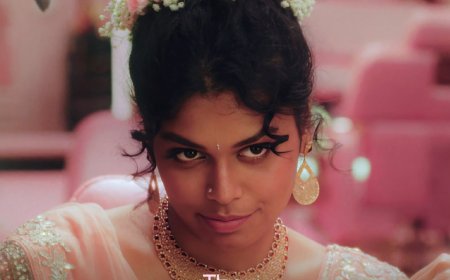
In the 2011 Bengali film Icche, directed by Shiboprosad Mukherjee and Nandita Roy in their debut, we meet Manas, a contented insurance agent, his wife Mamata, and their son Shamik.
Mamata, a former schoolteacher turned homemaker, is deeply dissatisfied with her husband’s easy-going, unambitious nature. She takes complete charge of her son’s upbringing, channeling all her unfulfilled dreams and aspirations into him.
From his early childhood, she enforces strict study routines, monitors his every move, and pushes him relentlessly toward excellence -- dreaming of IIT, Oxford, Cambridge, or Harvard. She views his success as the ultimate validation of her own sacrifices and existence.
As Shamik grows into a teenager, he begins to rebel against his mother’s dominance and constant interference. At sixteen, he falls in love with his classmate Debjani. They exchange innocent yet passionate love letters filled with youthful longing.
The hawk-eyed Mamata discovers the relationship, reads the private letters -- which contain references she deems indecent -- and becomes skeptical of Debjani’s character. So, she systematically works to destroy the bond. She embarrasses her son publicly, confronts Debjani’s family, and ultimately succeeds in breaking them apart.
Though Mamata temporarily regains some control, this victory only drives a deeper wedge between mother and son.
Years later, Shamik is now a college student in his second year. He enters a new relationship with Jayanti, a bright first-year student.
Once again, Mamata discovers it and intensifies her efforts to sabotage the romance. She even reaches out to Debjani’s family once more, attempting to arrange a marriage with his first love as a way to pull him back under her influence.
Her husband Manas tries to reason with her, warning about the long-term damage of her controlling behaviour, but Mamata remains blind to it, convinced that only she knows what is best for her son.
Unbeknownst to her, Shamik and Jayanti have secretly married and made plans to move to Mumbai for a simple, independent life together. In a dramatic confrontation, Shamik announces his marriage and departure, leaving his mother stunned and shattered.
The film’s touching and heartbreaking climax shows Mamata alone, clutching Shamik’s old childhood toys and medals. She sits reminiscing about the little boy who once depended on her entirely, revealing her profound inability to accept that he has grown up and now has his own desires, relationships, and path. In her eyes, he remains her little son who still needs her protection and guidance.
The story, based on a short by Suchitra Bhattacharya, Iccher Gaach, ends on this poignant note of regret, love, and loss. It touches something profoundly tender and painful across the Indian subcontinent.
Many of us have seen it up close -- in our mothers, our aunts, our elder sisters, or in the quiet struggles unfolding within so many families around us.
A woman marries, has children, and slowly, almost invisibly, her entire identity folds into motherhood. She stops being the girl who once had dreams, the wife who had her own emotional world, the person who laughed with friends or nurtured secret ambitions. She becomes only Maa.
Her days, her worries, her conversations, her measure of self-worth -- everything begins to revolve around her child, especially if the child is a son.
When that child grows and seeks his own life, it can feel to her not like a natural flowering, but like a deep, personal loss -- as if the very ground beneath her feet is vanishing.
Why does this happen so often here? The reasons live not just in culture but in the quiet chambers of the heart.
Across South Asia, motherhood has historically been treated not merely as a role, but as a woman’s primary social identity. For generations, a woman’s worth in our families has been tied so tightly to how well she raises her children that other parts of her slowly wither from lack of attention.
Limited by society’s expectations, many women channel their intelligence, creativity, and longing for achievement almost entirely into their sons and daughters. The child becomes more than flesh and blood -- he or she becomes the vessel carrying the mother’s unlived life, her unfulfilled potential, her need to feel important and necessary.
From a deeper, psychological view, this is a love that struggles to complete the journey of separation. A mother and child begin as one being, breathing together, feeling together.
Healthy growth asks the mother to gradually let the child become a separate person -- to celebrate their independence even when it hurts.
But when a woman has no other strong identity left, that separation feels like dying. Her son’s desire for privacy, his love for another woman, his decision to move away -- each feels like rejection, like betrayal of the sacred bond.
She clings harder, not always from selfishness, but from a genuine terror of emptiness. Who is she when she is no longer needed every moment? What remains of her when the role that gave her respect, purpose, and visibility is taken away?
Most mothers like Mamata act from a fierce, protective love mixed with real fear -- fear of a world that still does not fully value women beyond their maternal role, fear of growing old without relevance, fear of facing their own unmet needs after decades of putting everyone else first.
Their control, their interference, their inability to let go -- these are often silent cries from a heart that was never taught it could be whole without constantly giving itself away.
On this International Mother’s Day, let us hold both truths gently. Let us honour the sleepless nights, the endless worries, the fierce devotion that has carried families through generations.
But let us also be honest: the most beautiful motherhood is one that eventually sets the child free and, in the same breath, reclaims the woman’s right to a full self.
A mother deserves to be more than just “someone’s mother.” She deserves friendships, silences, hobbies, dreams, and respect even when her children no longer need her in the old ways.
Mamata’s trembling hands holding those old toys stay with us because they reveal a woman trapped between yesterday’s closeness and today’s painful reality.
In her story, we see so many of our own mothers. May we find kinder ways -- as children and as a society -- to say thank you without demanding eternal dependence.
May we help our mothers rediscover themselves beyond us, so that when we fly, they are not left feeling erased, but quietly proud, with lives that are still rich, still theirs, still meaningful.
That, perhaps, is one of the deepest ways we can truly celebrate motherhood.
Jannatul Naym Pieal is a Dhaka-based writer, researcher and journalist. He can be reached at [email protected]