
































































Diplomacy Demands Credibility. Pakistan Has None to Spare.
Pakistan may be relevant. But relevance is not neutrality, and it is not trustworthiness. Any diplomatic process in which Pakistan seeks a decisive role should be treated with strict limits, hard verification, and deep skepticism.
Pakistan wants to present itself as an indispensable diplomatic broker, now inserting itself into US-Iran diplomacy. But diplomacy is not built on convenience. It is built on credibility. And Pakistan’s record offers little reason for trust.
Since its birth in 1947, Pakistan has shown a troubling pattern of signing agreements, brokering deals only to violate them when they clash with its strategic or ideological goals.
Right at partition, Pakistan backed a tribal invasion of Kashmir in October 1947, sending armed raiders to seize the princely state before its ruler could decide its future. This forced the Maharaja to accede to India, yet Pakistan has never accepted that reality, turning Kashmir into a permanent flashpoint.
The pattern continued. The UN brokered ceasefire and the 1972 Simla Agreement committed India and Pakistan to peaceful dispute resolution and respect for the Line of Control. Yet in 1999, Pakistan crossed that line in the Kargil War, just months after the Lahore Declaration had again promised peace.
Even the 1971 crisis in East Pakistan revealed deep internal betrayal: West Pakistan's military launched a genocide by killing hundreds of thousands of its own Bengali citizens as well as using rape as a weapon of war, also estimated in the hundreds of thousands.
After 9/11, Pakistan received billions in US aid to fight terror, yet harbored Osama bin Laden, “Most Wanted Terrorists” for years in Abbottabad, right beside its top military academy. The 2011 US raid did not just find a terrorist leader. It exposed a state built on duplicity.
That duplicity continues at home. Blasphemy laws and mob violence still terrorize Christians, Hindus, Ahmadis, and Shia. And now Pakistan wants to help shape diplomacy in one of the world’s most dangerous regions.
This is the same country that never signed the Nuclear Non-Proliferation Treaty and whose network sold centrifuge technology and bomb making know how to Iran, North Korea, and Libya. It now seeks influence in diplomacy involving Israel, a state Pakistan refuses to recognize and has long treated as illegitimate.
How can a country that does not even acknowledge Israel’s legitimacy be trusted as an honest broker in any process where Israel’s security is directly at stake?
Prime Minister Shehbaz Sharif and honorary Field Marshal Asim Munir may wish to appear as major geopolitical players, but Pakistan’s history should disqualify it from any claim to moral or diplomatic neutrality. Its record with the United States and the wider world is not one of reliability. It is one of betrayal.
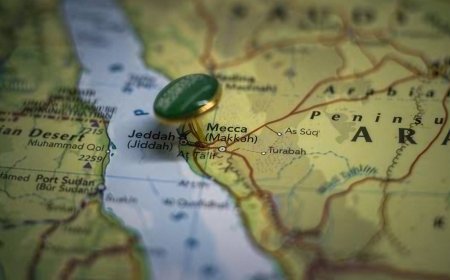
Then there is Saudi Arabia. Reports of a Saudi Pakistan mutual defense pact have further tied Pakistan, and potentially its nuclear umbrella, to the Middle East security equation. Pakistan is not entering this arena as a neutral actor. It is entering as a nuclear armed state with deep strategic interests of its own.
Pakistan may be relevant. But relevance is not neutrality, and it is not trustworthiness. Any diplomatic process in which Pakistan seeks a decisive role, especially one involving Iran, Saudi Arabia, and Israel, should be treated with strict limits, hard verification, and deep skepticism.
If Israel is affected, Israel must be at the table from the first day. Otherwise, the world risks repeating an old mistake: Confusing tactical usefulness with strategic trust.
Mirza Ahmad is an independent writer with a strong interest in politics, religion, and human rights.