








































![A Ledger of the Soul: Navigating the Allah-Bhagavant Nexus in a 19th-Century Puruṣākāra Jñāna Caupara [Gyan Chauper]](https://counterpointbd.com/uploads/images/202608/image_430x256_6a93baa3b09a7.jpg)




















When a society burns its own newspapers, attacks its artists, and restricts freedom of thought, that fire does not stop there. It spreads to courts, classrooms, and homes. When a city burns, its temples do not survive. Our temples, culture and freedom of expression, are no longer matters of personal preference. They are matters of collective survival.

It is no longer an abstract fight over who controls the political clock. It is a concrete, urgent battle for the very foundations of public order, institutional integrity, and rational discourse.
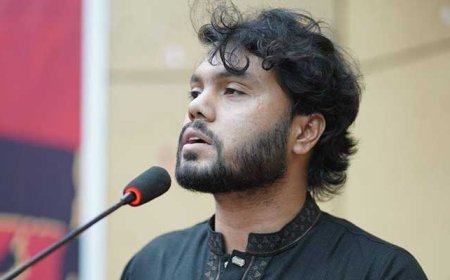
Hadi wanted elections. He believed in the electoral process. He believed in democracy. He was running for election in Dhaka-8. He believed in the slow, painstaking process of building a new Bangladesh and knew there could be no short-cuts.

Do not read these polls as a scoreboard. Read them as a map of the public's fears, confusion, and silent hopes. The party that understands what the polls are not saying -- the doubts of the undecided, the nuances in the responses on reform, expectations on law and order, corruption, employment will be the one that truly wins the mandate of Bangladesh.

A trustworthy opinion poll requires a trustworthy method: the right questions, a sample that reflects the country’s diversity, strict data verification, and transparency about what the poll can and cannot reveal. Without these basics, no amount of promotion or visual appeal can turn a weak survey into meaningful data.