






















































The Burning Temples of Bangladesh: Journalism, Culture, and Democracy at Risk
When a society burns its own newspapers, attacks its artists, and restricts freedom of thought, that fire does not stop there. It spreads to courts, classrooms, and homes. When a city burns, its temples do not survive. Our temples, culture and freedom of expression, are no longer matters of personal preference. They are matters of collective survival.


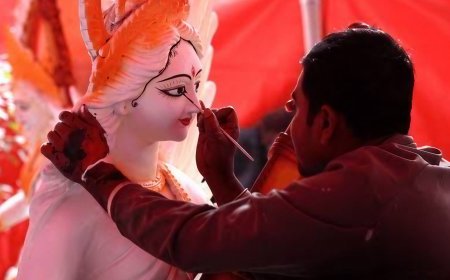
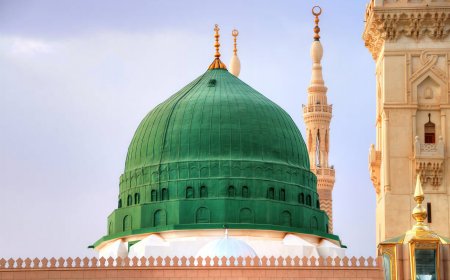
When a city catches fire, do its temples remain intact? History’s brutal answer is no. In moments of chaos, a temple is no longer just brick and stone. It becomes a symbol of morality, intellectual freedom, and collective truth.
Our social life has similar temples: journalism, cultural institutions, and spaces of education and debate. When rage and violence spread through society like wildfire, these symbolic temples are often the first to be attacked.
That is when we realize a hard truth: When institutions burn, the foundation of society is damaged.
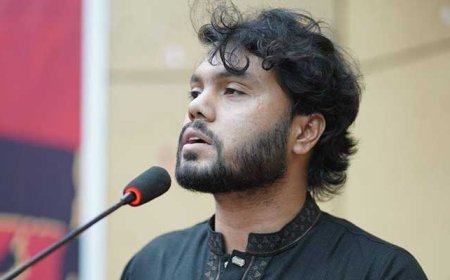
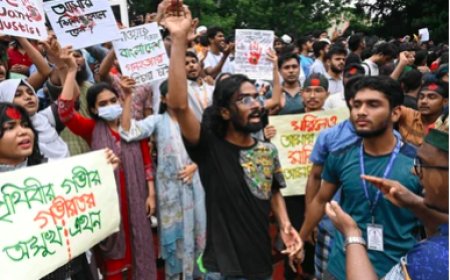
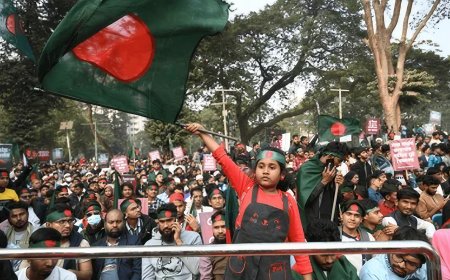
Sociologist Émile Durkheim called this condition anomie, the breakdown of social norms and the loss of moral direction. We see it clearly today. The death of young politician Osman Hadi shocked the nation. Grief and demands for justice were natural. But how did those emotions leave the path of law and order and turn into vandalism and arson?
The night of December 18 gives the answer. The offices of Prothom Alo and The Daily Star were attacked. Chhayanaut was set on fire. The Udichi office was burned. In Mymensingh, the corpse of Dipu Das was burned. These were not isolated incidents. They were not spontaneous expressions of grief. Video footage showed something far more disturbing: a grotesque, almost celebratory mood. This was not democratic protest. It was collective barbarism, where violence itself was justified and even praised.
The attacks continued in early 2026. On February 6, during protests at Inqilab Manch demanding a UN investigation into Hadi’s killing, journalists covering the event were beaten by police -- cameras smashed, reporters kicked, and thrown to the ground.
When questioned, the Dhaka Metropolitan Police Commissioner explained why he personally led a baton charge, but avoided answering how or why journalists on duty were assaulted, or whether any officer would be held accountable.
Two days later, on February 8, armed army personnel entered the office of the news outlet Bangladesh Times in Dhaka and took 21 journalists to a military camp. The Inter-Services Public Relations (ISPR) later described this as a discussion related to certain news items. All journalists were released unharmed within hours, and ISPR stated that no misunderstanding remained.
Yet video footage showing uniformed soldiers inside a functioning newsroom at night, the removal of journalists without notice, and reports of phones being confiscated and posts being deleted generated widespread concern. Even if officially framed as a mistake or a resolved matter, the incident conveyed a troubling signal.
Armed forces entering a media office, outside any publicly stated legal process, raises questions about institutional boundaries and press freedom. Such actions, even brief and without physical harm, can chill the media ecosystem, reinforcing fear and self-censorship.
These moments matter. Not because journalists are special citizens, but because journalism is society’s mirror. When that mirror is threatened, by mobs, batons, or boots, society loses the ability to see itself honestly.
Hannah Arendt warned that evil does not always come through monsters; it becomes ordinary when people stop thinking critically and follow the crowd and their emotions. René Girard’s theory of the scapegoat explains this pattern well. In moments of crisis, societies often avoid confronting real centers of power. Instead, they release anger on symbolic targets such as journalists, artists, minorities, and intellectuals. This allows the powerful to escape accountability. The public gains a brief emotional release, but justice is never achieved.
These attacks are not only on buildings, they are attacks on society’s mirror. Philosopher Antonio Gramsci showed that power survives not only through force, but through control over culture and ideas. Media and cultural institutions produce those ideas. Destroying them weakens society’s ability to question itself and to search for truth.
If the mirror in your home is dirty, you clean it. You do not smash it in anger. Once the mirror is broken, you can no longer see your own face. Similarly, when institutions that reflect truth are destroyed, a nation can no longer see its mistakes, responsibilities, or possibilities.
A Global Crisis and Bangladesh’s Harsh Reality
Attacks on journalists are a global crisis, not a local problem. UNESCO reports that more than 1,600 journalists have been killed worldwide since 1993, with justice denied in 90% of cases, reflecting a culture of impunity that weakens democracy. Violence against journalists now extends far beyond war zones, encompassing threats, legal harassment, arbitrary arrests, enforced disappearances, and online abuse.
In 2025 alone, 128 journalists were killed worldwide -- more than half in the Middle East -- according to the International Federation of Journalists, while at least 533 journalists remain imprisoned globally. Women and marginalized journalists face the highest risks.
In Bangladesh, this global crisis is particularly acute. Manabadhikar Shongskriti Foundation data shows a sharp deterioration in human rights in 2025, with rising political violence, mob attacks, deaths in custody, and shrinking democratic space under laws such as the Cyber Security Act.
Journalists were directly targeted. MSF recorded 289 incidents affecting 641 journalists, including one killing, alongside attacks on media offices. The recovery of 641 unidentified bodies, a 26% increase from the previous year, further underscores deep failures in law enforcement and accountability.
As political sociologist Charles Tilly warned, collective violence is never random. It thrives where institutions fail and impunity becomes normal. Bangladesh’s data makes that reality impossible to ignore.
How Society Can Survive
There is a way forward. First, we must understand that journalists’ safety is not a favor granted by the state. It is a basic condition for democracy, accountability, and citizens’ rights. Jürgen Habermas’s idea of the public sphere helps explain why this matters. Democracy depends on spaces where citizens can debate freely and question authority without fear. Newspapers, universities, and cultural institutions create that space. Silencing them means silencing democratic dialogue itself.
International law is clear on this responsibility. Article 19 of the International Covenant on Civil and Political Rights guarantees freedom of expression. In Bangladesh, the proposed Journalists’ Rights Protection Ordinance of 2025 could have been a positive step. However, its promise is weakened by the continued use of restrictive laws such as the Cyber Security Act, criminal defamation provisions, and the Official Secrets Act. These laws maintain an atmosphere of fear and uncertainty.
In Norway and Germany, journalists’ safety is embedded in strong legal frameworks that protect media freedom and address threats such as digital intimidation. Norway constitutionally guarantees freedom of expression and prosecutes attacks on journalists. Germany reinforces press freedom through its Basic Law and support initiatives for threatened reporters.
At the European level, the EU Media Freedom Act strengthens source protection, editorial independence, and media pluralism. As Slavtcheva-Petkova notes, journalists’ safety extends beyond physical protection to include mental, digital, and economic security.
The Courage to Clean the Mirror
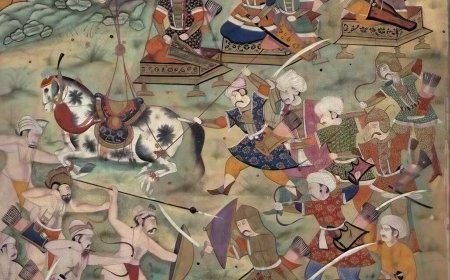
History is full of examples of knowledge being destroyed. Nalanda, the Library of Alexandria, and Baghdad’s House of Wisdom were all burned. Throughout history, rulers have tried to erase dissenting ideas. Yet ideas and truths survive through memory, storytelling, and courage. The real question is whether we will allow them to survive today.
When a society burns its own newspapers, attacks its artists, and restricts freedom of thought, that fire does not stop there. It spreads to courts, classrooms, and homes. When a city burns, its temples do not survive. Our temples, culture and freedom of expression, are no longer matters of personal preference. They are matters of collective survival.
Breaking a mirror does not make anyone more beautiful. It must be cleaned if needed. We must keep society’s mirror clear through truth, criticism, dissent, and free expression. This path is not easy. It demands responsible institutions, restoration of the rule of law, and moral courage from all of us. But it is the only path where hope can rise again from burned foundations. That hope is what we must protect.
Nafew Sajed Joy is a writer, researcher and an environmentalist. He can be reached at [email protected].