


































![A Ledger of the Soul: Navigating the Allah-Bhagavant Nexus in a 19th-Century Puruṣākāra Jñāna Caupara [Gyan Chauper]](https://counterpointbd.com/uploads/images/202608/image_430x256_6a93baa3b09a7.jpg)




















What the Polls are Telling Us (and What They are Not)
Do not read these polls as a scoreboard. Read them as a map of the public's fears, confusion, and silent hopes. The party that understands what the polls are not saying -- the doubts of the undecided, the nuances in the responses on reform, expectations on law and order, corruption, employment will be the one that truly wins the mandate of Bangladesh.

Bangladesh is witnessing a systemic shift in opinion polls, marked by sustained demand, improved media coverage, and waning skepticism. Political parties now use these results for strategy, though methodological differences make direct comparisons difficult. In this context, it is important to ask what the polls are telling us and what they are not.
Devil is in the Methodology
To be nationally representative, surveys must use stratified, random sampling reflecting the population. Both IRI and INNOVISION uses multi-stage probability sampling method. The IRI survey was undertaken in 500 Primary Sampling Units (wards and villages) in 63 districts. INNOVISION survey was undertaken in 521 PSUs in 64 districts and the samples are proportionally distributed as per population census 2011.
Prothom Alo does not explain the PSUs and distribution of samples by age and location (urban and rural). They have equally distributed the male and female samples (male 674, female 668) and sampled them from 5 urban and 5 rural locations which appear to be selected purposively. IRI and INNOVISION use systematic random sampling method where houses are selected from a landmark and a skip-pattern is used (for example every fifth house on the right-hand side).
Prothom Alo did not explain whether such random sampling approach was adapted. Besides, Prothom Alo limits the survey to literate respondents only while the other survey does not.
The Blind Spot
None of the surveys offer insights into total number of seats each party will win.
The Prothom Alo survey asked the respondents: ‘Who will win the highest number of seats?’ 65.9% said BNP, 25.9% said Jamaat and 7.2% said Awami League. Surprisingly, there is no option to choose ‘I don’t know or I cannot comment’.
Also, this result does not bear much meaning: 100% may think BNP will win highest number of seats, but that also potentially and technically can mean BNP will win 151 seats and Jamaat will win 149 seats.
INNOVISION asked five different questions to understand people’s voting intention and voting perception.
One of the questions was: ‘Which party candidate will win in your constituency if election was held tomorrow?’ Of the respondents, 25.3% said they do not know. If these samples are excluded for a comparative analysis with Prothom Alo, then we find 58.48% said BNP candidate will win in their constituency followed by 24.0% who favored Jamaat candidate. Of the rest 14.35% said Awami League candidate and 2.3% said NCP candidate will win in their constituency. INNOVISION poll has samples from 181 constituencies. But still, this data does not mean BNP is ahead in 58.48% of the constituencies from which the samples are drawn.
The distribution of seats remains a blind-spot.
Contradictory Responses
There are ironies/contradictions in the results. For example, in the Prothom Alo survey, 5.2% said they are very satisfied with IG performance, 49.3% said they are somewhat satisfied, 23.1% said they are neither satisfied nor unsatisfied. Yet, when Prothom Alo asked who people think is responsible for key reforms not taking place, 47.5% said the government is responsible, followed by 34.6% who said Awami League and its collaborators, 22.1% who said NCP, 20.7% who said BNP, and 7.0% who says Jamaat.
One should ask, why would Awami League be responsible for key reforms not happening? Yet, the people have said so because the choice was given. Also, the people are rating the IG performance favorably yet 51% are saying they are highly unsatisfied with the IG’s performance on controlling price. These are contradictions. In a small sample survey both the negative and the positive biases can get inflated simply because the sample does not have the statistical power to correct the noise.
Besides, there are nuances. For example, in the IRI survey 53% of the respondents said the country is heading in the right direction. When asked why, the majority (20%) identified better economic conditions as the reason. But here is the catch: at least 20% of the responses are related to personal experiences and biases -- 3% thinks the country is in the right direction because of abdication of Sheikh Hasina, 2% thinks it is because of advancements in medical science, 1% think it is because of more sports facilities, 1% thinks it is because of receipt of foreign remittances. You need to be aware of these nuances to understand why people think what they think.
Phrasing Matters
Prothom Alo asked: 'What will be the result if Bangladesh follows Islamic rules?' 28.8% said very good, 36.6% said good, 16.7% said not good and not bad, 9.4% said bad, 2.9% said very bad, 5.7% said unsure.
In a Muslim majority country, if you are asking this question in an opinion poll directly, it is highly likely that the respondents will respond in positive as to the respondents a non-negative response here could also potentially mean he/she is saying Allah's rules will not yield good result for the country.
This is not a good question to ask if the objective is to assess whether people's voting decision will be influenced by religion. It simply says 65.5% of the voters in Bangladesh are likely to think Islam will have a positive influence on the nation. Note that in the Prothom Alo survey 2.4% said religion will be a basis for vote.
Be Aware of Validity
In the Prothom Alo survey, 44.4% respondents said they are satisfied with the Interim Government’s climate actions; another 6.9% said they are very satisfied. This made me think. I wonder whether even the experts on climate adaptation would be immediately able to respond correctly to this question. A survey must not assume that the respondents have all necessary information. As such, we either first ask whether the respondent knows the subject and then proceed or we provide the option ‘I don’t know.’ The Prothom Alo survey missed this option for many questions.
What Signals are Common Across the Surveys?
Despite the limitations in the methodology of the surveys, we can make some important deductions.
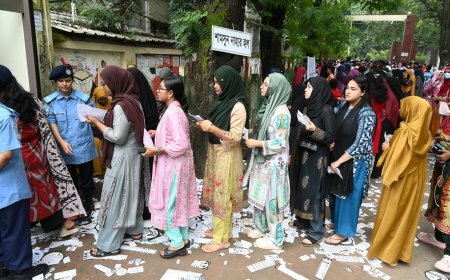
We are likely to see high voter turn-out: INNOVISION (Yes 94.2%), IRI (Very Likely 66%, Likely 23%), ProthomAlo (Yes 92.0%).
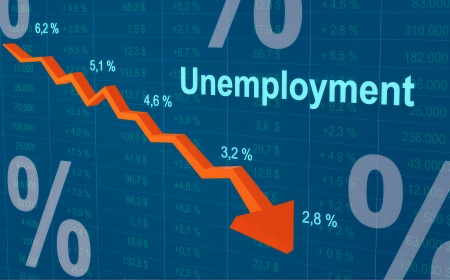
Law and order, corruption, employment are priorities: IRI survey has a duality. When asked about the single most important problem they found: Corruption (21%), Political Instability (18%), Law and Order (12%), and Unemployment (8%). However, when asked why the country is heading in the wrong direction, they found: Price Hikes (22%), Law and Order (18%), Lack of Democracy (8%), and Lack of employment opportunities (6%). The latter responses mirror INNOVISION’s findings (multiple response option): Law and Order (57.5%), Inflation (54.6%), Employment (42.4%), and Corruption (36.9%)
There is an anti-elite sentiment: All the three surveys capture rising tension on income, jobs, expenditure. But the IRI survey goes deeper and reveals that 54% of the respondents think the civil society in Bangladesh represents interest of the elites; also 51% strongly agree that there is large gap between political elites and the people. The party that is closer to the people will win the heart and perhaps the votes.
Awami league votes will be key: All the surveys have picked up a sizeable proportion of voters who want to vote for Awami League and want Awami League to participate in the next election. In absence of Awami League, how will these votes get distributed?
INNOVISION survey shows that among the voters who identified Awami League as the most suitable party, 49.5% identifies BNP as the second most suitable party and 17.9% identifies Jamaat as the second most suitable party.
Whether the Awami League votes will break accordingly is an unresolved question. But it is clear that the Awami League votes will be key to making a difference.
The undecided voters: Prothom Alo survey does not show undecided voters. The questionnaire assumes that all the voters are decided. In the IRI survey only 7% said they do not know who they will vote for. INNOVISION got 32.6% undecided.
This is a big unknown. One reason why INNOVISION survey might be identifying the undecided is because the survey first asks the respondents whether they have decided to vote before it moves on to asking who the voters are likely to vote.
This is an option that is not available in other surveys. If the IRI survey holds, then it is bad news for NCP because the room for grabbing the undecided voters is limited for them. If the share of undecided voters is closer to what the INNOVISION survey reveals, then NCP still has some hope.
Gen Zs and women: In the INNOVISION survey of the total respondents 32.9% are housewives. Of the female respondents, 72.4% are housewives. In the IRI survey, 40% are housewives. In the IRI survey, 61% of the female respondents reported that they are very likely to vote; in comparison to 71% of the male respondents who reported that they are very likely to vote.
In the INNOVISION survey, while 95.3% of the household respondents reported that they are likely to vote, of the student samples, 84.5% said they are likely to vote. NCP enjoys its largest voter base among the students (11.5% among students while 2.1% among general households).
There are many nuances on the student, Gen Z and female voters that are captured in the surveys. The parties must take careful note of these nuances to decide on their strategy.
BNP shares a disproportionate burden: The burden of reforms and other expectations are affecting voter’s perception about BNP. In the Prothom Alo survey, 20.7% thinks BNP is responsible for key reforms not taking place, in contrast 7.0% thinks Jamaat is responsible. It is evident that the burden of reform is on BNP, and Jamaat gains from instability in the country.
Bottom Line
Do not read these polls as a scoreboard. Read them as a map of the public's fears, confusion, and silent hopes.
The party that understands what the polls are not saying -- the doubts of the undecided, the nuances in the responses on reform, expectations on law and order, corruption, employment will be the one that truly wins the mandate of Bangladesh.
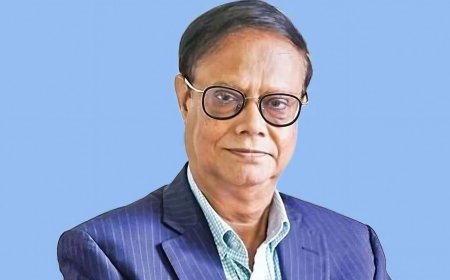
Md. Rubaiyath Sarwar is the Managing Director, Innovision Consulting.