



























































The Clock is Broken: How Bangladesh’s Managed Time Descended into Chaos
It is no longer an abstract fight over who controls the political clock. It is a concrete, urgent battle for the very foundations of public order, institutional integrity, and rational discourse.

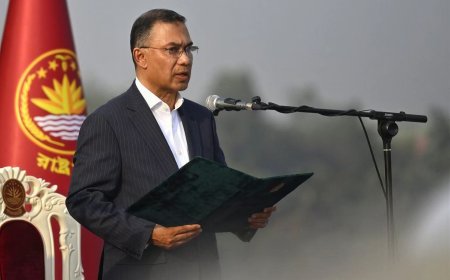
In late July 2024, the clock of Bangladeshi politics stopped. The July Revolution ousted an authoritarian regime, dissolved parliament, and ushered in an interim government led by Nobel laureate Muhammad Yunus.
Its project was framed in temporal terms: To build a "new Bangladesh" required a prolonged suspension of the old political time. The regime mastered this suspended state -- a "state of exception" where the promise of a future election justified an endless, managed present.
The past was deemed criminal, the future a receding horizon, and the present a staged performance of cleansing. It was a sophisticated, chilling mastery of political time.
That fragile construct lay shattered on the morning of December 20, 2025, amidst the acrid smell of smoke and ashes.
The controlled "cold fear" of bureaucratic management has been incinerated, replaced by the hot, raw fury of a nation unmoored from any timeline.
The catalyst was the death of a 32-year-old man, Sharif Osman Hadi, and the explosion of violence that followed has revealed the perilous fiction of a managed transition.
The Catalyst: A Martyr for a New Time
Sharif Osman Hadi was not just a political candidate; he was a symbol. A frontline leader of the 2024 uprising, a founder of the revolutionary cultural platform Inqilab Moncho, and an aspiring parliamentarian for Dhaka-8, he represented the very generation that fought for the "new Bangladesh.”
His political identity was built on fierce nationalism, opposition to the ousted Awami League, and a vocal critique of what he termed Indian "hegemony".
On December 12, a day after the election schedule was announced, he was shot in the head by assailants. After a week on life support in Singapore, he was pronounced dead on December 18.
His death was not merely a tragedy; it was a temporal detonator. Hadi was a figure of the uprising -- the past -- but also a candidate in the promised election -- the future. His killing violently collapsed these two timelines into a single, burning point of rage in the present.
As Chief Adviser Yunus declared a day of state mourning and called his death an "irreparable loss," the streets delivered a different verdict.
The promise of a managed path to democracy was now seen by thousands as a hollow lie, paved with the blood of the revolution's own children.
The Stage Burns
The interim government’s playbook relied on staging the political narrative. Its most decisive act had been using the courts to ban the Awami League, effectively rewriting the cast list for the future.
On the night of December 18, the stage itself was seized and set ablaze by a grief-stricken, furious public.
Protesters, chanting slogans for Hadi, surrounded the offices of Bangladesh’s two most prominent newspapers, Prothom Alo and The Daily Star_.
They smashed gates, vandalised floors, looted equipment, and piled furniture and archives into the streets to burn. At The Daily Star, the fire trapped at least 28 journalists and staff on the rooftop, who spent hours gasping for air before being rescued by army and fire services.
One journalist’s desperate Facebook post read, "I can't breathe anymore. You are killing me".
The attackers branded the newspapers "Delhi's lapdog" and "Sheikh Hasina’s enabler," accusing them of enabling the political violence that killed Hadi.
The symbolism was catastrophic. These institutions, which had endured pressure from the previous regime, were seen by the mob as part of an old, compromised order. Their destruction was a violent rejection of the interim government’s entire narrative architecture.
The attack spread to the iconic cultural institution Chhayanaut, further assaulting a pillar of Bengali civil society. The consequence was immediate and profound: For the first time in decades, both Prothom Alo and The Daily Star were forced to completely suspend all publication, print and online.
The government’s controlled stage was now a blackened, silent ruin.
The Horizon Explodes
The carefully managed "horizon" of a February 2026 election has now vanished into a storm of wider geo-political tension. Hadi’s politics and the circumstances of his attack have instantly made the crisis a diplomatic flashpoint with India.
Anti-India sentiment has intensified. Protesters and leaders, particularly from the National Citizen Party (NCP), have openly blamed India, accusing it of sheltering Hadi’s attackers and the ousted Prime Minister Sheikh Hasina.
At protests, speakers have demanded Hasina's extradition and warned that Bangladesh could retaliate by sheltering separatists from India’s northeast.
This rhetoric has triggered a serious diplomatic row, with India summoning Bangladesh’s envoy to protest and a chief minister warning of retaliation.
The interim government, which once seemed to command time, now appears powerless against the tide of events.
While Yunus’s administration condemned the mob violence and pledged to stand by the media, its calls for calm have been drowned out. The police and state machinery were conspicuously slow to respond to the arson attacks, raising loud questions about where authority truly lies.
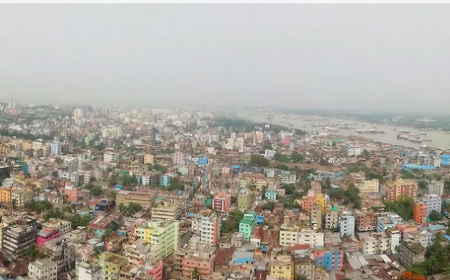
The spatial spread of violence -- from Dhaka to Chittagong, where protesters stoned the Indian Assistant High Commission, to districts nationwide where Awami League offices were attacked -- shows a crisis that is no longer contained. The "state of exception" has metastasized into a state of anarchy.
Reclaiming Time from the Ashes
The theory of mastered political time lies in ruins alongside the burnt-out newsrooms. The "cold fear" of legal process has been overwhelmed by the hot fear of mob violence and state impotence. The "receding horizon" of the election is now obscured by the smoke of a national crisis that threatens to derail it entirely. The "staging" of politics has been violently taken over by the crowd.
The true struggle in Bangladesh is starkly clear. It is no longer an abstract fight over who controls the political clock. It is a concrete, urgent battle for the very foundations of public order, institutional integrity, and rational discourse.
The clock is not just ticking now; it is broken. And in the deafening silence of its stopped hands, a nation holds its breath.
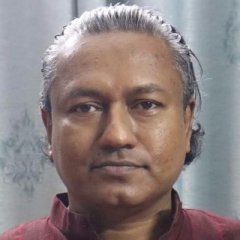
Zakir Kibria is a Bangladeshi writer, policy analyst and entrepreneur based in Kathmandu, Nepal. His email address is [email protected].