














































Is an Empty Chair Diplomatic Leverage?
if the chair simply remains empty, the summit proceeds, other states advance their interests, India absorbs the symbolism without changing its behaviour, and Bangladesh returns home with little more than domestic applause, then it was not leverage. It was an opportunity cost.


In diplomacy, an empty chair can sometimes speak more loudly than a long speech.
If that empty chair at the BRICS Summit in New Delhi this September belongs to the Prime Minister of Bangladesh, however, the important question is not whether India will notice the absence.
It certainly will. The more important questions are: What exactly does Bangladesh intend to communicate through that absence, and what does it expect to gain in return?
Because protest and diplomacy are not the same thing. Protest can succeed through visibility and symbolism. Diplomacy ultimately succeeds through measurable outcomes.
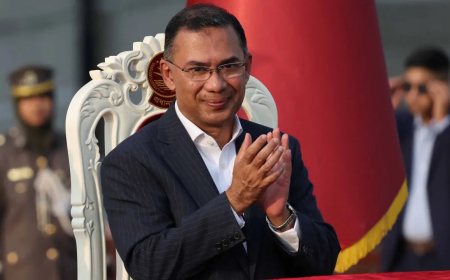
In the current political climate, the possibility that Prime Minister Tarique Rahman will stay away is undoubtedly a diplomatic and political signal. Symbolism in diplomacy is never trivial. Whether a prime minister accepts or declines an invitation is not simply a matter of protocol or scheduling; it involves signal, audience, timing and leverage.
There is an important institutional distinction here. India has not invited Tarique Rahman for a bilateral state visit. Bangladesh has been invited to the BRICS outreach session in its capacity as the current chair of BIMSTEC.
The institutional context of that invitation is therefore larger than the bilateral relationship between Dhaka and New Delhi.
At the same time, Delhi appears to regard the invitation within a broader attempt to stabilise a relationship that has become increasingly strained. Consequently, declining it will not be interpreted as an innocent scheduling decision. It will inevitably be read as a political message.
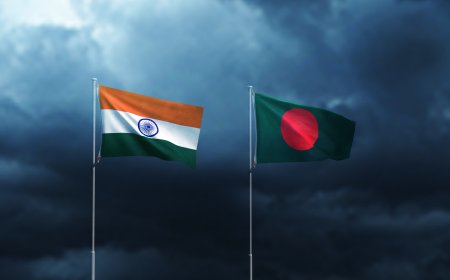
And Bangladesh-India relations have reached precisely the kind of moment when messages matter.
The relationship is now caught in an uncomfortable triangle: showing anger is easy, severing the relationship is practically impossible, while continuing under the old political formula is becoming increasingly difficult.
Bangladesh is effectively trying to renegotiate the old terms of political proximity with India. Yet it must do so while preserving a strategic relationship with a neighbour that no government, ideology or diplomatic mood can remove from the map.
To understand the difficulty of that task, we need to look beyond the immediate controversy. Bangladesh's political transition is taking place at a moment when the Bay of Bengal, the Indo-Pacific, China's rise, India's security doctrine, American strategic pressure and the wider realignment of the Global South are intersecting.
Bangladesh is therefore not simply recalibrating its relationship with India. It is trying to redefine its strategic identity within a rapidly changing regional order.
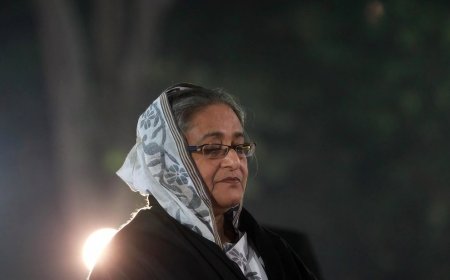
The signal Dhaka appears to want to send is relatively clear: if Delhi provides Sheikh Hasina with a public political platform that Bangladesh interprets as interference in its domestic political process- or, at minimum, as hostile political signalling -- then bilateral relations cannot simply continue as business as usual.
There is, of course, a sovereignty argument on the Indian side. Sheikh Hasina is on Indian territory, and allowing her to speak to journalists is ultimately an Indian sovereign decision.
Fair enough. But sovereignty works both ways.
If Delhi regards providing such a platform as an exercise of its sovereign discretion, Dhaka is equally entitled to regard declining a summit invitation as an exercise of its own diplomatic sovereignty.
Yet there is a crucial distinction here: Having the sovereign right to do something does not automatically make doing it strategically wise.
That brings us to BRICS itself. BRICS is not India. Delhi may be the host, but the institution is not India's bilateral diplomatic property. Bangladesh is not a BRICS member either; it has been invited to the outreach session in its capacity as BIMSTEC chair.
Bangladesh's presence at that table would therefore not simply be about the Modi-Tarique equation. It would also create space for engagement with China, Brazil, South Africa, Russia and the wider diplomatic architecture of the Global South.
There is consequently a peculiar diplomatic paradox in withdrawing from a multilateral table in order to punish the country geographically hosting that table.
Ask the most basic cost-benefit question. How much does India materially lose if the Bangladeshi Prime Minister does not attend? Probably very little.
What is Bangladesh's opportunity cost? Potentially considerably more.
BRICS has expanded well beyond its original symbolism as a counterweight to Western dominance. Its growing relevance now touches enlargement, development finance, trade diversification, payment architecture, technology cooperation and representation of the Global South.
If Bangladesh is serious about eventual BRICS membership, access to the New Development Bank, alternative development financing or wider South-South cooperation, interpreting a BRICS summit as essentially an “Indian event” simply because it happens to be hosted in Delhi would be strategically shortsighted.
This leads to a larger principle of small-state diplomacy. In great-power politics, the most valuable asset of a small or middle power is usually not military strength. It is optionality.
The more tables at which you have a seat, the more options you possess. The more options you possess, the harder it becomes for any single power to impose conditions upon you.
Much of the international-relations literature on hedging rests on precisely this logic. Small and middle powers do not necessarily protect their autonomy by distancing themselves from powerful states.
They often do it by constructing multiple, overlapping relationships that dilute dependence on any one of them.
Vietnam is an instructive example. It has developed an increasingly important strategic relationship with the United States while China remains one of its most important economic partners. Hanoi has serious disputes with Beijing in the South China Sea, but it does not respond by abandoning every China-hosted multilateral platform and thereby shrinking its own diplomatic space.
Singapore offers an even clearer example. It maintains deep security relations with the United States while sustaining enormous economic engagement with China. Its underlying strategic logic is pragmatic: on which issue, and with which partner, can Singapore best advance its national interest?
Bangladesh needs precisely this kind of maturity. Staying away from BRICS because of a dispute with India, accepting every strategic preference of Washington because Bangladesh needs access to the American market, or accommodating every sensitivity of Beijing because China finances infrastructure- none of these constitutes strategic autonomy.
Strategic autonomy means needing everyone while giving no one a veto.
There is another uncomfortable truth about Bangladesh–India relations. The relationship cannot adequately be understood through the vocabulary of either friendship or hostility. It is a case of geography-driven asymmetric interdependence.
India surrounds Bangladesh on three sides. The two countries share 54 rivers and roughly 4,100 kilometres of border. Electricity, trade, transit, connectivity with India's Northeast and security in the Bay of Bengal all bind the two states together in ways that political anger cannot simply erase.
That interdependence is not symmetrical. India is the larger economy, the greater military power and the more influential regional actor. Bangladesh therefore cannot build its India strategy around performing equality of power in every confrontation.
The power available to a smaller state lies elsewhere: coalition-building, international institutions, issue linkage, economic diversification, reputational capital and carefully calibrated diplomacy.
This is why the Prime Minister's decision not to travel to Delhi would, in my view, be strategically defensible only if it is attached to a clear diplomatic demand, a measurable objective and an exit strategy.
What exactly does Dhaka want? Formal Indian restraint regarding Sheikh Hasina's political activities? A bilateral understanding on non-interference? Specific confidence-building measures? Visa normalization? Commitments on border management? A structured high-level political dialogue? Or merely a symbolic snub?
Because without a defined objective, diplomacy can very quickly become theatre. And theatre has an obvious limitation: the audience applauds, but the state gains nothing. An empty chair looks dramatic on a stage.
At a negotiating table, however, an empty chair can also mean that everyone else is making decisions while you are absent.
The most successful diplomatic protest is therefore not the loudest one. It is the one that increases the other side's costs without simultaneously reducing your own bargaining space.
There is a broader lesson here as well. When relations between two states become synonymous with relations between two particular governments, the entire diplomatic architecture becomes vulnerable to regime change. Governments change. Geography does not.
That is perhaps the hardest truth Bangladesh must accept. Political anger cannot defeat geography. Disagreements with India have to be managed in ways that do not unnecessarily reduce Bangladesh's own strategic options.
And saying “no” to a powerful state becomes leverage only when you already know what your next move is. “No” by itself is not a foreign policy.
So my question about the possible decision to stay away from Delhi remains very simple:
What does Bangladesh gain by staying away -- and what exactly does India lose?
If the absence imposes a measurable diplomatic cost on India, produces changes in bilateral conduct, or helps establish a clearer boundary of mutual political non-interference, then the empty chair will have served as meaningful strategic signalling.
if the chair simply remains empty, the summit proceeds, other states advance their interests, India absorbs the symbolism without changing its behaviour, and Bangladesh returns home with little more than domestic applause, then it was not leverage. It was an opportunity cost.
And in geopolitics, there is an important difference between refusing to take your assigned seat and ensuring that your seat at the table cannot be ignored.
Dr. Lubna Ferdowsi is an academic and researcher based in England.
What's Your Reaction?