




































































What Should Be the Foreign Policy Priorities of the Next Government
A Bangladesh that wants diplomatic space to grow must first secure strategic space. If it wants autonomy, it must first make coercion unprofitable. That is the hard, unromantic truth of the world as it is, not as we might wish it to be.


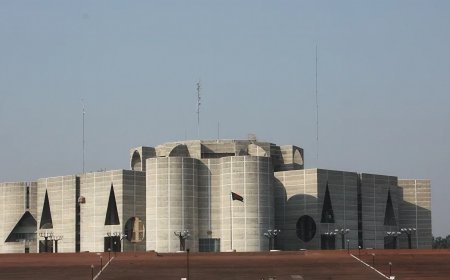
On February 12, Bangladesh will hold an election that will not merely decide who governs, but how the state positions itself in a world that is getting harsher by the month.
The next government will take office in a security environment that is unforgiving, asymmetric, and consequential. This is not a routine transition. It is a hinge moment.
The timing is brutal. The global order that once muted raw power is visibly unraveling. Great-power competition is back. So are wars of aggression and territorial revisionism. In this new reality, states are not protected by good intentions. They are protected by leverage, partners, and credible capacity.
Bangladesh is emerging from more than a decade of a regional political climate that narrowed its choices and encouraged restraint over autonomy. The next government will have to reverse that habit. “Bangladesh First” cannot be a sentiment. It has to be a doctrine. What follows is a guide to the foreign policy priorities for the first post-July elected government from day one.
Posture is Policy
Foreign policy is not just what a state has but what it projects. Posture shapes bargaining before power enters the room.
For too long, Bangladesh has been narrated -- and has too often narrated itself -- as dependent, fragile, and perpetually in need of hand-holding. Humanitarian virtue replaced strategic self-respect. Moral appeal substituted for leverage.
The consequence was predictable. Partners stopped negotiating and started managing. States do not bargain seriously with actors they can patronize.
This carried material costs. A country that leads with need invites conditions, delays, and quiet vetoes. A country that leads with utility gets terms. Status is not decoration in international politics. It is bargaining power. A “Bangladesh First” foreign policy, therefore, begins with an attitudinal overhaul.
Stop advertising dependence. Start projecting indispensability. Replace the language of gratitude with the language of exchange. Cooperation produces value, and value has a price.
This is discipline, not arrogance. Once posture shifts, firm policies stop looking like provocation. They look like normal state behavior.
Deterrence First, Always
Hope is not a security strategy. Neither is goodwill. In an anarchic system, states do not get points for being well-meaning. They get punished for being weak. History, recent and distant, is brutally consistent on this point.
Bangladesh faces a high-risk threat environment. It sits next to a nuclear-armed neighbor whose political discourse has increasingly tolerated incendiary language, maximalist nationalism, and civilizational rhetoric. In such a setting, restraint without deterrence is not virtue. It is vulnerability.
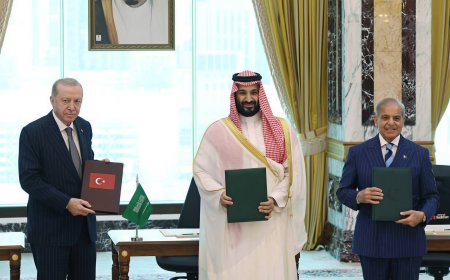
So, the core task for the next government is to build credible deterrence. That requires serious thinking about survivability, denial capabilities, and active-forward defense. That also means keeping external security guarantees on the table -- following recent bilateral precedents, including the Pakistan-Saudi model.
A state that can deter decisively is not an easy target. States that hesitate invite coercion. The record on this -- even in recent history -- is not ambiguous.
Modernize Smart, not Loud
Bangladesh does not need to outspend its adversaries. It cannot. But it must outthink it. Modernization should make aggression costly, slow, and uncertain. Build for precision, mobility, intelligence, air and maritime denial, and resilient command structures. The goal is not spectacle. A force that complicates an adversary’s planning is often as effective as the one that looks impressive on parade day.
Modernization also signals seriousness. A capable, professional, well-equipped military raises the political cost of coercion. It forces neighbors to calculate, not assume. In international politics, forcing calculation is often half the battle. This is not about militarism. It is about realism.
The India Question
Bangladesh’s India policy after Hasina must move from a relationship of patronage to disciplined transactions. Cooperate where Dhaka gets returns. Push back where it does not.
Turn what Delhi values -- transit, connectivity, border coordination -- into bargaining chips, not blank cheques. Make it unmistakable that access has a price.
Treat connectivity to India’s Northeast as leverage and trade it only for reciprocity. India cannot demand seamless passage through Bangladesh while enforcing coercion at the border and denying fair terms on water.
Connectivity is not a right. It is a concession -- earned through restraint, respect, and return.
Move water beyond technocratic management and treat it as a core national security priority. Demand binding, time-bound deals on Teesta and other shared rivers. If talks stall, raise the costs -- take it to international forums and make delay politically expensive. Water is about existential sovereignty.
And because borders are where power becomes physical, adopt a hard-border posture -- more surveillance, rapid response, stricter enforcement, and loud, immediate diplomacy when incidents occur. Enforce zero tolerance for border killings. The border defines the nation.
Strategic Clarity and Responsibility
“Friendship to all and hostility to none” cannot be a serious doctrine for a nation of over 170 million people. A state that refuses to distinguish between actors that strengthen security and actors that endanger it is not being virtuous. It is avoiding responsibility.
The slogan also smuggles in a false assumption that a neutral supranational authority exists to enforce order and restrain coercion. But there is no such thing in a world of unequal power and competing interests.
Bangladesh, therefore, needs partners it can rely on when pressure rises -- relationships built on terms, not sentiments, and backed by commitments that hold. Choose partners by utility and reliability. Trade cooperation for concrete returns. Pragmatism is the only currency.
The Southeastern Front
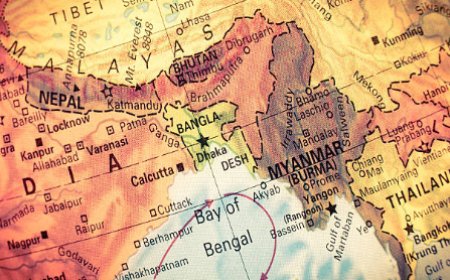
Bangladesh’s southeast is now a live security frontier. The Arakan Army -- the de facto authority in Rakhine -- is an emergent threat with deep ties to the ecosystem that enabled the Rohingya genocide. A non-state armed group that crosses into Bangladesh, abducts civilians, and collaborates with insurgents is a clear threat to territorial integrity. Deny it operational space.
Impose deterrence on the border through persistent surveillance, hardened positions, and rapid response. Treat kidnappings, incursions, and armed crossings as redlines. Protest notes are not enforcement. Send a clear signal to Naypyidaw and the Arakan Army that continued violations will invite painful retaliation inside their contested zones.
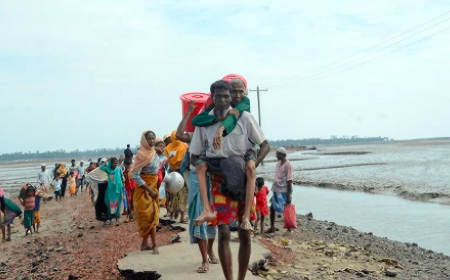
The Rohingya crisis is the same hard-security problem. Stop treating it as only a humanitarian problem. Diplomatically, make containment transactional. Price stability and the prevention of onward migration through sustained funding and coordinated pressure on Myanmar for enforceable repatriation guarantees. This is not optional. It is sovereignty.
Making China Useful
Beijing invests to gain leverage, not to earn friendship points. Bangladesh should take what expands autonomy and refuse what quietly purchases it.
Welcome Chinese capital where it increases productivity and resilience -- power, logistics, export-linked industry, and defense capability -- but under hard guardrails. Demand transparent debt terms, competitive procurement, enforceable arbitration, and real local-content and skills-transfer requirements. Renegotiate or exit opaque or open-ended deals, especially in digital infrastructure, where dependence becomes political pressure.
Keep China important but never indispensable by diversifying finance, suppliers, and technology pathways. Avoid predictable errors: No proxy posturing, no photo-op diplomacy, no quiet concessions traded for speed. Discipline is the policy.
Engaging Washington with Leverage
Treat the United States less as a savior to flatter and more as a superpower to transact with. The goal is low drama, high-value cooperation that creates durable stakeholders on the American side.
Bangladesh is not asking for charity. It has leverage. The Bay of Bengal is a leverage. As US-China competition sharpens and India continues to hedge, Washington will need more than a single regional anchor.
Bangladesh can be that missing pillar. Not as a treaty ally, but as a stabilizing, sovereign maritime actor whose cooperation reduces reliance on any single partner and limits adversarial access in a crowded littoral. The doctrine should be blunt: Offer utility, demand returns. Keep cooperation practical and quiet.
“Boring” is an asset. It outlives politics.
Defense cooperation should be framed as capability, not alignment theater. Modernize in ways that raise deterrence and resilience, seek partnerships that build local capacity.
Economically, speak in Washington’s language: supply chains and predictability. Bangladesh’s export footprint gives it a real story, but only if paired with integrating both the American producers and retailers. Integrating American producers into Bangladesh’s export supply chains can help Bangladesh secure tariff concessions and benefit from lobbying efforts led by US producers and exporters.
Keep the framing transactional. Nothing is a favor. Everything is business.
Economic Statecraft
Treat the Bay of Bengal as strategic depth. Build coastal capacity that protects offshore resources, sea lanes, and port sovereignty. Turn Chattogram and Mongla into assets, not infrastructure. Say it plainly: Bangladesh is a littoral power. Act like one.
After macro stabilization, lock in market access. Meet the EU’s labor and climate rules and build the compliance spine -- traceability and digital product passports -- so Bangladesh stays inside premium supply chains. Open structured talks with ASEAN to plug into “China-plus-one” sourcing.
Treat stolen wealth as a foreign policy file. Deepen anti-corruption cooperation with partners such as the UK’s NCA and convert asset freezes into repatriation through expedited legal processes and political commitments.
Build targeted economic zones as an industrial strategy to attract FDI in food, cosmetics, and pharma. Accelerate technical cooperation with countries like Malaysia to capture first-mover advantage in the $7 trillion global halal market.
With the Gulf, stop improvising. Institutionalize. Routine leader-level engagement, standing bilateral channels on labor rights, consular protection, skills upgrading, and investment. Remittances should be stabilized by design, not left exposed to mood and policy shocks.
With Western markets, be calm and transactional. Quietly build domestic lobbies abroad -- brands, importers, financiers, diaspora business networks -- who lose money when Bangladesh is disrupted. In parallel, diversify export destinations and climb gradually into higher-value production so no bloc can punish Bangladesh cheaply.
The Bottom Line
A Bangladesh that wants diplomatic space to grow must first secure strategic space. If it wants autonomy, it must first make coercion unprofitable. That is the hard, unromantic truth of the world as it is, not as we might wish it to be. The sooner the next elected government internalizes that truth, the better its chances of growing resilient enough to deliver everything else it promises.
Dr. Nazmus Sakib is a Lewis Lecturer at the University of Kentucky and Dr. Muhib Rahman is a Perry World House Postdoctoral Fellow at the University of Pennsylvania.