




























































Why Bangladesh's Boldest Budget Move Was Simply Telling It Straight
Bangladesh now has the diagnostic tools, the legal framework, and crucially, the public honesty about the scale of the task that previous governments lacked. What it does with that foundation over the next two to three years, not the next two to three months, is the real story still being written.


Imagine a doctor who finally tells a patient, after years of vague reassurances from previous physicians, exactly how serious the illness is, no euphemisms, no soft-pedalling, just the numbers on the chart.
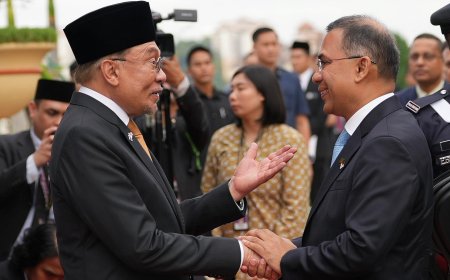
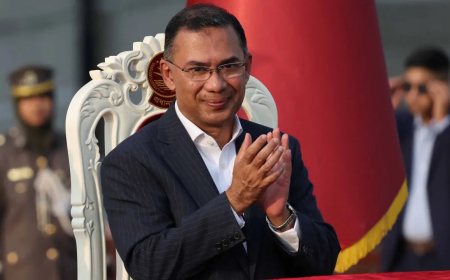
That, in essence, is what happened in Bangladesh's parliament this June, when Finance Minister Amir Khosru Mahmud Chowdhury stood up and read out a figure most governments would have buried: The banking sector's capital adequacy ratio, the cushion that protects depositors from bad loans, had fallen from a healthy 7.3 percent in 2005 to negative 2.64% by the end of 2025.
It is a startling number. But the more interesting story isn't the number itself, it's the fact that, for the first time in a long while, someone in power said it out loud, in the one room where it is hardest to hide.
A problem two decades in the making, finally seen in daylight
Bangladesh's banking troubles did not arrive with this government, and understanding their long arc actually makes the present moment easier to appreciate. The country's non-performing loan ratio had been brought down below the 40% seen in the late 1990s by the early 2000s, a real achievement at the time.
The trouble is that the improvement did not hold: from the start of the 2010s, NPLs began climbing again, the product of political patronage steering loans that bankers privately knew would never be repaid, and insider lending to owners and their families.
In 2019, rather than tightening the rules, regulators loosened them further, lengthening board tenures and allowing more family members onto bank boards, a choice that, with hindsight, made the underlying weakness harder to see rather than easier to fix.
What changed in the last two years was not the scale of the problem but the willingness to measure it honestly. When Bangladesh Bank adopted stricter Basel III standards for classifying bad loans, the official NPL ratio jumped from 10.11 % in mid-2023 to 35.73% by late 2025, not because the banks suddenly got worse, but because, as one assessment memorably put it, this was "a revelation, not a deterioration."
Years of cosmetic provisioning and politically convenient rescheduling were finally being counted properly. Even the IMF found that the headline 4.5 percent capital ratio being reported was itself flattering the truth, masked by deferred loss provisions across 27 banks.
Five institutions, mostly Shariah-based banks with heavy exposure to one conglomerate, had NPL ratios above 90 percent, with one reaching 98 percent.
These are genuinely hard numbers to sit with. But there is something worth celebrating in how they came to light: a government finally let the accounting catch up with reality, rather than continuing to manage the story instead of telling it.
What the Budget Gets Right -- and Where the Real Work Begins
Set against this backdrop, the FY27 budget deserves credit on its own terms. The minister did not soften the numbers for his own speech, he put the worst of them on the record himself, candidly acknowledging that previous administrations left the country a "fragile and precarious" economy that, in his words, needed water poured into the tube well before it could draw any out. That candour, after two decades of euphemism, is itself a form of progress.
The budget also backs the rhetoric with real choices. Domestic bank borrowing is capped at Tk 1,12,000 crore specifically to leave more credit available for private businesses. Sixteen banks are now operating under central-bank-appointed administrators rather than drifting unsupervised.
Five insolvent Islamic banks were merged into a single new entity, Sammilito Islami Bank, with a Tk 35,200 crore capital injection, costly, yes, but a deliberate choice to protect depositors rather than let weak institutions collapse outright.
An asset quality review, already completed for private banks by reputable international auditors, is meant to extend to the state-owned banks by year's end.
Where the picture is more complicated is in what comes next. The Tk 40,000 crore already spent this year recapitalizing weak banks, with more proposed for FY27, is necessary, depositors cannot be left exposed while institutions sort out responsibility, but recapitalization by itself is a repair, not yet a renovation.
The real opportunity sitting in front of this government is to turn that repair into something more lasting.
The One Clause Worth Watching Closely
Here is where the story becomes genuinely interesting, and where good-faith observers across the political spectrum are paying the closest attention.
The Bank Resolution Ordinance, introduced in May 2025, is widely regarded as the most significant piece of banking legislation since 1972, it finally gives the central bank real power to step into a failing bank without years of litigation, install administrators, and protect depositors directly. That is a genuine institutional achievement, and Bangladesh is better for having it.
The current parliament kept this law but amended it, and the amendment has become the subject of a lively, important debate. Under the Bank Resolution Act, 2026 as passed, former directors or owners of merging banks may reclaim control by paying 7.5% of the amount upfront, with the rest repayable over two years at 10% interest.
The Bangladesh Association of Banks, speaking as practitioners, not partisans, has urged the government to make sure this provision cannot be read as a door back open to the very people whose decisions created the crisis in the first place.
It's a fair and constructive caution, not an accusation, and the Finance Minister has responded to it directly and on the record, telling parliament plainly that "BNP does not believe in patronage of any individual in economic matters," and that the law exists to bring funds back into the system, not to favour anyone.
There is, in fact, a coherent and reasonable logic underneath the policy: a bank already merged with a 90+% NPL ratio has little left to lose by allowing former owners, who at least understand the existing loan book, to inject fresh capital, provided any liability for past wrongdoing is pursued on its own track and doesn't simply evaporate.
If the 7.5% genuinely restores working capital and the remainder is genuinely collected, that beats the alternative of an indefinitely state-run, capital-starved bank going nowhere.
The test, as with most good policy, will be in the execution rather than the wording. A live case, Islami Bank Bangladesh PLC, is currently working its way through exactly this question in parliament, with the government defending its approach against opposition concerns while separately pursuing specific loan-recovery allegations.
How that single case resolves will tell observers more about the strength of the new framework than any number of speeches will. It is, in the best sense, a test the government has set for itself by being transparent about the dilemma at all.
Why Getting This Right Matters Beyond Banking
It would be easy to file the banking story away as a sector-specific concern, but its resolution ripples outward in ways that touch nearly every other ambition in this budget.
Private credit growth has slowed to around 4.75%, and private investment has dipped to 22.48% of GDP, a reminder that a confident banking sector is the foundation underneath everything else the government wants to build, from job creation to export growth.
The IMF, whose support underwrites part of the financing plan, is watching this file closely too, with a mission expected in Dhaka to discuss a new programme.
There is an encouraging precedent worth remembering here: China's NPL ratio, once as high as 25 percent after the Asian financial crisis, was brought down to just over 1% within a decade, proof that even a banking crisis of this scale is genuinely solvable within a single decade, given consistent follow-through and even-handed enforcement.
Bangladesh now has the diagnostic tools, the legal framework, and crucially, the public honesty about the scale of the task that previous governments lacked. What it does with that foundation over the next two to three years, not the next two to three months, is the real story still being written.
A Budget that Named the Disease -- Now Comes the Cure
This is the first budget a BNP government has presented in two decades, inherited amid real fiscal strain that long predates this administration, and delivered by a minister who chose candour over comfort. That choice deserves genuine credit, and it sets a more promising tone for what follows than years of quiet management ever did.
The next chapter, publishing the state-owned banks' asset quality review on schedule, attaching real consequences to missed NPL targets, and making sure the reinstatement clause survives contact with cases like Islami Bank's, is where this budget's good intentions get to prove themselves.
The headline number that opened this piece will fade from memory within the year. Whether Bangladesh's banks have climbed back into positive territory by next June is the number that will actually decide how this chapter of the story gets told.
Suborna Akther Laboni, Researcher, Dacca Institute of Research and Analytics (daira). She can be reached at [email protected].
What's Your Reaction?