


















































I Am of This Earth
A river does not recognize a border. A bird carries no passport. The wind requires no visa. Seeds do not stop at lines drawn on human maps. An elephant does not know which hill belongs to Bangladesh, which to India, which to Myanmar.

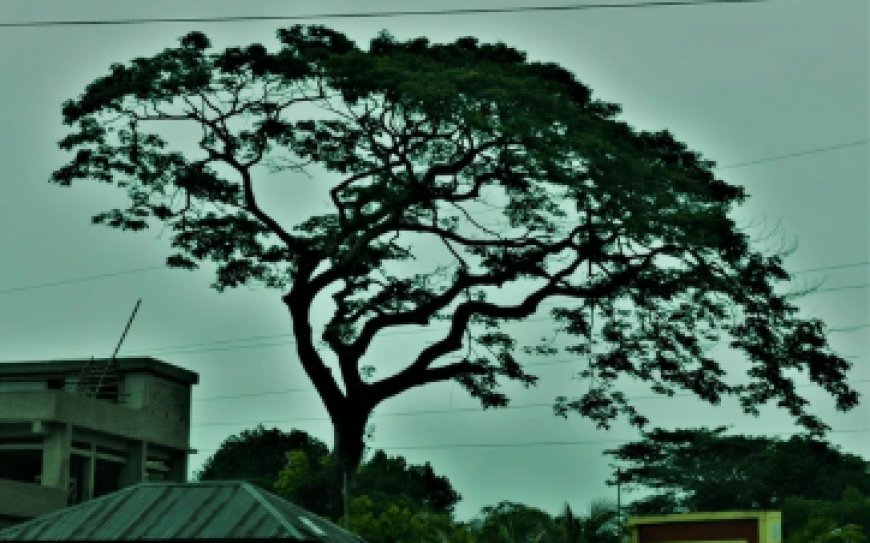
Lately, when I see a tree being cut down, it does not feel as though only a tree is being felled. It feels as though somewhere in my own body, a vein is being severed.
Perhaps that sounds strange. But the older I grow, the less distinct the boundary between the human body and the body of the Earth becomes to me. I can no longer quite tell where I end and the Earth begins.
The air that touches a leaf and then enters my lungs -- how can I call it separate from me? The water that gathers as cloud, falls as rain, becomes river, and eventually becomes part of my blood -- whose water is it?
The salt, iron and calcium in my body have all, at some point, belonged to soil, stone, sea, or another living body.
So I cannot experience the destruction of the Earth as something happening outside me.
I do not merely live on this Earth. I am of its body.
When I look at the botanical history of Bengal, this feeling becomes even more acute. More than six thousand plant species have been recorded in Bangladesh.
Yet when we think of our landscape, we tend to imagine a small collection of familiar trees -- mango, jamun, jackfruit, lychee, coconut, betel nut. The true language of this land, however, was written by thousands of wild plants: Grasses, vines, shrubs, ferns, aquatic plants, orchids, wildflowers and trees, most of whose names we do not even know.
And perhaps because we do not know their names, we do not hear them leaving.
We say we are planting trees. But planting trees and allowing a forest to grow are not the same thing.
We select a few species we like and plant them neatly in rows. We clear the undergrowth, trim the grass, sweep away fallen leaves, pull down vines. Then we look upon this disciplined green and call it nature.
But nature was never so obedient.
A forest is beautiful because of its complexity. The towering tree matters, but so does the nameless grass beneath it. Flowers matter, and so do thorns. Bees matter, and so do termites. Dead wood is as much a part of a living forest as the living tree. Even inside a layer of rotting leaves, an entire world is at work.
In nature, not even death is wasted.
It is perhaps we humans who have learned to measure everything by its usefulness to us.
When there is talk of cutting down an old tree at our home, my children grieve. So do I. To someone else in the same building, perhaps it is simply a tree: it sheds leaves, occupies space, stands in the way of new construction.
But we cannot see it alone.
Crows sit on its branches. Squirrels run along them. Birds may have returned to it year after year to build their nests. Insects live beneath its leaves. Mosses and fungi inhabit its bark. Around its roots exists an invisible society about which most of us know almost nothing.
So when we cut down that tree, what exactly have we cut down? A tree? Or have we evicted an entire neighbourhood?
The question follows me because my own family is preparing to demolish an old building and build another. There will be more construction. More trees will disappear.
I am not against development. Humans need homes, roads, hospitals, schools and cities. Humans, too, are nature.
But are we nature’s only children?
Somewhere deep within our idea of civilisation, we seem to have accepted a peculiar assumption: every other species must rearrange its existence around human needs. As our homes grow larger, theirs grow smaller. Our roads interrupt elephant corridors. Our cities consume wetlands. Our lights expand, and the darkness needed by nocturnal creatures retreats.
And when a wild animal eventually enters a human settlement, we say: wildlife has entered our territory.
Do we ever stop to wonder whether our territory entered theirs first?
I think of Bangladesh’s wild elephants. An animal so immense, yet the space we leave for it to live grows narrower every year. An elephant does not understand the boundaries we draw around property. It knows the paths its mother walked, the smell of water, the slope of a hill, the ancient routes carried through generations.
We put fences across those routes.
Then we call what follows “human-elephant conflict.”
There is something remarkable even in the phrase: how neatly it absolves us.
I think, too, of Dhaka’s crows. The crow is hardly an exotic bird. No one travels with binoculars hoping to catch a glimpse of one. We do not photograph crows to show visitors the splendour of Bangladesh. Yet even this most ordinary of birds seems less visible in the city than it once was.
Perhaps one day we will understand that the disappearance of the ordinary was the greatest warning of all.
The Earth does not become poorer only when a rare species vanishes. It becomes poorer when common butterflies become scarce, when frogs fall silent, when bees stop arriving, when bats disappear from the evening sky, when the nameless flower beside the road no longer returns.
Extinction does not always arrive dramatically. Sometimes it simply removes a birdsong from the morning.
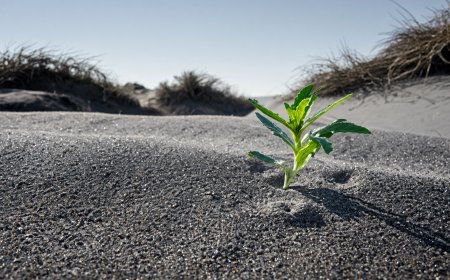
This is why I no longer want to speak only of planting trees. I want to speak of allowing the Earth to become wild again. Rewilding.
There is, to me, a profound humility in that word. It does not mean that humans will once again manufacture nature. It means that we step aside from our position as managers of everything.
Not every place needs to be arranged by us. Not every blade of grass needs cutting. Not every thicket needs clearing. Not every fallen leaf needs sweeping away. Not every pond needs to be landscaped into prettiness. Not every river needs to be disciplined into a straight line.
Let some of the Earth remain untidy. Let wild grasses return to a corner of the garden. Let a native vine choose its own way up a tree. Let an unfamiliar plant that appears with the monsoon remain, even if we do not know its name. Where it is safe, let part of a dead tree lie where it fell -- for insects, fungi, and moss.
Perhaps it is our idea of beauty that needs to be relearned.
Neatness is not the same as beauty. Cleanliness is not the same as life. Green is not the same as biodiversity.
A lawn can be brilliantly green and almost ecologically empty. A tangled thicket that appears neglected to us may be home to a hundred lives.
I increasingly feel that the ecological crisis is not merely an environmental crisis. It is a crisis of relationship. We have forgotten kinship.
We call a tree a resource, a river a water resource, a mountain a mineral resource, wildlife a natural resource. We have learned to determine the value of almost everything by asking what humans can extract from it.
But perhaps the greatest value of a tree is simply that it exists. The same is true of an elephant. A crow. A blade of nameless grass.
Why should any of them have to prove their worth by being useful to me?
I do not want merely to leave my children a more developed world. I want to leave them a world that is more alive.
A world in which, when they open a window, they do not see only things made by human hands. A world in which a child does not have to memorise the definition of biodiversity from a textbook because they can look around and understand it.
A world in which an elephant’s ancient passage is considered as real as a human road, and a century-old tree is understood to have a place in the city simply because it, too, is alive.
Perhaps one day we will reconsider borders as well.
A river does not recognize a border. A bird carries no passport. The wind requires no visa. Seeds do not stop at lines drawn on human maps. An elephant does not know which hill belongs to Bangladesh, which to India, which to Myanmar.
The Earth is older than our maps.
And so, ultimately, I cannot locate myself entirely within a country, a religion, a nation, or even within the boundaries of this human body.
There is river in me. There is soil. There is salt. There is the matter of long-dead stars.
The oxygen travelling through my blood at this moment may, moments ago, have passed through a leaf.
So where, exactly, is the separation?
Perhaps that is why it hurts when a tree falls. Perhaps it is not excessive sentiment. Perhaps it is memory. Some ancient memory held in the body -- that once, we understood that nothing lives alone. And so even the phrase “I want to save the Earth” no longer feels quite right to me. Who am I to save the Earth?
I would rather learn again how to live with it. Occupying less. Controlling less. Claiming less as mine. Giving some land back to the grass. Some sky back to the birds. Some darkness back to the night. Some pathways back to the elephants.
And leaving some silence for the countless beings whose names I will never know.
Because the pain of their disappearance is not, ultimately, happening somewhere outside me. I am not standing apart, looking at the Earth.
I am of its body.
Anusheh Anadil is a Bangladeshi musician, artist, cultural activist, and social entrepreneur.