































































Kharg Island and the Fragility of the World’s Energy Order
Modern warfare increasingly targets economic infrastructure rather than traditional military formations. Oil terminals, pipelines, power plants and ports have become instruments of pressure in conflicts across the world. The objective is not merely to defeat an enemy army but to weaken an adversary’s economic foundations.

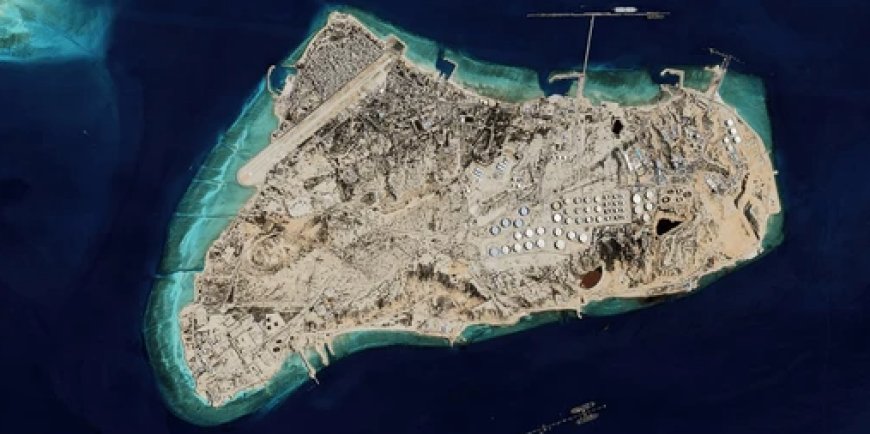
In the geography of modern war, there are places that matter not because of their size but because of what flows through them. In the northern waters of the Persian Gulf lies one such place. Kharg Island is a small coral outcrop barely twenty square kilometres in size, located a short distance from Iran’s southern coastline.
Yet this modest island sits at the heart of one of the most consequential questions in contemporary geopolitics: How vulnerable is the world’s energy system in an age of escalating strategic confrontation?
The island has recently entered the centre of global attention amid rising tensions between Tehran and Washington. Military rhetoric has intensified and speculation about targeting Iran’s oil infrastructure has begun circulating within strategic circles in the United States. In that discussion, Kharg Island inevitably emerges as the most consequential point of leverage.
For Iran, Kharg is not merely an oil terminal. It is the artery through which the lifeblood of the state economy flows. Around 90% of Iran’s crude oil exports pass through this island before tankers move towards global markets, often navigating the narrow maritime corridor of the Strait of Hormuz. Few pieces of infrastructure in the global energy system carry such concentrated importance.
The island functions as the logistical centre of Iran’s petroleum export machinery. Undersea pipelines connect Kharg to some of the largest oil fields in southern Iran. Crude oil extracted from those fields is transported to storage facilities on the island, where massive tanks hold tens of millions of barrels.
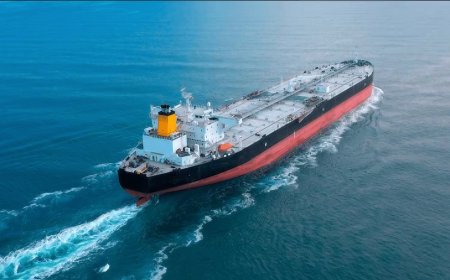
From there, long offshore docks extend into deep waters, allowing supertankers to load cargo that cannot be handled along much of Iran’s shallow coastline. The design of this infrastructure reflects both geography and necessity. Without Kharg, Iran would struggle to move its oil to the global market at scale.
That fact alone explains why the island appears repeatedly in discussions about strategic pressure on Tehran. Disrupting Kharg would strike at the core of Iran’s revenue structure. Oil remains the principal source of government income for the Iranian state, and any severe interruption could reduce fiscal capacity, constrain domestic spending and weaken Tehran’s regional influence.
Recent signals from Washington have added a new layer of urgency to this strategic equation. Donald Trump has indicated the possibility of deploying American forces to take control of Kharg Island, transforming what was once a theoretical pressure point into a potential operational objective. Such a move, if pursued, would likely be designed not for permanent occupation but for temporary disruption -- aimed at severing Iran’s primary export artery and compelling Tehran to reconsider its posture over the Strait of Hormuz.
Yet even at the level of planning, the proposal exposes its own contradictions. Any attempt to physically secure the island would require navigating heavily monitored waters, evading layered Iranian defenses, and confronting the logistical complexities of amphibious or airborne assault in one of the most militarized maritime corridors in the world.
Even if such an operation succeeded in its initial phase, the challenge of sustaining control would quickly eclipse the challenge of capture. Iran’s mainland proximity ensures that any occupying force would remain within range of sustained missile and artillery fire, turning the island into a vulnerable outpost rather than a strategic prize.
The comparison to Snake Island in the Black Sea is instructive: territorial seizure without strategic depth often proves untenable under constant pressure. Moreover, the political costs within the United States could be significant, particularly given domestic fatigue with prolonged foreign interventions.
In this light, the discourse around Kharg may be as much about coercive signaling as it is about actionable strategy -- another move in a broader negotiation where the threat itself carries weight, regardless of whether it is ever realized.
Yet the apparent simplicity of that logic conceals a far more complicated reality. Targeting Kharg would not be a surgical strike on an isolated facility. It would represent an attack on one of the most sensitive nodes of the global energy network.
The concentration of infrastructure on the island creates a paradox. From a military perspective, it is a highly visible and potentially vulnerable target. From a strategic perspective, it is almost too important to strike.
The world has seen this dilemma before. During the brutal years of the Iran–Iraq War, Kharg Island endured repeated bombing campaigns intended to cripple Iran’s oil exports. The attacks were part of a broader confrontation known as the tanker wars, in which both sides targeted shipping and energy infrastructure in the Persian Gulf.
Yet even then the island continued operating. Damage was repaired quickly, tankers continued to arrive, and the global energy market adapted to the disruptions.
The lesson from that period is sobering. Destroying Kharg is far harder than merely hitting it. The infrastructure was designed with resilience in mind, and disabling it would require sustained military operations rather than a single strike.
That reality leads to a second and even more dangerous dimension of the debate. Any attempt to seize or permanently disable the island would likely require a ground operation. Such an operation would represent a dramatic escalation, moving the confrontation beyond symbolic air strikes into direct territorial control. Few strategists believe that such a step could occur without triggering a wider regional conflict.
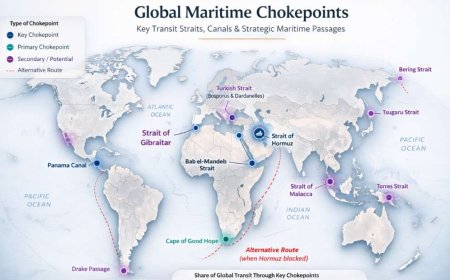
Iran possesses numerous avenues of retaliation. One possibility lies in its capacity to threaten energy infrastructure across the Gulf. Another lies in the disruption of maritime traffic through the Strait of Hormuz, the narrow channel through which roughly a fifth of the world’s traded oil passes. Even limited interference in this corridor could send shockwaves through global markets.
In an already volatile energy environment, such a shock could be dramatic. Oil prices are shaped not only by supply and demand but also by perceptions of risk. The mere possibility of disruption in the Persian Gulf can push markets into panic. If the main export terminal of one of the world’s largest oil producers were disabled, the psychological impact alone could drive prices upward.
This is why Kharg Island has long been treated as a kind of strategic red line in the region. Policymakers understand that the consequences of attacking it could extend far beyond the immediate battlefield.
The irony is that the island’s importance also exposes Iran to structural vulnerability. By concentrating such a large portion of its export infrastructure in one location, the country has created a single point of economic pressure. Any prolonged disruption could sharply reduce export capacity and government revenue.
This concentration reflects historical choices. Kharg began emerging as Iran’s primary export terminal in the 1960s when its infrastructure was developed with the involvement of international oil companies. The island’s deep waters, proximity to major oil fields and navigational advantages made it an ideal location for large-scale loading operations.
Over time, the island evolved into a complex industrial hub. Storage tanks, processing facilities, docks and pipelines were gradually added. Petrochemical plants began converting associated gas into products such as methanol, sulfur and propane. Workers’ housing, transport facilities and even academic institutions appeared, turning the island into a small but highly specialized community.
Despite its industrial character, Kharg remains geographically fragile. The island faces frequent storms and has limited land space. Its population is small, and much of its infrastructure exists to serve the oil industry.
That combination of vulnerability and importance has forced Iran to consider diversification strategies. Plans have been proposed to expand storage facilities on the mainland and to develop offshore infrastructure beyond the island itself. Yet such projects take time, and Kharg continues to dominate the country’s export system.
For the wider world, the island illustrates a deeper truth about the global energy order. Much of the system depends on a handful of geographic chokepoints. Pipelines, ports, canals and narrow sea lanes connect the supply chains that sustain modern economies. When one of those nodes becomes entangled in geopolitical confrontation, the consequences extend far beyond national borders.
In this sense, Kharg Island represents a microcosm of the fragile architecture underlying the global energy market. A small piece of land in the Persian Gulf has the potential to influence prices in New York, manufacturing costs in Europe and fuel bills in Asia.
There is also a broader strategic question that rarely receives sufficient attention. Modern warfare increasingly targets economic infrastructure rather than traditional military formations. Oil terminals, pipelines, power plants and ports have become instruments of pressure in conflicts across the world. The objective is not merely to defeat an enemy army but to weaken an adversary’s economic foundations.
That is precisely why policymakers tread carefully around it. Striking Kharg might promise immediate economic pressure on Iran, but it could also unleash consequences that no one fully controls. Energy markets could spiral, regional tensions could explode and global economic stability could be shaken.
In the tense chessboard of the Persian Gulf, this coral island remains both a prize and a warning. Whoever contemplates its fate must also confront the wider system it anchors. And that system, fragile and interconnected, has far more at stake than the fate of a single island.
H. M. Nazmul Alam is an Academic, Journalist, and Political Analyst based in Dhaka, Bangladesh.