



























































COP 31 and Bangladesh's Search for Climate Justice
The Loss and Damage Fund represents an important recognition of this reality. However, the existence of a fund does not automatically guarantee meaningful support.

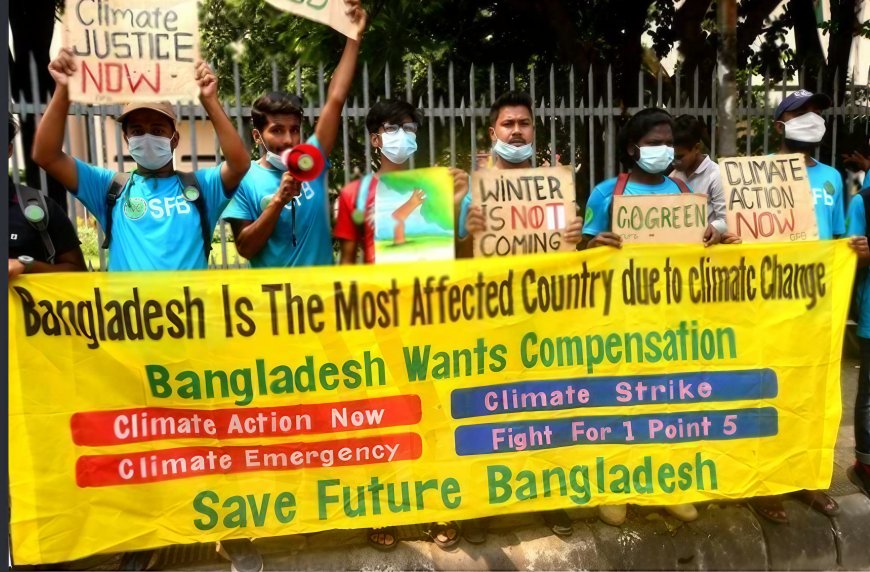
As world leaders prepare to gather in Antalya, Türkiye, for the 31st United Nations Climate Change Conference (COP31), Bangladesh has another opportunity to bring an uncomfortable question to the centre of international climate diplomacy.
How many more commitments must be made before climate finance actually reaches the communities living with the consequences of climate change?
For Bangladesh, climate change is not a distant environmental concern or an abstract discussion about global temperature targets. It is already shaping where people can live, what they can grow, how they earn their livelihoods, and whether they can remain in the places they call home.
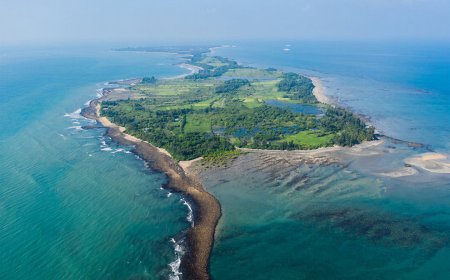
From the salinity-affected villages of the southwest to the erosion-prone riverbanks and flood-affected communities of the north, climate change is steadily transforming everyday life. While the consequences are experienced locally, much of the decision-making and financial negotiation takes place thousands of miles away.
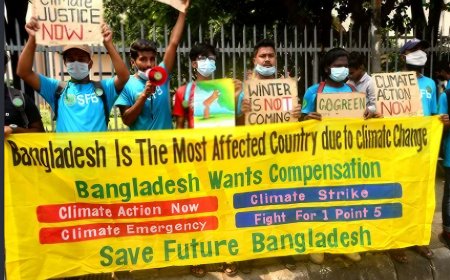
This is precisely why COP31 matters to Bangladesh. But its success should be measured by whether those commitments translate into meaningful protection for people who have contributed very little to the climate crisis but are paying an increasingly high price for it.
Bangladesh has repeatedly demonstrated its commitment to climate resilience. It has developed national adaptation plans, invested in disaster preparedness and strengthened its institutional response to climate-related challenges.
Communities have also developed their own ways of responding to recurring floods, cyclones, salinity intrusion and changing agricultural conditions. However, resilience cannot depend indefinitely on the ability of vulnerable communities to adjust to worsening conditions with limited resources.
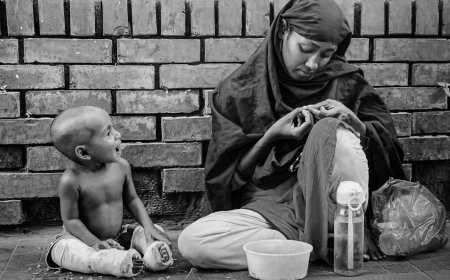
A farmer who repeatedly loses agricultural land to river erosion cannot rebuild a livelihood through determination alone. A family facing increasing salinity in its drinking water cannot be expected to solve a structural environmental problem through individual adaptation.
Nor can a household displaced by recurring floods simply recover without access to financial and institutional support. The financial gap makes this challenge particularly serious.
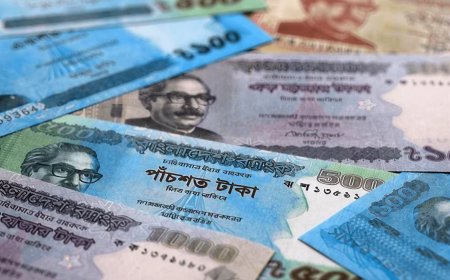
Bangladesh's Third Nationally Determined Contribution (NDC 3.0), submitted in 2025, recognises the country's dependence on international climate finance to meet its climate commitments.
The United Nations Development Programme has also highlighted that Bangladesh's annual climate finance requirements exceed US$26 billion, particularly for adaptation and addressing loss and damage.
One of the most important demands Bangladesh should advance at COP31 is the prioritisation of grant-based and highly concessional climate finance. There is a fundamental difference between financing climate adaptation through grants and financing it through loans.
When a country borrows to build infrastructure or recover from climate-related damage, it assumes an additional financial responsibility for a crisis it did little to create. For a country already managing development pressures, debt obligations and economic uncertainty, this can create another layer of vulnerability.
Climate finance must not become a mechanism through which vulnerable countries are expected to borrow their way out of a crisis they did not cause. This is particularly important when discussing loss and damage.
Adaptation can help communities prepare for future risks, but it cannot prevent every loss.
When land disappears through river erosion, homes become permanently uninhabitable or agricultural livelihoods are destroyed by repeated climate shocks; the damage cannot always be reversed through better planning.
The Loss and Damage Fund represents an important recognition of this reality. However, the existence of a fund does not automatically guarantee meaningful support.
Bangladesh needs accessible funding arrangements, transparent allocation criteria, and a process that does not impose excessive administrative requirements on countries and communities already struggling with climate impacts.
COP31 should therefore push for a clear distinction between adaptation finance and loss and damage support. Communities should not have to demonstrate that every loss can be economically recovered before receiving assistance.
Another concern is the gap between international climate finance and the communities it is intended to support. A climate project may appear successful in an international report because it has been approved, allocated a budget, or completed its initial implementation stage.
But these indicators do not necessarily reveal whether a vulnerable family has gained reliable access to drinking water, whether a farmer has recovered agricultural production, or whether a displaced household has found a sustainable livelihood.
For Bangladesh, climate finance must be evaluated through the experiences of the people receiving it. There must also be greater attention to the needs of people who are often overlooked in large-scale development planning, such as small farmers, landless households, women, people with disabilities, informal workers and climate-displaced families.
A successful climate programme should not simply build infrastructure. It should improve people's ability to maintain their livelihoods and access essential services even as environmental conditions become increasingly difficult.
Bangladesh also needs to strengthen its negotiating position through reliable evidence, clear funding priorities and coordinated diplomacy. Its experience can contribute to a wider discussion about the difficulties faced by climate-vulnerable countries, particularly those whose development prospects are increasingly affected by environmental risks.
COP31 will take place in a world where climate negotiations are increasingly judged by the distance between political promises and practical outcomes. For Bangladesh, this distance has real consequences.
The country does not need another conference where its vulnerability is acknowledged, but its financial demands remain unanswered. It needs a climate finance system that recognises responsibility, provides predictable support and allows affected communities to participate in decisions about their own futures.
The international community must recognise that climate justice cannot be achieved by asking vulnerable countries to become more resilient while leaving them to finance that resilience largely on their own. Responsibility must be reflected in the scale, quality and accessibility of financial support.
At the same time, Bangladesh must ensure that the resources it receives are managed transparently and reach those whose lives are being transformed by climate change.
Sanjida Nourin Jhinuk is an undergraduate student in the Department of International Relations at the University of Dhaka.