







































































The Lesson of the Chittagong Port Deal
The average citizen is no longer buying the old nationalistic slogans. They are tired of inefficiency, corruption, and delay. They have reached a pragmatic conclusion: they do not care who owns the cranes; they care about how fast the ships turn around.

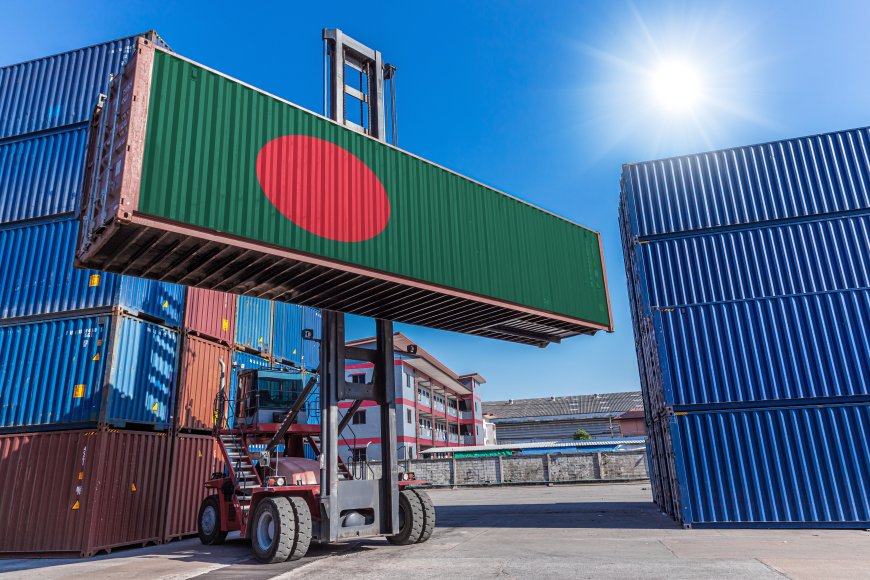
The impending deal with DP World to manage operations at the New Mooring Container Terminal (NCT) in Chittagong Port is more than just a commercial contract. It is a litmus test for the Bangladeshi national psyche.
While the decision has sparked predictable opposition from traditional political factions -- both left and right, including reservations from major parties like the BNP and Jamaat -- a quiet revolution is taking place on the ground.
For the first time, the Bangladeshi public is breaking with the historical dogma that critical infrastructure must remain strictly in state hands. While everyone is busy studying the impact of the July uprising on the political landscape -- traditionally focusing on the technical and ideological alliance among political factions -- this could be the real impact of the uprising: the end of economic nationalism.
The average citizen is no longer buying the old nationalistic slogans. They are tired of inefficiency, corruption, and delay. They have reached a pragmatic conclusion: they do not care who owns the cranes; they care about how fast the ships turn around. This shift signals a tectonic change in our political landscape: ideology is finally losing out to lived experience and economic realities.
The Myth of "In-House" Innovation
For decades, Bangladesh has approached reform with a defensive mindset. We act as if solutions must originate locally to safeguard sovereignty. But this insistence on "in-house" innovation has often served as a cover for maintaining entrenched syndicates and operational mediocrity. We must ask ourselves a hard question: Why reinvent the wheel when global best practices already exist?
The interim government’s move to delegate container operations to a proven global operator is an acknowledgment that "control" does not equal "power." In a globalized economy, power is delivery. Early indicators suggest the port is already seeing improved handling and reduced waiting times. This success shouldn't just be applauded; it should be studied and replicated.
A Blueprint for the Future
The port deal -- inviting global expertise to manage local assets -- should not remain an isolated experiment. With people’s wide acceptance of the deal, it offers a blueprint for rescuing other drowning sectors.
Take Bangladesh Railway (please!). It operates beyond capacity yet remains financially unsustainable and frequently unsafe. People do not need a state-run train; we need a safe, fast, reliable one. People do not care if the train runs in their area from Bangladesh Railway or Deutsche Bahn -- they only care if the train runs fast and on time.
Bangladesh is the most densely populated country on Earth; if high-frequency European-style rail cannot be profitable here, it should not succeed anywhere else.
Rather than trying to improve the outdated system on its own, we should invite operators like global successful operator Deutsche Bahn/Euro/Chinese/Japanese rail into a joint venture. The state provides land and labour; the partner provides the technology and operational discipline.
Consider education. We face a paradox of high youth unemployment alongside a shortage of skilled technicians. Instead of experimenting with underperforming different versions of vocational models, we could adopt Germany’s Ausbildung system -- a proven dual model of apprenticeship. A similar system has been successfully adapted in Japan, China, and Australia. Why are we trying to write a new curriculum from scratch when we can franchise a system that works?
Look at the postal service. The Bangladesh Post Office sits on a goldmine of real estate with a physical post office in every growth center and a vast countrywide network, yet it is largely obsolete. Its capacity is stacked in delivering non-perishable paper letters.
A collaboration with global logistics giants like DHL or FedEx could transform post offices into modern e-commerce hubs, lowering costs for rural businesses and reducing our reliance on dangerous highway trucking.
This would especially benefit the thousands of small entrepreneurs who sell products online but are unable to build connections with vast rural markets due to unreliable delivery options. With a DHL-style postal service, these young entrepreneurs could be registered and receive commercial services for their businesses, which could also help formalise the huge online commercial sector that is technically informal now.
Strengthening postal logistics with global giants would expand their reach, reduce dependence on highway trucks, and lower transportation costs for businesses nationwide.
Adopt, Adapt, Scale
This approach requires a new formula for governance: Adopt, Adapt, Scale. We must stop viewing external collaboration as a threat to sovereignty and start viewing it as a shortcut to development. We adopt internationally successful models, adapt them to the Bangladeshi context, and scale them through national institutions.
The public is currently miles ahead of the politicians. While political elites debate ownership, the people are demanding results. They are ready to accept solutions that deliver tangible improvements in daily life -- jobs, safety, and speed -- regardless of the operator’s passport.
The Chittagong Port debate is a turning point. It is a clear message to the political class to leave behind outdated assumptions. Bangladesh does not need to invent reform. It needs to import it, adapt it, and most importantly, deliver it.
Rayhanul Islam works for a development organization.