




















































Who Gains from the RMG Unrest?
Indian garment exports currently incur a 12% trade tax on entry into European shores. However, this long-embedded economic equation is about to change dramatically and immediately.

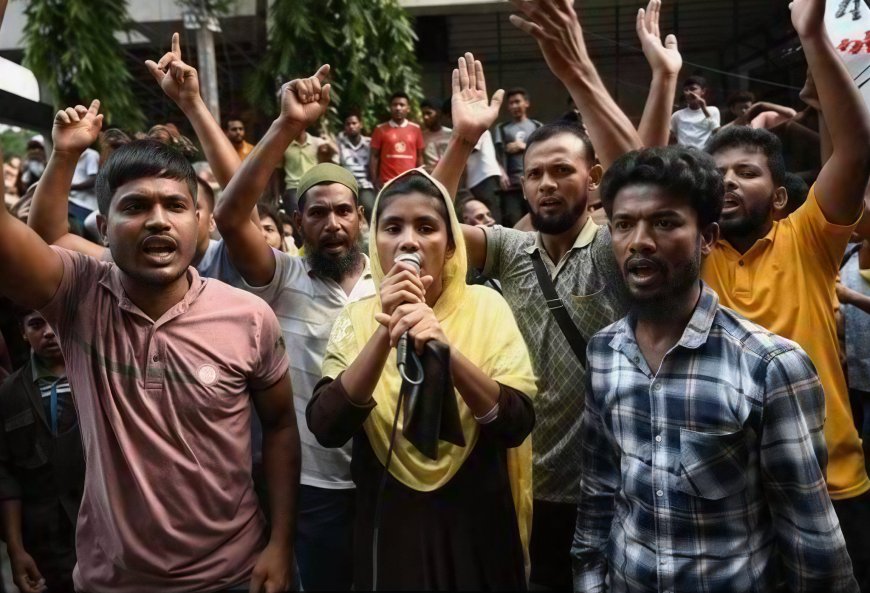
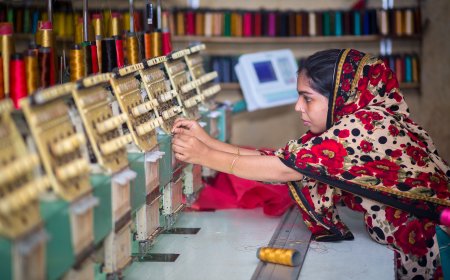
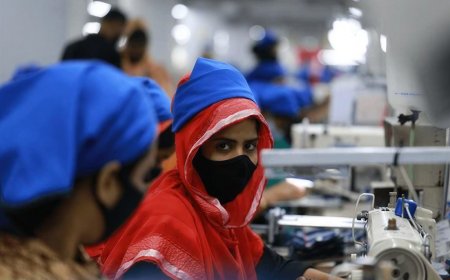
The undisputed heart of the economy of Bangladesh is the RMG sector. This industry is the engine driving our nation’s growth which gives livelihood to millions of people and also forms the backbone of macroeconomic stability of the country.
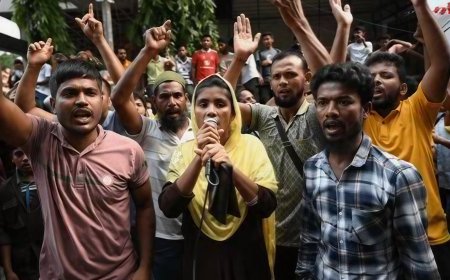
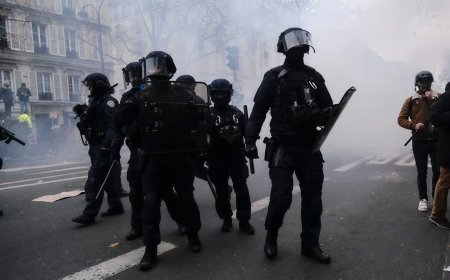
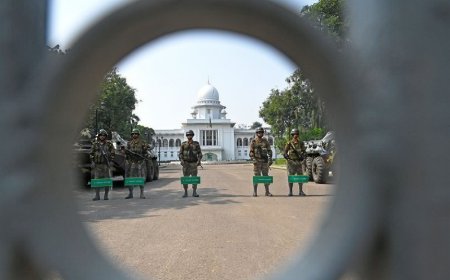
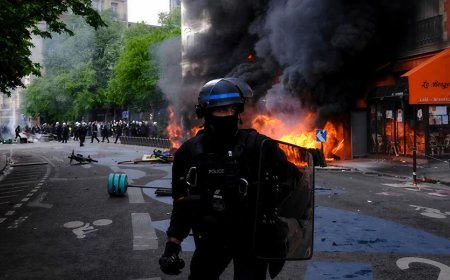
At this time, however, the sector is confronting a deep and multi-pronged crisis. A catastrophic spate of incidents targeting factories, including fire-setting, road blockades, arson, and disruption of cargo transportation, has recently impacted industrial regions.
What may seem to be an internal instance of labor unrest could, on deeper geo-political analysis, actually be the master plan of forces seeking to disrupt global supply chains and gain pre-eminence in the global apparel market.
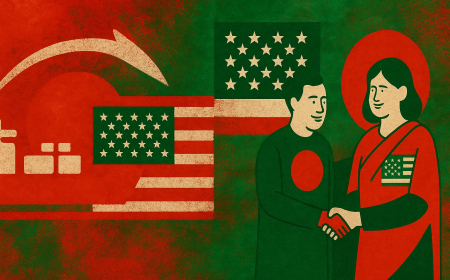
Bangladesh has monopolized the EU apparel market and maintained unchecked dominance in it for a long time. Current data clearly reflects this growing edge: Bangladesh has a 19.5% share of the EU apparel market. On the other hand, the neighbouring country of India has a share of only 4.5% in the same.
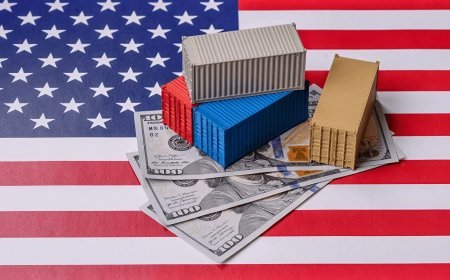
A major reason for this huge gap is the prevailing global trade structure; Indian garment exports currently incur a 12% trade tax on entry into European shores. However, this long-embedded economic equation is about to change dramatically and immediately.
A Free Trade Agreement between India and the EU, will almost certainly be signed sometime this December. Once this landmark agreement is executed, the 12% tariff levied on Indian apparel will drop straight to zero.
In other words, the unique zero-tariff advantage Bangladesh has gained over the years to attract international buyers will soon be granted to India, giving it the same “free entry ticket” to Europe.
With zero tariff access, it is extremely tough to take away Bangladesh’s 19.5 market share overnight. Bangladesh's stable supply and manufacturing capacity have positioned it well in Europe for many years.
In the past year, a new strategy has been launched to successfully overcome the barrier. It involves an innovative narrative war and a campaign of hybrid economic sabotage.
In October, one of the most egregious examples of such narrative warfare was when an Indian content creator named KK Creation was sent to Bangladesh on a particular mission.
This creator was deployed to infiltrate, film, and generate highly disparaging and manipulative video content about the internal operations of Bangladeshi garment factories.
Upon returning to India, this creator deliberately tagged the global fashion brand ZARA in these videos, framing the entire Bangladeshi textile sector as a crime scene. ZARA is targeted for a very strategic reason; Bangladeshi manufacturing is the backbone of ZARA’s global supply chain system.
The end plan is to destroy the production schedule
There is a precise, ruthless, and massively funded action plan in place on the ground to destroy Bangladesh’s international image. An enormous amount of money is being planned to be used for mobilizing certain workers to incite street protests, vandalizing factories, and disrupting the entire critical production schedules.
The engineered chaos intends to convey a message to foreign buyers that their goods will not be delivered on time if they source from Bangladesh. This sabotage wasn’t casual; the timing of this act is perfectly timed.
India’s zero-tax FTA is becoming effective in December; just then, European buyers will be approached strategically with an enticing alternative on the table: Do not take risks in Bangladesh; move your orders to our factories.
The ultimate goal of this grand masterplan is 2027. Before the first half of 2027, when global buyers will sit to sign new contracts worth billions of dollars, the conspirators want the RMG sector of Bangladesh to bleed and become crippled so that they can easily take over the whole European market.
Real Demands of Workers or a Sabotage Set-Up
While broaching the subject of this crisis, one has to recognize a highly sensitive and undeniable reality: The daily existence of the worker. Essential commodities' price in the last ten years increased by multiple folds like rice, pulse, oil, etc.
Garment workers are struggling with immense financial difficulty and have their backs completely against the wall. As a result, their demand for a hike in wages is 100% logical.
Recognizing this harsh truth, the government has already set up a Wage Board comprising owners, workers, and neutral entities, which is working to set a new minimum wage and review existing policy.
But the important question that arises here is that at the negotiations table, who is benefiting from the vandalism inside the factories on the street right now during the peak delivery season?
If factories are shut down because of violence and the workers are left without income, who will pay their wages at the end of the day?
The Concealed Designers and the Path Ahead
Leaked information indicates that huge financial resources are behind this massive sabotage of a project. Fallen political leaders are disgruntled. Also, some top crony capitalists and two or three fugitive former MPs are allegedly supplying the manpower, cadres, and instigating the violence.
They only want to cripple a country's finances and cut off the livelihood of millions of workers, only for the sake of their foreign masters.
To defeat this threat, widespread awareness, strategic action, and national unity are essential. Working people must know who uses their real feelings to destroy the country’s most essential export sector for good.
While maximizing physical security for the industries, the workers' logical wage demands must be implemented at the earliest.
If the factories do not survive, the workers are doomed. Unless the national economy is secured and the workers’ rights fully protected, it will not be possible for Bangladesh to shatter this domestic and international conspiracy.
Dr. Md Habibur Rahman is a Development Specialist, Folklorist, and Professor of Folklore and Social Development Studies at the University of Rajshahi, Bangladesh. He may be contacted at [email protected].
Md. Shihab Uddin is a volunteer at UNICEF Bangladesh, an independent researcher, and a student of Folklore and Social Development Studies at the University of Rajshahi. He may be contacted at [email protected].