




































































Emerging Markets Monitor
Key Stories Shaping Emerging Markets: Thai Election Fuels Stock Market Rise, EM Rises as Wall Street Looks Global, The Race for Brazil Rare Earths, US-Bangladesh Trade Deal, Uber Buys Getir Stake from Mubadala

Foreign Investors Pile Back into Thailand Stocks After Conservative Election Win
The Economist and Bloomberg
“For the first time this century, Thailand’s conservatives have won a general election outright. On February 8th voters awarded the Thai Pride Party (BJT) of Anutin Charnvirakul, the new prime minister, a surprise victory. The result could lead to an unusual run of political stability in a country that has mostly lacked it since the Asian financial crisis began in 1997. But it will delay, perhaps indefinitely, reforms to the monarchy and the armed forces championed by the liberal opposition. And it leaves core economic policy questions unanswered.” The Economist reports.
Investors cheered the news as “global funds piled back into Thai equities as a convincing win by incumbent Bhumjaithai Party in Sunday’s election paved the way for policy continuity,” Bloomberg reports.
“Foreigners bought $531.3 million of the nation’s stocks on a net basis on Monday, the most since February 2022, according to Bloomberg-compiled data. The inflows helped push the benchmark index 3.5% higher on Monday, making the gauge the best performer in Southeast Asia.”
“‘The initial results imply potential stability in the formation of a new coalition government,’ Citigroup Inc. analyst Preenapa Detchsri wrote in a report. ‘This could facilitate smoother rollout and execution of long-term policies, in contrast to the political changes experienced during 2023-2025.’”
“Improving sentiment as well as higher gold prices also boosted the local currency. The baht climbed for a third day on Tuesday, putting it closer to the highest since 2021.”
Wall Street Hunt for Cheaper Stocks Goes Global, Emerging Markets Take Lead
Wall Street Journal and Ed Yardeni Quick Takes
“Last spring, it was ‘Sell America.’ Now Wall Street’s hot trade is buy everywhere else.”
“After years making outsize bets on the largest U.S. companies, investors are moving more money into international markets, wagering that America’s wide lead on the rest of the world will shrink. For years, money managers say, the U.S. stock market was viewed as the only game in town. Now that perception is starting to shift.”
“Their optimism has been boosted by a number of developments abroad, from fiscal stimulus in Japan to a boom in European military spending. Some traders are simply hunting for better deals than the richly priced shares offered at home. Others are hoping to diversify out of major domestic indexes dominated by just a handful of names in the tech industry.”
“‘Right now, we’re in a global bull market,’ said Keith Lerner, chief investment officer at Truist Advisory Services. ‘It’s no longer just a U.S. story.’”
“Several global indexes have pulled ahead of major U.S. benchmarks so far in 2026, including the Stoxx Europe 600, Korea’s Kospi and the MSCI Emerging Markets Index…And last year, the MSCI all-country world ex-U.S. index surged 29% in dollar terms, logging its best performance in more than a decade and blowing past the S&P 500’s 16% gain.” The Wall Street Journal reports.
Meanwhile, Ed Yarden writes: “The US MSCI continues to underperform in the global stock market derby as it did last year. Does this mean that American exceptionalism, which was touted as recently as 2024, is kaput? Is this another sign of de-dollarization? We don’t think so. America remains exceptional, and foreigners continue to invest in the US. However, there are plenty of exceptional companies overseas that have also attracted global investors.”
“…So far, the star performers in the global MSCI derby have been South Korea, Brazil, Mexico, Taiwan, and Japan. All of them, except Japan, are included in the Emerging Markets MSCI.” Ed Yardeni writes.
Investing.com reports that “Asian stock markets extended tech-led gains on Tuesday, while Japanese shares outperformed, surging to fresh record highs as investors cheered the so-called ‘Takaichi trade’ following Prime Minister Sanae Takaichi’s election victory.”
“Regional sentiment was underpinned by an overnight rise on Wall Street, where U.S. stocks ended modestly higher. The Nasdaq rose more than its peers, lifted by the recent rebound in technology and AI-related stocks.”
Three Way Race for Brazil Rare Earths Goes Global
“A global race for Brazil’s vast deposits of rare earths is heating up, with the US, China and EU all vying for access to the minerals that are vital for an array of 21st-century technologies.”
“The Latin American nation’s reserves of the metals, the second-largest in the world, are in the crosshairs of both Washington and Brussels as they try to reduce dependence on China, the dominant producer which has a chokehold on supplies.”
“The EU is in talks to reach an agreement with Brazil for joint investments into critical raw materials, European Commission president Ursula von der Leyen said last month in Rio de Janeiro.”
“At least six mining ventures are developing prospects in Brazil, and several said they had been approached by Chinese groups, including investment funds and carmakers looking to secure material. Even without a government-to-government deal, Washington has committed more than half a billion dollars to Brazil’s only operational rare earths mine, operated by Serra Verde, making it a top investor in the nascent sector.” The FT reports.
US Cuts Bangladesh Tariffs to 19% in New Deal
Hindustan Times
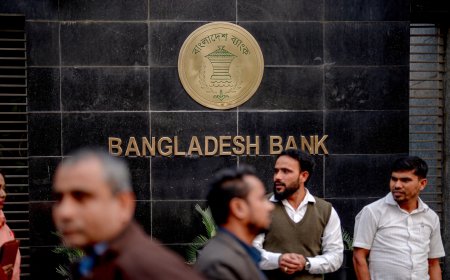
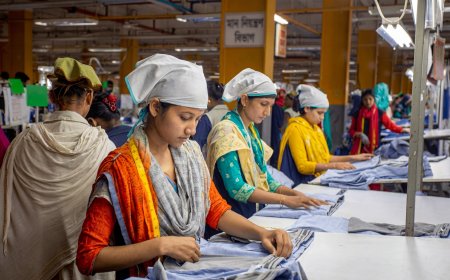
“Bangladesh has secured a lower 19 per cent US tariff under a trade agreement signed by the two countries on Monday, with exemptions for certain textiles and garments produced using US materials.
Bangladesh’s Chief Adviser Muhammad Yunus speaks via a televised address to the nation. (PTI)
“Muhammad Yunus, chief adviser to Bangladesh’s interim government, said Washington had ‘committed to creating a mechanism’ that would allow select Bangladeshi textile and apparel goods made with US-produced cotton and man-made fibre to enter the US market at zero reciprocal tariff.”
“The White House said Bangladesh has agreed to grant significant preferential market access to US industrial and agricultural products, including chemicals, medical devices, machinery, motor vehicles and parts, soy products, dairy items, beef, poultry, tree nuts and fruit.”
“It added that Bangladesh will also relax non-tariff barriers by accepting US vehicle safety and emissions standards, recognising US Food and Drug Administration certifications, and lifting import restrictions on remanufactured goods.” Hindustan Times reports.
Uber to Buy Getir’s Turkey Delivery Service from UAE’s Mubadala
Bloomberg
“Uber Technologies Inc. has agreed to buy Turkish company Getir’s delivery operations from its controlling shareholder Mubadala Investment Co. in a deal that will bolster the US company’s position in the Middle East.”
“The deal spans Getir’s entire delivery portfolio, including food, grocery, retail and water, Uber said in a statement on Monday. Uber will acquire the food delivery portion of the business for $335 million in cash, the company said in a regulatory filing. It will also take a 15% stake in the remaining grocery, retail and water delivery portfolio for $100 million, and plans to buy the rest in the ‘next few years’ if it meets certain performance milestones, it said.”
“The deal solidifies Uber’s ambitions to expand in a populous country with a growing middle class. Uber agreed to buy a $700 million stake in another Turkish delivery app, Trendyol Go, last May. It’s snapping up Getir relatively cheaply -- the delivery and commerce business was once valued at $11.8 billion at its peak, but withdrew from international markets last year after investor pressure to cut costs. It was later valued at $2.5 billion.”
“….Getir was founded in Istanbul in 2015, born out of co-founder Nazim Salur’s conviction that consumers wanted groceries delivered in 10 minutes or less, and his earlier experiences running local Uber clone BiTaksi.”
“…The rapid-delivery sector boomed during the pandemic, as consumers obeyed stay-at-home orders and did the bulk of their shopping online. Getir and its rivals raised vast troves of funding to fund international expansion and big discounts. But as pandemic restrictions eased, consumer habits changed and interest rates rose. Getir and its competitors such as GoPuff in the US and Zapp in the UK have cut staff and retreated from markets.” Bloomberg reports.