




































![A Ledger of the Soul: Navigating the Allah-Bhagavant Nexus in a 19th-Century Puruṣākāra Jñāna Caupara [Gyan Chauper]](https://counterpointbd.com/uploads/images/202608/image_430x256_6a93baa3b09a7.jpg)




















Nation-Building in Bangladesh and the Global South
Marginalizing Sylhet and other peripheral districts is more than a regional grievance. It is a strategic mistake that weakens Bangladesh’s national economy, even as policymakers tout the country’s global competitiveness. Yet it also reveals the contradictions and idiosyncrasies in modern nation-building exercises.
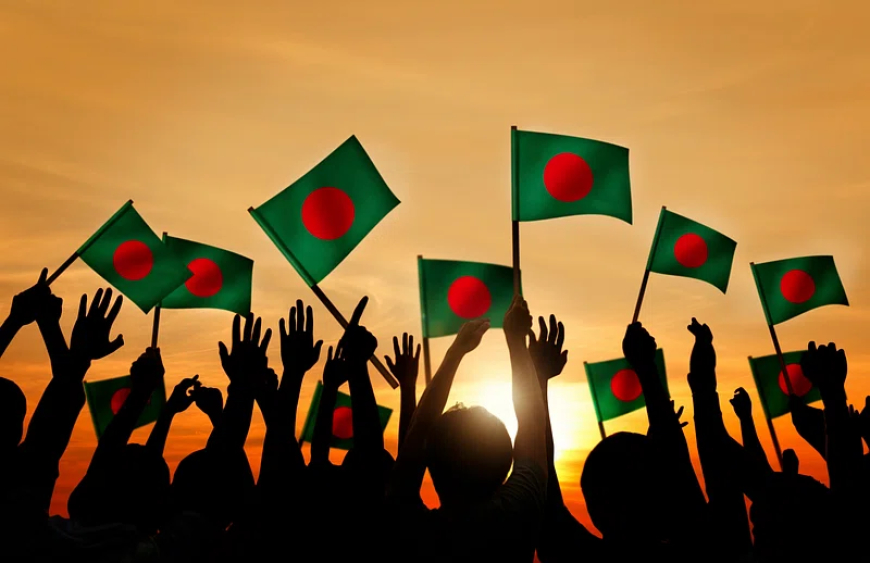
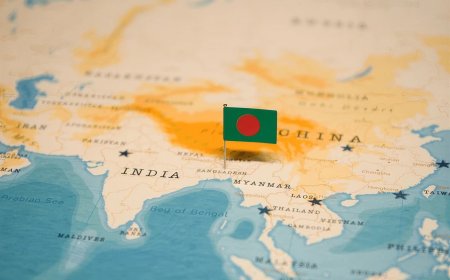
Since Bangladesh’s independence in 1971, the country has often been hailed as a story of resilience: From the wreckage of war, famine, and poverty, the country has emerged as one of the fastest-growing economies in Asia.
Yet beneath this budding success story lies a set of unresolved internal fractures that threaten the sustainability of its development, and offers stark lessons for the rest of the Global South.
Bangladesh’s ongoing experiments in nation-building are not undermined only by colonial legacies, ethnic or religious nationalism, exploitative and authoritarian neighbors, or global capitalism.
Its deepest challenges come from within: Entrenched hierarchies, center–periphery divides, and social prejudice that marginalize entire communities even as they power the national economy.
Dhaka at the Center, Peripheries at the Margins
Like many developing states, Bangladesh suffers from a stark imbalance between its capital and its regions. Dhaka dominates political and economic life, often at the expense of peripheral divisions. Sylhet is an especially telling case. Its diaspora sends home remittances equivalent to 11% of Bangladesh’s GDP, sustaining millions of households.
The region also contributes natural gas, tea, tourism, and hospitality. Yet Sylhet’s road infrastructure lags far behind. Highways linking it to Dhaka remain inadequate, and the long-delayed Dhaka–Sylhet–Tamabil highway has become one of South Asia’s most expensive road projects.
The pattern is familiar across South Asia and the Global South: Punjabis dominate Pakistan’s politics at the expense of Sindh and Balochistan; the ruling party’s iron grip over the national government increasingly sees New Delhi centralizing power over India’s states. Furtther afield, Lagos and Abuja overshadow both Nigeria’s Hausa-Fulani heartland in the North and the Igbo-dominated Niger Delta.
The Burden of Exclusionary Identity
Marginalizing Sylhet and other peripheral districts is more than a regional grievance. It is a strategic mistake that weakens Bangladesh’s national economy, even as policymakers tout the country’s global competitiveness. Yet it also reveals the contradictions and idiosyncrasies in modern nation-building exercises.
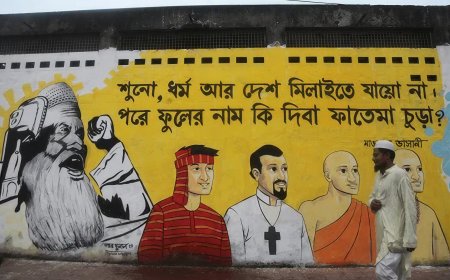
Bangladesh’s liberation struggle was rooted in the defense of Bengali language and culture, a powerful unifier against Pakistani domination. However, the same identity framework has since become exclusionary. Non-Bengali communities feel sidelined, while a Muslim-centered narrative marginalizes religious minorities.
A more inclusive national identity -- rooted in the shared geography of Bengal’s rivers and delta -- would better reflect the country’s rich tapestry of ethnic, religious, and linguistic diversity.
But centuries of entrenched hierarchies -- rooted since the founding of Dhaka and Sylhet cities themselves -- make such a shift politically difficult. These attitudes reveal tensions that continue to shape Bangladesh’s evolution as a modern nation-state.
Prejudice in Practice
Regional inequities are not only economic -- they are deeply social.
I recently spent almost a year getting to know a woman in accordance with halal protocols for the purposes of marriage whose parents hailed from Dhaka. When I met her parents, she mentioned my academic background -- particularly that I was a national-merit scholar at Vanderbilt University for my undergraduate studies and earned two law degrees -- which they expressed admiration for.
Yet in the same conversation, they casually made derogatory remarks about Sylhetis.
Her mother was astonished at my formal Bangla skills as she operated under the assumption that most Sylhetis don’t know Bangla -- not realizing my father worked with cabinet-level officials during his work with Brac and my mother was a top student at Dhaka University and taught me to recite classic Bangla poetry from Kazi Nazrul Islam and Rabindranath Tagore at community functions and international fairs.
Her father was adamant that Sylhetis were “unpatriotic,” despite talking to a man who has dedicated his career to working on Bangladesh projects and writing about Bangladesh policy issues.
They also did not realize that my family -- the Choudhurys of Sylhet -- has been central to Bangladesh’s nation-building. Members of my extended family have served as liberation-war heroes, generals (including a former Chief of Army Staff and head of the Anti-Corruption Commission), and cabinet advisors.
They have founded cancer hospitals, as well as NGOs that have educated tens of thousands of Bangladeshis, the vast majority of whom are not Sylheti.
Yet even with this exceptional legacy and despite living in the United States for 31 out of 36 of my years on this Earth, they simultaneously viewed me as Sylheti first and an “exception” to their pre-existing notions of Sylheti people -- jarring proof that prejudice, no matter how subtle, continues to shape belonging.
Elites and Dynasties
That encounter, while personal, revealed something structural: the quiet hierarchies that persist in societies even as they modernize.
In Dhaka, Sylhetis are often stereotyped as parochial or “unpatriotic,” despite Sylhet’s rich cultural and historical legacy and its people’s disproportionate contribution to the country’s economy and soft power image.
One wonders where Dhaka would be without Sylhet’s natural gas, tourism, foreign direct investment and remittances from its outsized diaspora, and its booming music industry.
Yet elites often knowingly or subconsciously rely on these crude stereotypes and caricatures as convenient shields to uncomfortable truths about how the periphery sustains and fuels the center -- often through exploitation and marginalization.
Similar prejudices affect Chittagongians, Rangpuris, and other peripheral groups. These cultural dynamics -- rarely discussed in development policy -- shape who is seen as credible, who is trusted, and who is allowed to lead. These hierarchies are so entrenched that even members of the diaspora cannot escape their long shadows.
These divides are further exacerbated by elite patronage networks and dynastic politics. Family rivalries and entrenched power blocs shape Bangladesh’s governance as much as ideology or policy.
The dynamic is hardly unique: Dynastic politics in Sri Lanka, Pakistan, and Kenya similarly constrain development by prioritizing family interests over national ones.
Lessons for the Global South
Bangladesh’s experience illustrates a broader truth about nation-building in the Global South. The most difficult obstacles are often internal, not external. For states to succeed, three imperatives stand out:
1. Identity must be inclusive. National belonging cannot rest on a single culture or religion.
2. Resources must be equitably distributed. Infrastructure investment must extend far beyond national capitals beyond mere decentralization of government services.
3. Internal divisions must be acknowledged. Pretending at unity only papers over and deepens fractures.
Despite recent challenges, Bangladesh’s emergence as a rising regional power has been remarkable. Yet its long-term stability and capacity for further economic and social development depends on confronting the inequities reproduced from within.
Inclusive nation-building requires a reckoning with deeply entrenched, systemic barriers to equality and equity for all of its citizens.
For a young, post-war nation that is often celebrated as a development success story, the harder task ahead is not sustaining economic growth, it is building a more inclusive and cohesive national community.
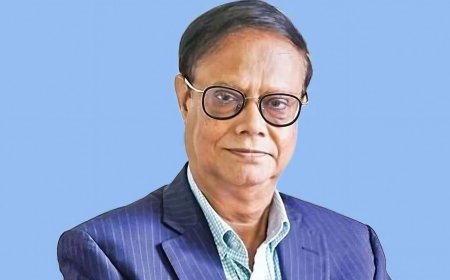
Atif Choudhury is Founder and CEO of the US-Bangladesh NextGen Fellowship & Policy Institute. This article was first published in LSE International Development. Reprinted by special arrangement.