























































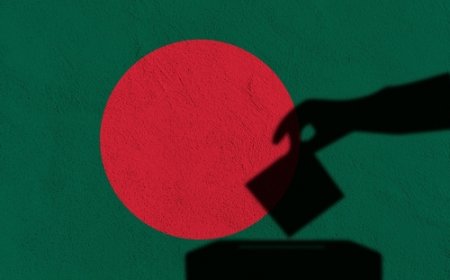
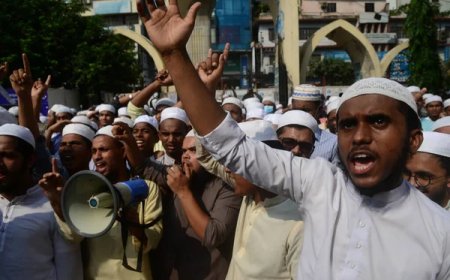
Banning the AL has led to a vacuum filled by the Jamaat-e-Islami, now the second largest party and arguably stronger and more hopeful than ever about transforming Bangladesh into an Islamic state.

With the election scheduled to take place in the coming days, the need to heighten and strengthen protective measures is now immediate and critical. Preventive security, early warning, and community engagement efforts must be intensified not only on polling day but throughout the pre-election and post-election period, particularly over the next month, when risks of retaliation and intimidation have historically been highest.
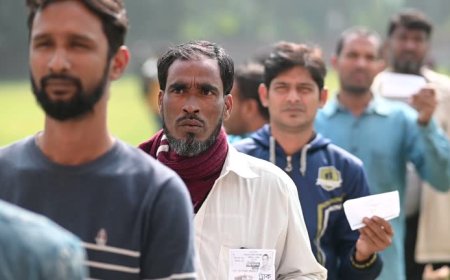
The polls close. One by one, the live streams flicker and die. The official pages go dormant, saving their energy for victory declarations or accusations of theft. The meme pages are quiet. The deepfake bazaar has shut its stalls. Your thumb, trained for twelve hours on a refresh-loop, finally has nothing to pull.
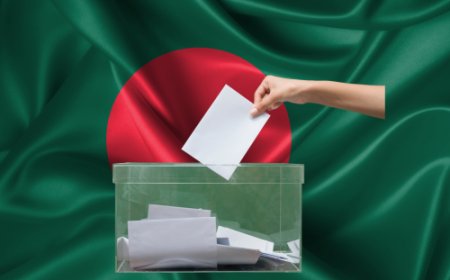
The question is not whether this election will solve all of Bangladesh’s problems, it will not. The real question is whether it can reopen a democratic pathway that has long been blocked.

Bangladesh has tremendous potential to grow both economically and institutionally but the growth depends on the trust that people and investors place in its institutions, and that trust is nurtured through elections that are fair, transparent, and conducted with integrity.

Trolling is hit-or-miss politics. It is unstable, often unserious, and frequently destructive to governance. But when it works, its impact is asymmetrical -- geometric, even gigantic-- compared to traditional campaigning.
The greater challenge lies not in predicting who will dominate a flawed structure, but in recognizing how much uncertainty -- political, institutional, and informational -- has been baked into its foundations and may reflect in the vote itself.

At the end of the day, the final test of this government is not whether the referendum passes or not, but whether they have been able to hold a credible election and whether the referendum process itself was managed without a hitch.

As Bangladesh prepares for the long-awaited national election, it is important to remember that strengthening democracy and building peace on the foundation of collective amnesia will be a disaster for our nation.
As Bangladesh enters into its first real general election since 2008, we will finally be given a snapshot of where the country stands electorally. Have the polls and the pundits called it correctly, or are we in for a February surprise? Only Election Day will tell.
Foreign observers will not, and cannot, answer the big questions. At best, they can marginally increase the reputational cost of blatant fraud. At worst, they offer political elites an easy scapegoat, deflecting public anger away from those who truly failed.
The lesson of recent first-past-the-post elections, from Britain to South Asia, is that victory belongs to the party that combines breadth with discipline. BNP has achieved the former. The task now is to execute the latter: Defend marginal constituencies, prioritize candidate quality, and treat every seat as winnable.
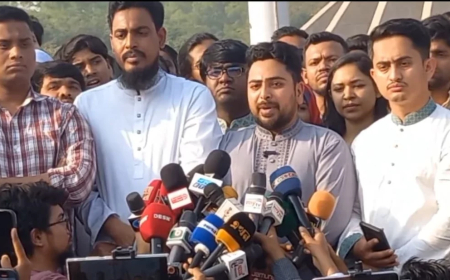
The NCP is still young. Its leaders are young. When it was launched, the response was electric; crowds gathered wherever it went. That energy is now waning. The atrophy has begun -- but it is not irreversible.

The notion that Jamaat-e-Islami is on the cusp of ruling Bangladesh tells us less about Bangladesh’s politics and more about the fantasies and anxieties of those observing it from insulated rooms.
Arithmetic still points to a BNP-led alliance winning, with a Jamaat-led alliance more likely to land as the principal opposition. The caveat is that Bangladesh has not had credible elections since 2008, so any confident prediction about voting behaviour is just that: An informed forecast, not a guarantee.
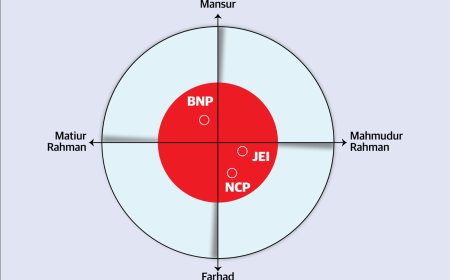
The axes of Bangladeshi politics have shifted dramatically. Where do the political parties line up in the new dynamic?