



























































The Election Bangladesh Needs but Isn’t Having
The timing could not be more appropriate. With election dates announced, the country has slipped into a familiar trance. What is striking is not what is being said, but what is being omitted. There is almost no sustained conversation about how Bangladesh will pay its bills, grow its industries, or persuade its own citizens to invest in their own country again.
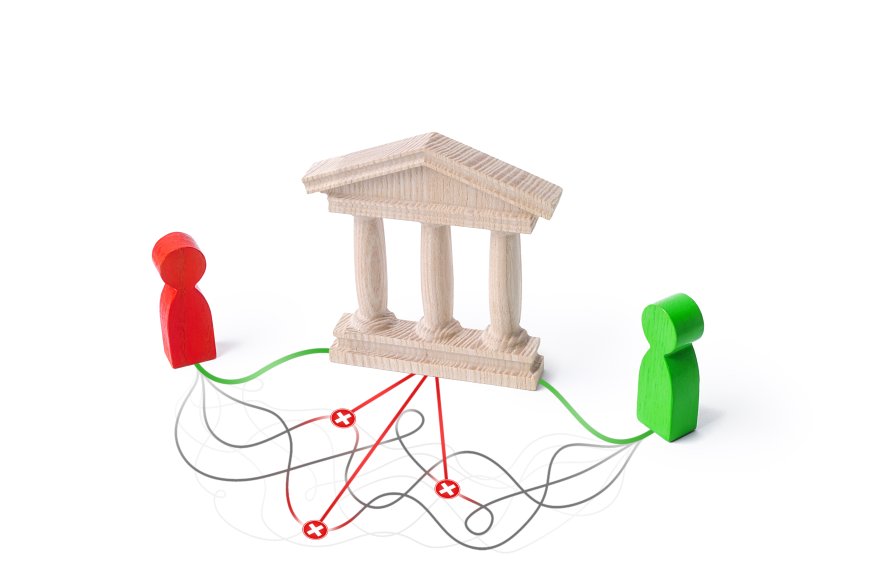
What Bangladesh needs now is a slogan less lyrical than sovereignty and less combustible than conspiracy. Something closer to Clinton’s blunt instrument from the 1990s from his first presidential campaign. In our context it might read, with deliberate inelegance: “It’s the economy, shadhinota rhetoric notwithstanding.”
Or, to keep it shorter and sharper: “It’s the economy, full stop.”
The timing could not be more appropriate. With election dates announced, the country has slipped into a familiar trance. 1947 is summoned like an ancestral ghost, 1971 invoked as moral capital, and 2024 framed as an existential reckoning.
Every rally is thick with the language of betrayal, conspiracies, and guardianship, of enemies within and hands without. What is striking is not what is being said, but what is being omitted. There is almost no sustained conversation about how Bangladesh will pay its bills, grow its industries, or persuade its own citizens to invest in their own country again.
Bangladesh today is not poor in symbolism. It is poor in foreign direct investment, short on confidence, and overexposed to debt service. The taka has been steadily losing value, not because of a single villain but because of a structural imbalance between ambition and capacity.
Megaprojects rise on the skyline like declarations of intent, yet the interest payments alone, roughly seven billion dollars plus annually, now sit on the national balance sheet like a silent austerity program. This is not an ideological problem. It is an arithmetic one.
The political class, however, prefers history to spreadsheets. History is elastic. It can be stretched, weaponized, romanticized. Economics is less forgiving.
A depreciating currency does not care who marched in 1971. Capital flight is unmoved by patriotic slogans. Investors, local and foreign, are not asking whether Bangladesh is sovereign. They are asking whether rules apply equally, whether contracts will be guaranteed and honoured, whether policy will change with every change of wind or minister, living them in a limbo.
In the journalistic tradition of puncturing grand narratives with inconvenient facts, one might note that Bangladesh’s most urgent sovereignty question today is not territorial or ideological. It is fiscal.
A country that cannot broaden its tax base, diversify its exports, or discipline its public enterprises gradually surrenders its autonomy to creditors, to commodity cycles, and to emergency negotiations conducted behind closed doors. Sovereignty erodes quietly, through balance of payments crises rather than border skirmishes.
Consider foreign direct investment. Bangladesh’s FDI inflows remain modest compared to peers who began the race at roughly the same starting line.
Vietnam, often cited admiringly but rarely studied seriously, did not achieve its gains through rhetorical unity. It did so by creating predictable industrial policy, decentralizing growth beyond its capital, and making peace with private capital rather than treating it as a necessary evil. Bangladesh, by contrast, continues to signal ambivalence.
Investors are welcomed in speeches and thwarted in practice, lost in regulatory thickets, traffic jams, and discretionary decision-making that rewards proximity over productivity, and as a result, FDI never crossed the USD 2 billion mark.
Then there is the concentration of wealth. Dhaka expands while districts hollow out. Real estate appreciates while manufacturing struggles to climb the value chain. A narrow elite accumulates assets, often sheltered from competition, while the informal economy absorbs millions with little protection and less mobility.
This is not merely unjust. It is economically inefficient. A level playing field is not a moral luxury. It is a growth strategy.
State-owned enterprises present another unexamined contradiction. Many of them are white elephants in the classical sense. They are expensive to maintain, politically sensitive to reform, and functionally detached from their original purpose. Privatization, the word itself, triggers ideological allergies across the spectrum.
Yet around the world, from Eastern Europe to parts of East Asia, the lesson has been less about selling assets cheaply and more about governance. Independent boards, professional management, partial listings, and transparent performance benchmarks have often delivered better outcomes than either total state control or reckless sell offs.
Bangladesh could study these models. It mostly chooses not to.
Development outside Dhaka remains a campaign slogan rather than a policy architecture. Infrastructure alone does not decentralize growth. Universities, healthcare, logistics, and decision-making authority do. Without them, expressways merely funnel people and capital back to the capital. The result is a metropolis that groans under its own weight and a hinterland that votes but does not prosper.
What is missing from the current campaign season is not passion. It is seriousness. There are no competing macroeconomic frameworks on offer.
MK Aref is the co-founder of AniMedCare.