


































![A Ledger of the Soul: Navigating the Allah-Bhagavant Nexus in a 19th-Century Puruṣākāra Jñāna Caupara [Gyan Chauper]](https://counterpointbd.com/uploads/images/202608/image_430x256_6a93baa3b09a7.jpg)



















Diplomatic Chatter and the Distortion of Political Truth
The notion that Jamaat-e-Islami is on the cusp of ruling Bangladesh tells us less about Bangladesh’s politics and more about the fantasies and anxieties of those observing it from insulated rooms.


In Bangladesh’s political history, many things have returned from the dead -- military strongmen, discredited doctrines, recycled promises. But one idea that stubbornly refuses to survive contact with reality is the recurring prediction that Jamaat-e-Islami is on the brink of state power.
This idea has now been revived not through electoral arithmetic or grassroots data, but through the much shakier foundation of off-the-record diplomatic chatter, filtered through journalists and amplified by an international media brand. The result is not insight, but confusion -- political, analytical, and ethical.
The claim that Jamaat-e-Islami is poised to achieve its best-ever electoral result, let alone emerge as a governing force, collapses under even minimal scrutiny. Bangladesh has a first-past-the-post parliamentary system where vote concentration matters far more than vote share.
Historically, Jamaat’s electoral performance has been modest, peaking at around 4-5 percent of the national vote in competitive elections. In 2001, widely considered its strongest showing, it won 17 out of 300 seats, not on its own strength but as part of a BNP-led alliance that transferred votes tactically.
Even then, Jamaat could not independently mobilize mass public support across constituencies.
Demographics make the picture even less favourable today. More than 60 percent of Bangladesh’s population is under the age of 35. Surveys by local research organisations and international bodies consistently show that younger voters prioritize employment, inflation control, education and mobility over ideological or religious governance.
In a country where the garment sector employs over four million workers -- nearly 60 percent of them women -- any party associated with restricting women’s participation in the workforce faces a structural disadvantage.
Bangladesh’s female labour force participation rate, while still low by global standards, has risen to around 42 percent, driven largely by export-oriented industries. This is not a marginal constituency; it is the backbone of the economy.
Against this backdrop, the suggestion that Jamaat could suddenly transform itself into a nationally dominant force sounds less like analysis and more like projection. Electoral politics in Bangladesh has always been brutally pragmatic.
Voters punish parties they believe threaten economic stability, international market access or social mobility. Jamaat’s attempts at rebranding -- talking up governance, anti-corruption and accountability -- are not new.
Similar language was used two decades ago, without fundamentally altering public perception. Rebranding does not erase institutional memory, particularly in a society where the trauma of 1971 still occupies moral and political space.
Yet the more troubling issue is not the overestimation of Jamaat’s electoral prospects, but how such overestimation is being laundered into public discourse. Off-the-record conversations are meant to provide background, context and nuance, not to become headline-shaping evidence.
When anonymous diplomatic remarks, made in informal settings, are treated as quasi-official signals of geopolitical intent, journalism slips from scrutiny into stenography. Worse, it becomes a participant in power games rather than an observer of them.
The ethical problem here is twofold.
First, anonymous sources with enormous power asymmetry are allowed to float speculative narratives without accountability. Second, local journalists who participate in these off-the-record spaces risk becoming conduits rather than interrogators.
The line between access journalism and compromised journalism becomes dangerously thin. In a media ecosystem already under pressure -- from political intimidation, economic precarity and declining public trust -- this is a risk Bangladesh cannot afford.
Trust in Bangladeshi media has been eroding steadily. According to the Reuters Institute Digital News Report, trust in news in South Asia remains significantly below the global average, with Bangladesh faring worse than many comparable countries.
Audiences increasingly believe that journalists are either aligned with political interests or chasing validation through international amplification. When narratives originating from whispered diplomatic assessments dominate headlines, the suspicion deepens that journalism is no longer grounded in field reporting, data or voter behaviour, but in elite echo chambers.
There is also a geopolitical naïveté at play. The idea that Washington can engineer or meaningfully shape Bangladesh’s electoral outcomes by selectively “befriending” political actors betrays a poor understanding of the country’s political sociology.
The United States is an important trade partner, absorbing roughly 20 percent of Bangladesh’s exports, mostly garments. But trade leverage does not automatically translate into electoral leverage. Bangladeshi voters do not vote based on perceived favour from foreign powers; if anything, overt external interest often produces nationalist backlash.
Moreover, the assumption that an Islamist party would be constrained into moderation purely by fear of economic retaliation oversimplifies political behaviour. History shows that ideological parties often miscalculate external pressure, especially when they believe domestic legitimacy or moral authority is at stake.
Betting on economic deterrence as a safeguard against policy radicalism is not strategy; it is hope masquerading as realism.
The regional implications further complicate the picture. Any suggestion that Islamist forces are being normalized or quietly courted by global powers inevitably feeds into India’s long-standing security anxieties, regardless of official reassurances.
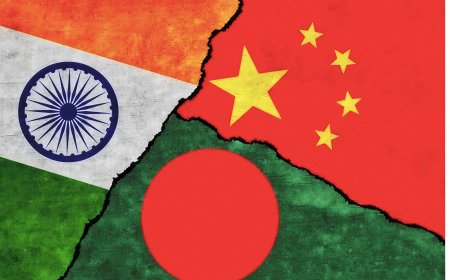
Bangladesh has historically balanced relations with India, China and the West through strategic ambiguity and pragmatic cooperation. Introducing speculative narratives about Islamist ascendancy into this already fragile equation risks destabilizing regional trust without delivering any tangible benefit.
None of this is to argue that Jamaat-e-Islami is irrelevant or that it should be analytically ignored. The party has organizational capacity, disciplined cadres and influence in certain social and educational networks. It will likely perform better than during periods of outright prohibition.
But there is a vast analytical distance between improved performance and state power. Collapsing that distance through careless reporting does not enlighten readers; it misleads them.
For journalism, the stakes are existential. When credibility shrinks, everything else follows -- readership, influence, and the moral authority to hold power accountable.
Bangladeshi journalists already operate in an environment where credibility is contested daily by politicians, online trolls and partisan platforms. Adding self-inflicted wounds through questionable sourcing practices only accelerates the decline.
Opinion journalism has a duty to interrogate power, not to be dazzled by it. Diplomatic gossip, however alluring, is not a substitute for electoral math, sociological data or historical memory. Nor is international validation a replacement for local legitimacy. If Bangladeshi journalism becomes too eager to impress foreign audiences or institutions, it risks losing the one audience that truly matters: Its own people.
The notion that Jamaat-e-Islami is on the cusp of ruling Bangladesh tells us less about Bangladesh’s politics and more about the fantasies and anxieties of those observing it from insulated rooms. Repeating those fantasies without rigorous challenge does not make them true; it merely makes journalism weaker.
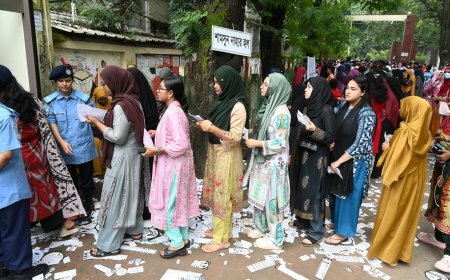
In the end, elections are not decided in embassies or at off-the-record meetings. They are decided in polling booths, by voters who understand their own interests far better than any diplomat or analyst projecting outcomes from afar. Journalism’s role is to reflect that reality, not to obscure it with whispers dressed up as foresight.
H. M. Nazmul Alam is an Academic, Journalist, and Political Analyst based in Dhaka, Bangladesh.