


































![A Ledger of the Soul: Navigating the Allah-Bhagavant Nexus in a 19th-Century Puruṣākāra Jñāna Caupara [Gyan Chauper]](https://counterpointbd.com/uploads/images/202608/image_430x256_6a93baa3b09a7.jpg)




















Why Peace Cannot Be Built on Division
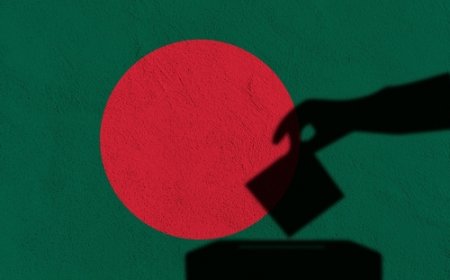
As Bangladesh prepares for the long-awaited national election, it is important to remember that strengthening democracy and building peace on the foundation of collective amnesia will be a disaster for our nation.

As Bangladesh prepares for the long-awaited national election and aspires to democratic renewal, it should reflect more than the future leadership. The country needs to focus on what kind of society we want to become.
The recent vandalism of Sufi shrines in Noakhali and Sunamganj, looted Hindu homes in Rangpur, violence in Chittagong Hill Tracts, assassination of political activist, and media offices set ablaze in Dhaka, all these point to a worrying direction.
Although the incidents and actors may look separate such as mobs, political groups, religious extremists, and even opportunistic criminals, but they all set a common narrative of fear, instability, and the collapse of trust.
Trust is broken in systems, institutions, people around us, and the very essence of living together.
It is important to remember that strengthening democracy and building peace on the foundation of collective amnesia will be a disaster for our nation.
While we denounce the brutality, violence, and human rights violations of the previous regime, it is equally important for us to remain unchanged by rejecting any sort of violence ourselves.
No justification of mob violence by the name of “pressure group” or “people’s anger” is acceptable. Such actions make peace fragile, break public trust, and destroy our aspiration for a just society.
Like fire, extreme anger and revenge destroy everything indiscriminately without any judgement, and when the smoke goes away, there is nothing renewed but the ashes remain.
There are different peaceful and constructive ways to protest, condemn, deconstruct, and challenge any ideology, regime, decision, system.
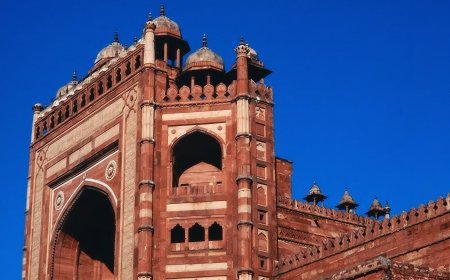
Instead of following peaceful approaches, burning symbols or portraits, destroying historical building, and setting fires at media offices, only deepen the devastation and division.
Over time, such actions breed fear, break trust, fuel intolerance, and sow grievance that gradually build a great wall of impediment on the way to lasting peace.
Tangible peace needs dialogue, resilience, collaboration and deliberate efforts to rebuild trust and hope.
As there is no silver bullet, therefore, understanding the underlying factors of the causes of crisis is the primary step if we would like to craft peace-centered policies.
Experts point to poor governance, weak institutions, religious extremism, radicalization, political instability, fabricated information are some of the key factors contributing to the ongoing fragile situation.
The aftermath of political violence, from the assassination of Sharif Osman Hadi to torching media houses, illustrates a breakdown of people’s trust in state institutions.
When people start thinking that formal systems and democratic institutions cannot deliver justice and protect their rights, they tend to take self-administered justice including mob justice.
Given the circumstances, solely relying on formal justice is insufficient to heal society and rebuild trust among people.
While it is crucial to hold all perpetrators accountable through due legal procedures, at the same time, it is also very important to run reconciliation mechanisms.
For instance, after the Rangpur mob attack, when the Hindu families came back home and found their ransacked homes and looted heirlooms, there was no initiative taken for reconciliation.
We saw no healing effort to let them sit with those who took part in the violence, remained silent, or stood by them. This is exactly where people start losing their ownership and trust over their neighbors, society, institutions, and the country as a whole.
Many of the people who were involved in Dhanmondi 32 attack and arson at the media houses were youths or students who lost their family members, companions, and beloved people killed by the state during the July uprising in 2024.
Therefore, their rage is not irrational, but it was never processed.
One of the key mistakes we made was failing to create a compassionate space where they could share their trauma, express anger, talk, listen, and slowly heal through mental health support, storytelling, anger management, mentorship, art, dialogue, and scriptural reasoning.
Analyzing the violent incidents, it is evident that the responses from police and local administration are often delayed.
For instance, the Sunamganj and Rangpur mob violence clearly portrayed slow response, flaws in early warning mechanism, and poor local level intelligence and prevention strategies.
Therefore, it is important to focus on fixing the gaps and develop community-based approaches to act proactively before violence escalates.
Along with security sector reform, it is essential to equip the security personnel with advanced training in de-escalation and non-lethal crowd control to avoid loss of lives and fatalities.
Debunking misinformation and disinformation are very vital to maintain stability during this fragile transition of Bangladesh. The absence of a coherent strategy has made the digital space a breeding ground for information disorder.
Consequently, online unrest, hatred, propaganda, extremist views, harmful narratives, and sociopolitical tensions are growing fast. To tackle such digital wildfire of fake news, it requires a collaborative approach among tech-savvy police units, fact-checkers, religious leaders, youths, and community leaders.
They can be trained with digital media literacy, advanced skills and tools to identify fabricated news, and help to stop spreading misleading content before those leads to violence.
Md Sariful Islam is a Development Professional and Peacebuilding Expert.