

























![A Ledger of the Soul: Navigating the Allah-Bhagavant Nexus in a 19th-Century Puruṣākāra Jñāna Caupara [Gyan Chauper]](https://counterpointbd.com/uploads/images/202608/image_430x256_6a93baa3b09a7.jpg)



















Why I Am Not Officially Observing The 2026 Election
Foreign observers will not, and cannot, answer the big questions. At best, they can marginally increase the reputational cost of blatant fraud. At worst, they offer political elites an easy scapegoat, deflecting public anger away from those who truly failed.
In the 2024 election, my visa as an official international observer was rejected. In 2026, I chose not to apply. Our organization will instead sponsor five national observers.
Why?
First, with something like 500 international observers flying in, I will not be missed. There is, however, a larger issue at stake: A long-overdue shift of attention and resources back to those who live with the results of their reports, the local observers.
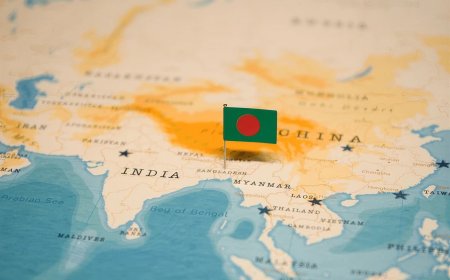
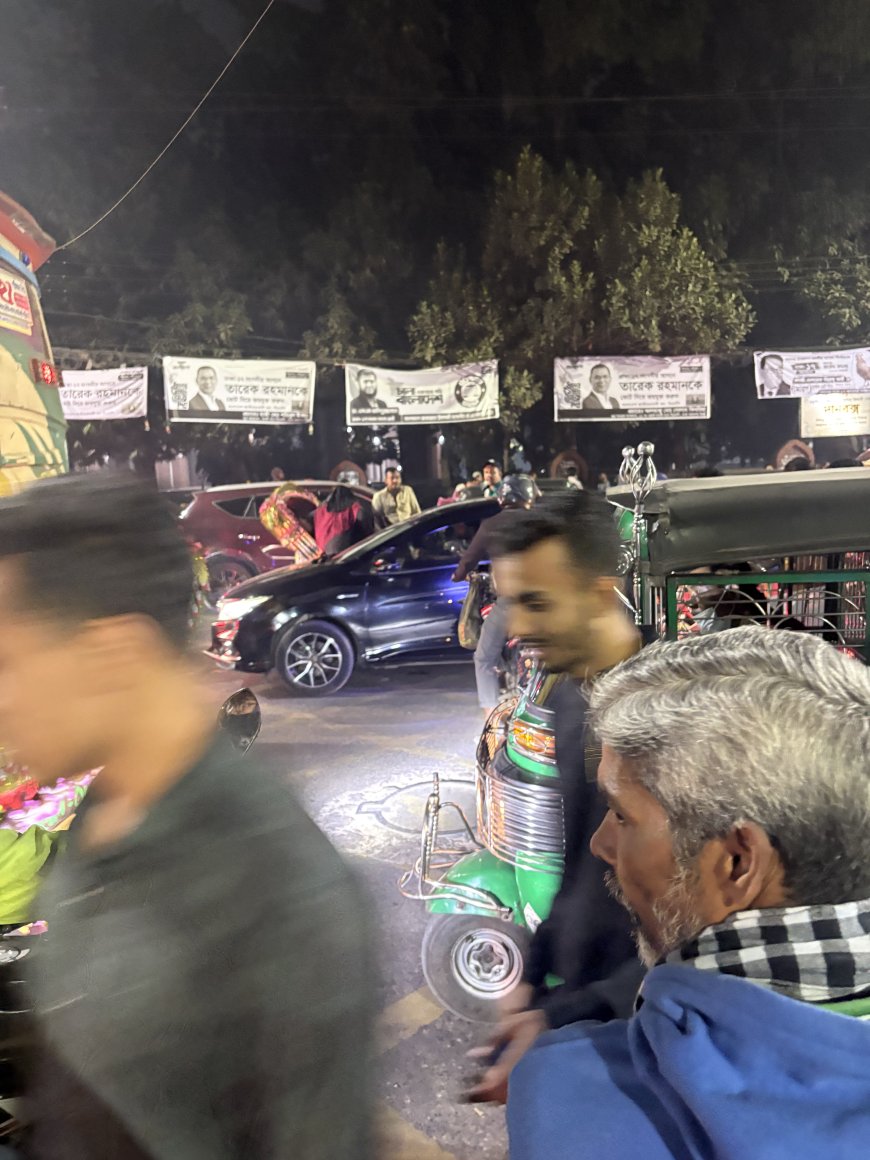
Once again, Bangladesh provides the leading example. In 2024, the electoral question was brutal in its simplicity: “Is the government rigging the vote again?”
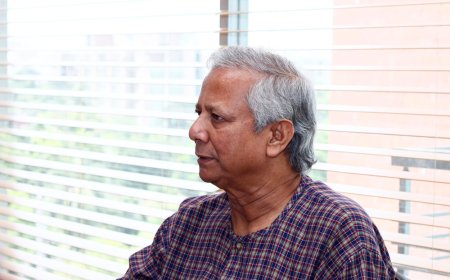
In 2026, with an interim government under Muhammad Yunus, the question is more demanding: “Will Bangladesh’s leaders, candidates, and workers finally accept that they either obey the law or lose votes?”
Dr Yunus’s caretaker administration, whatever its defects, is not simply the Awami League’s electoral machine wearing a different hat.
This election is different. Yunus has promised to repair wrecked institutions and preside over the most open election and referendum the country has seen.
The test is no longer whether the old regime can steal another mandate, but whether the new order can submit itself to rules it wrote for everyone else.
Are 500 overseas observers really necessary to determine whether the Election Commission, the courts, the parties, and the security services are doing their jobs fairly and competently? Can they? Should they?
These are not rhetorical questions. They go to the heart of a forty-year experiment in organized election observation that still hesitates to utter the simplest verdict: “The government stole the election.”
Too often, the reports are padded with diplomatic evasions, carefully delayed until well after ballots are counted. Without sharper judgments, it becomes harder to justify the costs and choreography of modern international observer missions. Their checklists grow thicker, their language thinner.
It is no surprise, then, that skepticism has grown about what these missions actually do. Are they there to certify that a pre-agreed list of bureaucratic requirements has been technically met, or to say something meaningful about whether citizens were able to choose their rulers?
Scholars such as Susan Hyde, Pippa Norris, and Toby James -- through efforts like the Electoral Integrity Project -- have pointed toward a simple but elusive conclusion: The future lies less in measuring local imperfections than in reinforcing the capacity to reduce the abuses through own efforts.
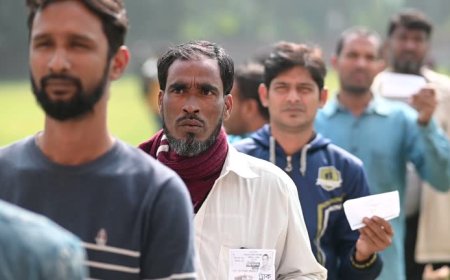
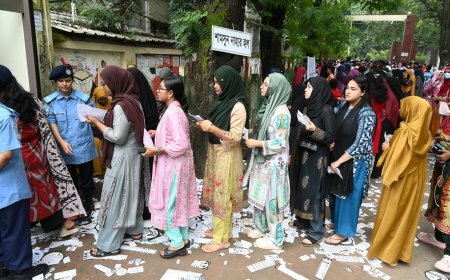
On that account, the citizen scrutineer becomes both the heart of electoral validation and the lead story, not the afterthought. The most important drama on election day in Bangladesh will not be played out in a hotel ballroom press conference in English, but in cramped polling stations and busy counting centers where local observers stand their ground.
The 2026 election, in that sense, has created three new expectations.
1. Parties accept the possibility of defeat without reaching reflexively for the street or the barracks.
2. Citizens come to believe they possess more power inside the polling booth than they do by hiding at home or rioting outside.
3. Institutions behave less like disengaged ushers and more like fully engaged boxing referees, able to enforce the rules, and, when necessary, stop the fight.
Foreign observers will not, and cannot, answer those questions. At best, they can marginally increase the reputational cost of blatant fraud. At worst, they offer political elites an easy scapegoat, deflecting public anger away from those who truly failed.
If that is the landscape, I doubt I can improve upon the work of my Bangladeshi colleagues. They know the parties, the neighborhoods, the thugs, and the promises. Their presence at a polling station means more than my lanyard card.
So what now? I will watch rather than “observe.” I will read what domestic publications have to say and listen to Bangladeshi media and activists. I will spend my time talking. My method will be casual empiricism, unworthy of a press conference with coloured slides.
If all goes well, some colleagues and I hope to shape these impressions and findings into an interpretive book on the 2026 election, placing this vote within Bangladesh’s unfinished revolution.
None of this should be taken as a slight against the individuals who serve on international observer missions. They are, as a rule, talented, industrious, and sincere. But the movement for large, headline-grabbing delegations -- descended from the age of President Carter’s personal interventions -- has quietly lost its raison d’être.
There is still a great deal that international democrats can do. It is simply not confined to the brief, glamorous weeks of an election campaign.
The real work lies with national activists and organizations in the long, dull seasons between elections.
Owen Lippert (PhD Notre Dame) has worked in Bangladesh on and off since 2003, as a Chief of Party for NDI and Democracy International, a consultant for DFID and UNDP, and the private sector. In his native Canada, he advised Stephen Harper when in Opposition and as Prime Minister on democracy promotion. He currently heads an NGO, Opposition International.