
























































Fear, Fragmentation, and an Uncertain Election
The greater challenge lies not in predicting who will dominate a flawed structure, but in recognizing how much uncertainty -- political, institutional, and informational -- has been baked into its foundations and may reflect in the vote itself.

An Election Shaped by Anxiety
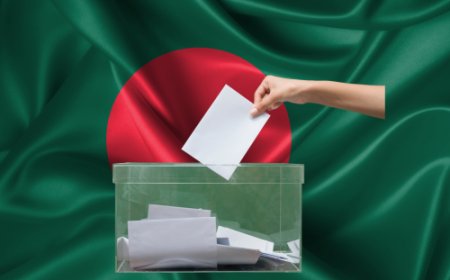
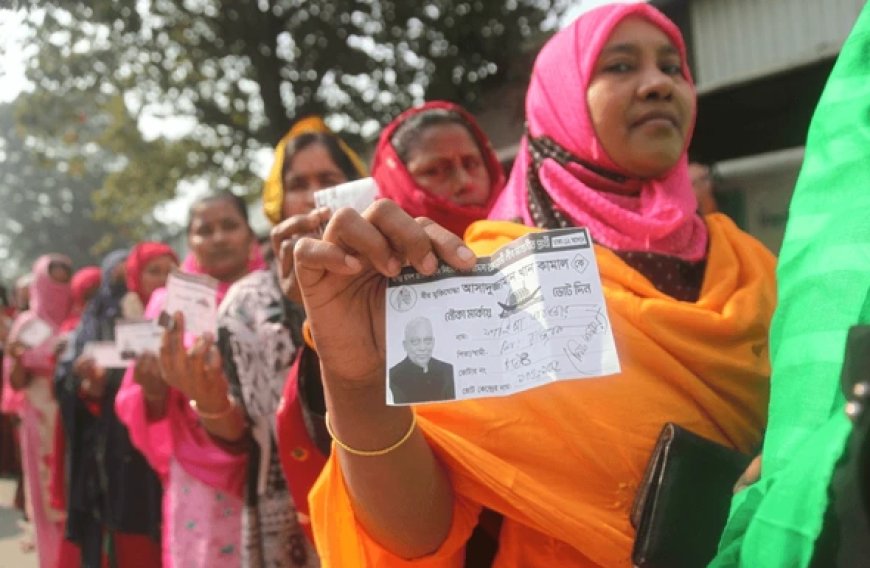
Commentary on Bangladesh’s upcoming election is unfolding in an atmosphere of anxiety. Strong claims are being made about outcomes at a moment when the basic conditions of competition remain unsettled. Party participation is uneven and confidence in the process is fragile.
This anxiety follows a period of political upheaval that has disrupted long-standing assumptions without resolving the structure of electoral competition. In this environment, interpretation has begun to outpace information, and partial signals are being asked to explain too much. Consequently, fear is increasingly substituting for analysis.
A Contested Electoral Field
Wherever one stands on the ban of the Awami League, its absence from the electoral field introduces a structural asymmetry. Once a dominant party is excluded, the election ceases to function as a straightforward test of voter preference, making it harder to interpret what is shaping voter behaviour.
The ban has heightened the sense that the contest is taking place under exceptional and unsettled conditions -- intensifying speculation, raising the stakes of subsequent developments, and reinforcing the perception that the rules of competition remain in flux. Even where procedures are formally followed, the political meaning of the contest becomes less clear.
Under these conditions, voter behaviour shifts. Some disengage, others hesitate, and some vote strategically rather than sincerely. Turnout reflects not only enthusiasm, but caution and uncertainty. Results, even when cleanly counted, are read through doubt rather than confidence.
The BNP, while participating, enters this environment in a weakened position after years of repression, internal strain, and lingering doubts about the process.
Jamaat-e-Islami has emerged as a prominent presence in this narrowed field. Prominence in a constrained contest should not be mistaken for evidence of a sweeping electoral shift. In a post-authoritarian moment marked by institutional uncertainty, highly visible and vocal actors often appear more dominant than they are in the absence of stabilizing reference points.
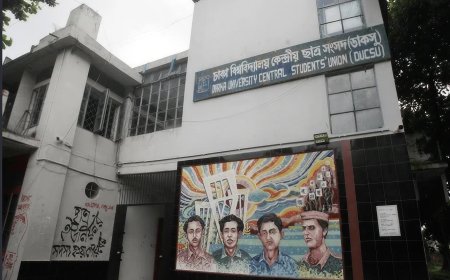
Student elections and street politics reinforce this pattern. Campus victories are often treated as early indicators of national outcomes, but they have rarely functioned as reliable litmus tests.
Historically, student unions in Bangladesh have frequently been dominated by leftist or oppositional forces without translating into corresponding dominance in national elections. Campus politics operates within a distinct institutional and demographic space.
Street politics operates differently again. Visible control of public space -- often described as elaka dokhol, the occupation of territory -- signals organization and the capacity to intimidate, not consensus. It shapes who feels safe speaking or mobilizing but is rarely a reliable indicator of how people vote when given a ballot. What is being read as momentum is more often the visibility of power under conditions of uncertainty.
Under these conditions, Jamaat and aligned groups are likely to perform better than their historical baseline (between 4-12 percent) because they enter a field with weakened competitors and can mobilize their organizational base. The question, however, is not whether they gain ground, but whether those gains reflect a sweeping mandate or a fragmented outcome shaped by constrained competition.
Voters, Locality, Labour, and Political Judgment
Much of the current commentary assumes that voters, especially rural and working-class voters, have undergone a decisive ideological shift, driven primarily by religion. This assumption says more about elite anxiety than about how people actually make political decisions.
For most voters, politics continues to be judged through practical concerns like the cost of living, access to work, debt, crop prices, roads, transport, and whether someone can intervene when things go wrong.
This is how people experience the state every day. Nothing in the current moment suggests that these calculations have suddenly been displaced by abstract ideological commitments.
This is where many readings of the July movement overreach. July mattered. It altered the tone of politics, especially in Dhaka, and disrupted a long-standing sense of inevitability.
But it did not produce a shared national project, and it did not realign electoral incentives in any uniform way. On questions of Islamist politics in particular, fragmentation was immediate and visible.
Outside major urban centres, July was not ignored. People heard about it, discussed it, and formed views. But they filtered these debates through local realities. When the dominant post-July conversation focused on constitutional reform, commissions, and charters, many voters likely did not see how those debates connected to their own lives.
Dhaka is not disconnected -- labour, remittances, and family ties bind city and countryside closely. The problem is not distance but direction. Political language travels outward from the capital; but everyday economic realities rarely travel back.
What is experienced in Dhaka as political renewal often arrives elsewhere as abstraction. Agrarian distress, labour precarity, rural infrastructure, and everyday economic survival remain largely absent from the loudest national conversations.
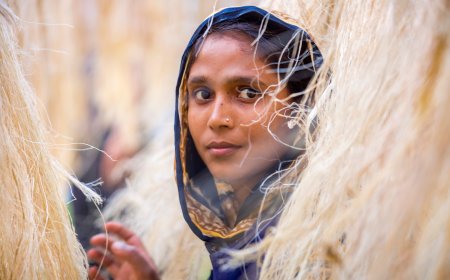
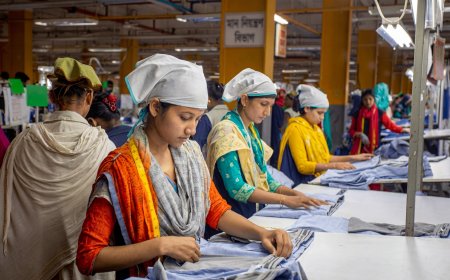
Labour precarity sharpens this pattern. According to the Bangladesh Labour Force Survey 2022, roughly 85 per cent of the workforce is employed informally. Among working women, the figure exceeds 96 per cent. Large numbers of people working in cities like Dhaka -- drivers, domestic workers, garment workers, construction labourers -- cannot simply leave work, travel home, or risk losing wages in order to vote. For someone living on daily or weekly earnings, missing even a single day of work has immediate consequences.
These constraints extend beyond urban informal labour. A significant share of the economy is also sustained by internal and overseas migrant workers, whose mobility is shaped by contracts, debt, and the constant risk of income loss.
Even where overseas voting is formally available, participation is likely to be uneven. For large segments of the migrant workforce, long hours, restrictive contracts, distance from embassies, and fear of employer retaliation make voting difficult or costly.
Migrant workers often influence political discussions within their families, particularly as primary earners. But influence does not guarantee alignment, nor does it ensure turnout. Family members may still vote -- or abstain -- within their own local constraints, pressures, and calculations.
Taken together, for a large segment of the labouring populace, whether voting preferences translate into turnout depends on who can afford to travel, who feels safe voting, and whether participation feels worth the cost. Low turnout or muted mobilization is often read as apathy or ideological sway. In many cases, the explanation is simpler. Participation itself is unevenly distributed.
Local political structure reinforces this caution. Years of weakened local government have pushed MPs into the role of intermediaries -- brokers of access rather than representatives of policy.
Political power at the constituency level has also become increasingly dynastic, with family names circulating as political capital. Politics, in this context, tends to be extractive and transactional rather than responsive.
It is against this backdrop that the absence of agrarian and labour concerns from national political debate becomes especially telling. Where livelihoods remain precarious and unaddressed, voting behaviour tends to remain cautious and pragmatic.
That persistence is now being misread as ideological change. There is little reason to expect uniform outcomes across different constituencies. Electoral behaviour in Bangladesh has historically tended to be locally inflected.
Women, Erasure, and the Limits of Democratic Legitimacy
Women are not a marginal constituency in this election; they are a test of democratic plausibility. Yet women have been consistently sidelined from the political imagination of the transition. Outside the Women’s Commission, most reform bodies and decision-making spaces have featured minimal or token female representation.
Women’s political agency has been siloed rather than integrated into the core of democratic debate.
This erasure extends to the July Movement. Women played visible and sustaining roles during July, yet public narratives of the movement have been overwhelmingly masculinized. Organizing, care work, and economic labour -- spaces where women are central -- rarely appear in accounts of political change.
At the same time, Islamist actors have articulated positions that directly undermine women’s autonomy, including questioning women’s participation in paid work and public life. These positions carry material consequences in a country where women’s labour sustains households, export industries, and entire sectors of the economy.
A democracy built by excluding the women who sustain the economy and the social fabric can hardly sustain itself.
A Climate of Fear
Concerns about electoral credibility have been amplified by a climate of fear and institutional hesitation. Street violence, targeted intimidation, and unresolved cases raise doubts about whether the process will be safe or accepted by all parties. Media and civil society, exhausted after years of authoritarian constraint and operating under fear of retaliation, have produced uneven scrutiny.
Coverage of reforms has often tilted toward official narratives, while scepticism circulates more freely through informal networks. Disinformation further complicates this environment, contributing to confusion and distrust. In such conditions, perception itself becomes politically consequential.
Calls by some groups to postpone the election reflect this broader uncertainty. These demands are less about ideology than about confidence -- whether the process feels credible enough to justify participation at all.
Where confidence in neutrality is thin, even procedurally sound elections may fail to generate legitimacy. The danger lies less in immediate disruption than in contested post-election results and prolonged uncertainty, which can spill into the streets after the ballots are counted.
Reading Uncertainty
Given the variables we can reasonably observe, a sweeping ideological realignment would require dramatic intervening conditions that are not currently evident. Jamaat and aligned groups may well perform above their historical baseline. Organizational capacity in a weakened field makes this likely.
Even significant gains, however, are more likely to produce fragmented pluralities than commanding or sweeping majorities -- and fragmentation in a weakened institutional environment carries its own risks.
The greater challenge lies not in predicting who will dominate a flawed structure, but in recognizing how much uncertainty -- political, institutional, and informational -- has been baked into its foundations and may reflect in the vote itself.
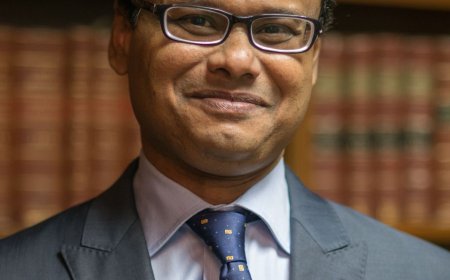
Dr. Cynthia Farid is an Advocate of the Supreme Court of Bangladesh and a legal scholar affiliated with the Chinese University of Hong Kong.