




































































Marginalizing Sylhet and other peripheral districts is more than a regional grievance. It is a strategic mistake that weakens Bangladesh’s national economy, even as policymakers tout the country’s global competitiveness. Yet it also reveals the contradictions and idiosyncrasies in modern nation-building exercises.

The logical way forward is for the government to ensure that all large producers of perishable agricultural commodities set up daily auctions. Then government agencies can ensure fair prices by auditing the records of the auctions.

That the stability and sustainability of Bangladesh’s renewed tryst with democracy will depend on how maturely Tarique Rahman deals with the thorny issue of Sheikh Hasina and the Awami League.
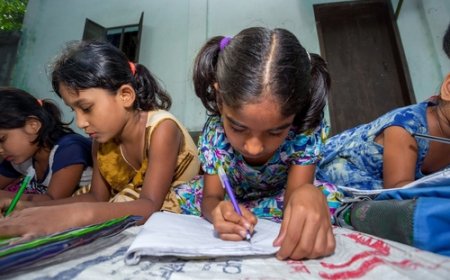
In the end, the controversy is not about a mechanism. It is about a mindset. It reveals a society that remains deeply anxious about opportunity and deeply divided in access to it.

International law and global stability are not distant abstractions for Bangladesh but essential pillars of economic resilience and national planning.
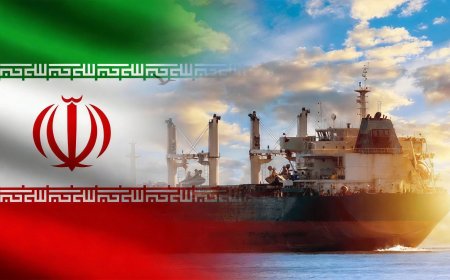
For the first time in decades, the United States risks strategic isolation within its own alliance network. If the United States is perceived as an unreliable negotiating partner, future mediation efforts -- both in the Middle East and beyond -- may suffer.

If the UN cannot prevent wars, cannot restrain powerful states, or even name the aggressors, then the world must confront an uncomfortable question: Is the United Nations still fulfilling its founding mission?
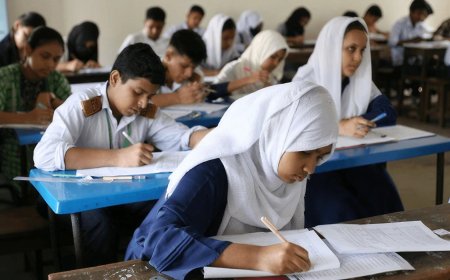
The education system of Bangladesh is not merely a ministry. It is one of the largest social systems in the world. Running such a system is not simply a policy challenge. It is an administrative challenge of almost unimaginable scale.

The Rohingya are not “fully dependent” on anyone. They are dependent only to the extent that they have been made dependent -- by design, by policy, and by a system that manages dependency rather than ending it.

The transition from cash to digital is not merely a technological shift; it is an institutional reform. It requires aligning incentives, building trust, and modernizing infrastructure. But the alternative -- continuing cycles of raids, fines, allegations of harassment, and persistent opacity -- offers little hope for sustainable market discipline.
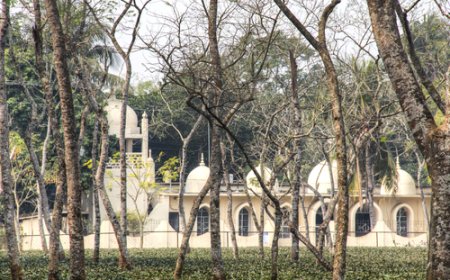
The sun of prosperity eclipsed for the Syeds in Taraf, as this land was conquered by the Kingdom of Tripura, which was at Bangladesh’s eastern border.

Reviving Saarc is a Sisyphean task, but it is one Bangladesh is uniquely positioned to undertake. In a world of hardening blocs, South Asia cannot afford to be the only region without a voice.

Both the USA and Israel have adopted evasive strategies influenced by various factors, such as diverting attention from the Epstein scandal, preventing Iran from developing a nuclear weapon despite Iran repeatedly denying its intent through negotiations in Geneva, the potential failure of Trump’s MAGA project, and notably, projecting a false sense of control over Iran before Trump’s visit to China to gain bargaining leverage. The length of the conflict will depend on the conflicting attitudes of the USA and Iran’s determination to withstand the war.
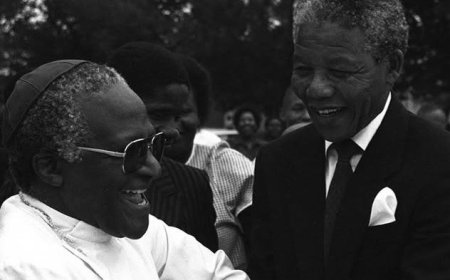
South Africa’s experience shows that legitimacy depends on perceived impartiality and transparency from day one. For a country at the crossroads, that is an invitation worth considering.

Comprehensive reform of the judicial system has emerged as a major national demand.