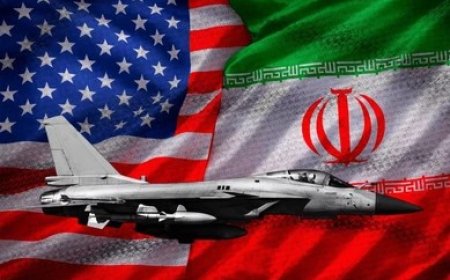



































































What if the Iran War is not What it Seems?
What we may be witnessing is not the eruption of uncontrolled conflict -- but a controlled application of force designed to close a 30-year nuclear standoff. History will not judge this moment by the explosions. It will judge it by what follows them.


For most observers, the sequence looked simple: Diplomacy was advancing, bombs fell, and therefore diplomacy failed.
But what if the opposite is true?
What if the strikes were not the collapse of negotiation -- but its enforcement mechanism? Not the breakdown of a deal, but the invoice for one already written?
Timeline Doesn’t Fit
Just days before the strikes, the signals were unambiguous: Oman’s foreign minister publicly declared peace was “within reach.” Iran reportedly signaled willingness to suspend enrichment, dilute stockpiles under IAEA supervision, and consider joining a regional nuclear consortium. Technical talks were scheduled in Vienna. Senior Iranian officials confirmed that negotiators held full authority to conclude an agreement.
Then the strikes began.
The conventional interpretation is clean: Hawks won, patience ran out, diplomacy collapsed. But that interpretation cannot explain the timing. Why attack precisely when the largest Iranian concessions in decades were reportedly on the table? Because concessions of that magnitude require political cover to survive domestically.
Concessions Without Capitulation
Iran’s leadership cannot dismantle decades of nuclear leverage and regional proxy architecture while appearing to surrender under pressure. The Islamic Republic’s internal ecosystem -- the IRGC, Basij networks, ideological hardliners -- cannot absorb visible capitulation without facing destabilizing consequences.
A regime that has defined itself through resistance cannot pivot through submission.
It requires defiance first. An external strike provides exactly that.
The sequence becomes narratively survivable: Iran is attacked. Iran retaliates. Iran then negotiates -- not from a position of weakness, but from one of demonstrated strength. That distinction carries far more weight domestically than it does internationally, and Tehran’s leadership knows it.
The Nature of Iran’s Retaliation
Iran’s response was loud in rhetoric and limited in effect. Missiles were launched toward US-hosting states in the Gulf. Yet interceptions were near-total.
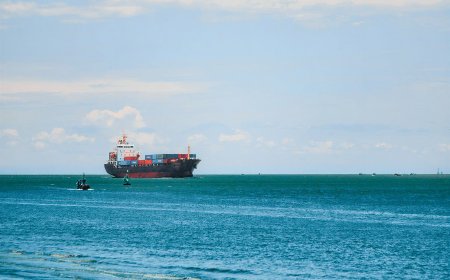
Saudi oil infrastructure -- the single most escalation-triggering target in the region -- was untouched. The Strait of Hormuz remained open. Oil markets moved modestly rather than catastrophically.
Iran demonstrated capability without triggering uncontrollable escalation. This is not what a maximal war posture looks like. It is what calibrated signaling looks like -- force deployed not to destroy an adversary’s capacity to negotiate, but to preserve one’s own.
The Gulf States’ Behavior
The Gulf states publicly denied participation in the strikes and signaled reluctance to escalate. They absorbed limited retaliation. They issued measured condemnations. They immediately pivoted to de-escalation language. Notably, Oman -- the designated mediator -- was untouched throughout.
Uncontrolled escalation produces emergency summits, mobilization alerts, and open fractures in US-GCC relations. None of that materialized. The posture across the Gulf has been one of management, not alarm. This suggests not orchestration necessarily -- but bounded awareness. The Gulf states understand the play and their role within it: Absorb the theatre, prevent the real war, let the controlled sequence run its course.
Structural Pivot in Tehran
The case for coercive diplomacy rests on a longer trajectory that predates these strikes. Since 2020, Iran’s regional posture has been quietly shifting. Proxy networks have been degraded or deliberately constrained.
Regional normalization tracks expanded. BRICS accession signaled economic realignment over revolutionary isolation. Saudi-Iran rapprochement broke years of entrenched hostility.
A reformist presidency re-centered governance around economic survival rather than ideological expansion. The direction has been visible for years: Integration over militancy.
But integration requires shedding leverage assets built across four decades. That shedding cannot appear voluntary -- it cannot be seen as a choice made from exhaustion or weakness. It must appear earned. Extracted. The product of endurance under pressure. Strikes create that political bridge.
Israel’s Incentive Structure
Israel is not operating outside this logic -- it has its own. A visible strike on Iranian targets offers a narrative of existential threat neutralized, a claim of strategic achievement that domestic politics urgently demands, and political breathing room inside a deeply fractured coalition government.
The marginal military gain from the strikes may be limited. The political gain is substantial. Force, in this case, serves narrative consolidation far more than it serves battlefield objectives.
US Posture
Washington’s footprint in this moment is revealing in what it lacks. There is no occupation plan. No ground invasion structure. No regime-change force configuration assembling in theater. The military posture signals coercive leverage -- not governance ambition. The objective appears to be behavioral change, not state collapse.
That framing aligns far more closely with negotiated constraint than with total war. It is the posture of a power that wants Iran to change, not one that wants to replace it.
Three Models for This Moment
Diplomacy Failed: Hawks derailed talks at the critical moment, and escalation now spirals toward uncontrolled conflict.
Coercive Diplomacy: Force was deployed deliberately to provide the domestic legitimacy required for concessions that were already pre-agreed in substance, if not in form.
Parallel Incentives: No grand choreography exists -- but each actor’s rational incentives happen to align toward bounded escalation and eventual return to talks, producing coordination without collusion. The coming weeks will determine which model holds.
What to Look for
If negotiations resume quickly, if sanctions relief is phased alongside verifiable constraints, if enrichment limits formalize, if proxy activity visibly declines -- then the strikes will look less like rupture and more like punctuation. A hard mark at the end of one sentence before the next one begins.
If escalation widens instead, if constraints dissolve, if the political architecture of a deal fails to materialize -- then the coercive diplomacy thesis collapses, and the collapse narrative was right all along.
War as Political Technology
Modern statecraft has always fused force and negotiation -- but rarely admits it. Violence is not always deployed to hold territory. Sometimes it is deployed to reshape domestic narratives. Sometimes it exists to make compromise survivable for those who could not survive it otherwise.
This does not require secret collusion between adversaries. It requires only overlapping incentives and the rational restraint to not let controlled theatre become actual war. The line between the two is narrow. Every actor in this sequence has walked it carefully so far.
What History Will Actually Judge
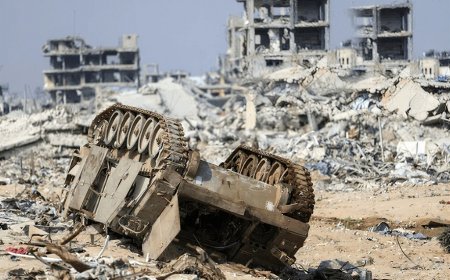
What we may be witnessing is not the eruption of uncontrolled conflict -- but a controlled application of force designed to close a 30-year nuclear standoff. It is loud. It is terrifying on television. It feels destabilizing in the moment.
But it may be structurally bounded. A piece of theatre with a predetermined final act. The theatre ends when the deal is signed. And if this interpretation holds, that deal was already being drafted before the first missile launched -- in quiet rooms, through careful intermediaries, with full understanding of what the noise would need to sound like before the silence could begin.
History will not judge this moment by the explosions. It will judge it by what follows them.