
































































When Two Wars Collide
None of this is really new, only newly visible. The Caspian has functioned as a sealed smuggling corridor between Moscow and Tehran since the summer of 2022.

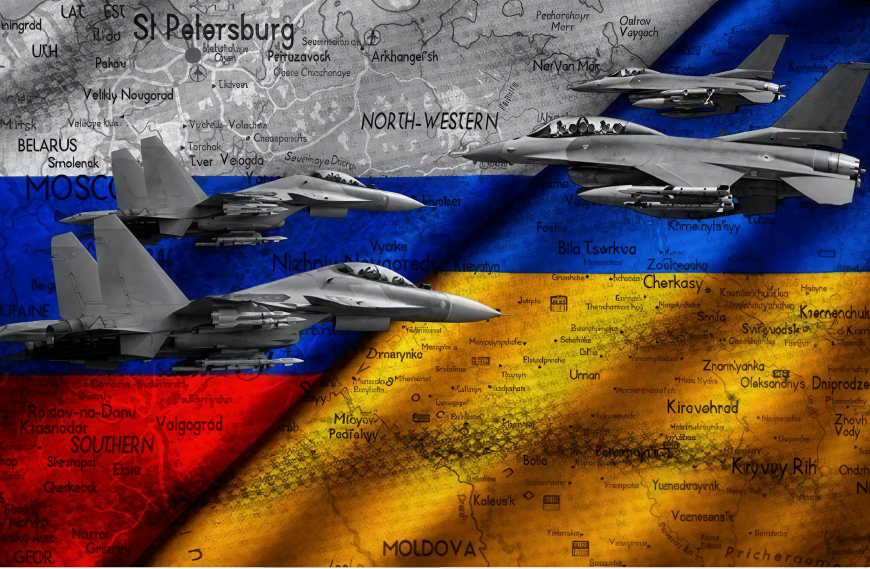
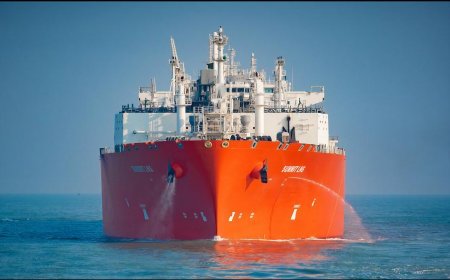
On July 25, Ukrainian drones struck two cargo vessels and a Russian missile boat in the Caspian Sea, a landlocked body of water that borders neither Ukraine nor any active theatre of its three-year war with Russia.
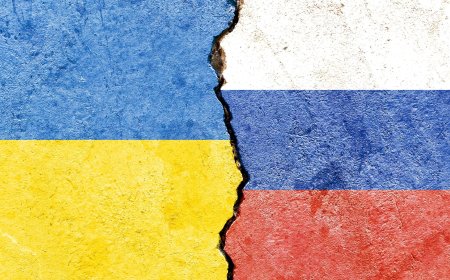
Overnight, two conflicts that policymakers, editors and ordinary citizens had carefully filed into separate mental boxes: "The Ukraine war" and "the Iran war" collapsed into one another.
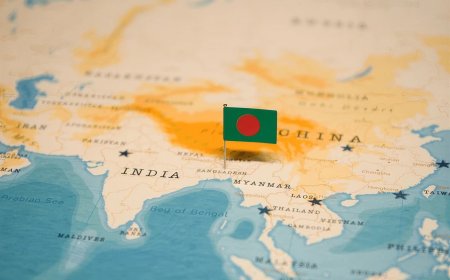
What happens when great and middle powers stop fighting contained wars and start fighting connected ones will shape the energy security calculus worldwide, Bangladesh included.
Ukraine's security service and military intelligence hit the Port Olya 2 and the Begey, cargo ships that Kyiv says were ferrying artillery shells, drone components and ammunition from Iranian ports to Russia's Astrakhan region, along with a Russian missile boat and an oil platform.'
At least one sailor is reported killed. President Volodymyr Zelensky then went further, announcing that Kyiv would hand partner governments its intelligence on Russian satellite surveillance of American and Gulf bases, imagery he says has been feeding Iranian targeting decisions since the war with Washington and Israel began.
None of this is really new, only newly visible. The Caspian has functioned as a sealed smuggling corridor between Moscow and Tehran since the summer of 2022, when Iran began shipping the Shahed drones that Russia could no longer build with sanctioned Western electronics.
A Wall Street Journal investigation later put the scale of the exchange at over 300,000 artillery shells and a million rounds of ammunition. In return, Iran received something arguably more valuable than hardware: Decades of expertise in surviving under the kind of sanctions regime Russia was only just discovering.
Two isolated states, propping each other up: This was never really two separate wars. It was one alliance fighting on two fronts, and everyone simply agreed not to say so out loud.
The Caspian strikes make that argument operational rather than rhetorical. Kyiv is not seeking a new war with Tehran; it is applying the logic of self-defence to a supply chain it has tracked for years.
Whether one finds that justification persuasive or opportunistic, the practical effect is the same: A war fought in Eastern Europe and a war fought in the Middle East are now materially entangled, sharing weapons, intelligence, and now, targets.
“This was never really two separate wars. It was one alliance fighting on two fronts, and everyone simply agreed not to say so out loud.”
The risk is that Iran's answer is being drafted by the wrong people. Since Israeli and American strikes killed Supreme Leader Ali Khamenei on 28 February, Iran has been led, nominally, by his son Mojtaba, who has scarcely been seen in public since being wounded in the same strikes.
Real authority has drifted toward the Revolutionary Guard's Ahmad Vahidi, sidelining the comparatively pragmatic camp around President Masoud Pezeshkian and Foreign Minister Abbas Araghchi, who has nonetheless taken to social media to warn that Ukraine's strike “cannot go unanswered.”
This is a regime that, only months earlier, killed tens of thousands of its own citizens in the space of days to crush the January protests. A leadership capable of that at home should not be assumed cautious abroad, whatever the diplomatic cost of striking a country most Iranians do not quarrel with.
Whether Tehran actually launches ballistic missiles at Kyiv, a genuine possibility given medium-range systems that could reach Ukraine from Iranian soil, matters less than what the episode has already revealed: Two theatres that Washington, Brussels and everyone else preferred to manage separately are now, functionally, one contiguous battlespace.
There is a second, subtler lesson here for policymakers and citizens alike: The era of "contained" wars is ending. World War II, it is worth remembering, did not begin as one global conflict; it began as separate wars in Europe and East Asia that merged only once alliances, supply chains and strategic interests overlapped.
The Caspian episode is a smaller-scale echo of that same dynamic. Russia and Iran built a genuine wartime alliance out of necessity -- Moscow needed cheap drones, and Tehran needed a customer, but both needed a partner experienced in evading Western sanctions.
That alliance has now dragged Ukraine into confrontation with Iran, and it has quietly repositioned Kyiv as a supplier of counter-drone expertise to Gulf states such as Jordan, Qatar, the UAE, Saudi Arabia and Kuwait -- nations that, until recently, kept cordial relations with Moscow.
When alliances of convenience between authoritarian states start blurring into shared battlefields, the assumption that any regional conflict will stay regional becomes less safe by the month.
This entanglement is also reshaping the transatlantic relationship in ways worth watching closely. Ukraine spent much of the past eighteen months being publicly humiliated and strategically sidelined by Washington, most memorably in that infamous Oval Office confrontation between Zelenskyy, Donald Trump and JD Vance.
Yet Kyiv has quietly become the world's most effective practitioner of counter-drone warfare, reportedly intercepting roughly 90% of incoming Shahed-type drones without relying on the four-million-dollar Patriot interceptors that Washington and its Gulf partners have burned through fighting fifty-thousand-dollar drones.
That asymmetry -- a superpower's air defence economics failing against cheap, mass-produced threats -- is precisely the vulnerability Iran has exploited against American and Gulf targets throughout its own war. Ukraine's offer to help fix that problem, paired with intelligence on Russian-Iranian coordination, has suddenly given Zelenskyy leverage in Washington that he lacked a year ago.
None of this means the Caspian strikes were reckless. Kyiv has calibrated its escalation carefully, framing each strike as self-defence against a demonstrable co-belligerent rather than a declaration of war on Iran.
Washington has quietly warned Ukraine against hitting neutral shipping unconnected to Russia's war machine. But calibration by one party does not guarantee restraint by the other, particularly when that other party is a fractured regime still governing through terror at home. The rest of 2026, on present evidence, is not going to get calmer.
Shafqat Aziz is a barrister (Lincoln’s Inn) and an accredited Civil-Commercial Mediator (ADR-ODR International).