


































































The Case for a Living Wage
If our macroeconomic achievements continue to rest upon structural inequity and human deprivation, our soaring GDP growth figures will stand exposed as a hollow moral pretence.

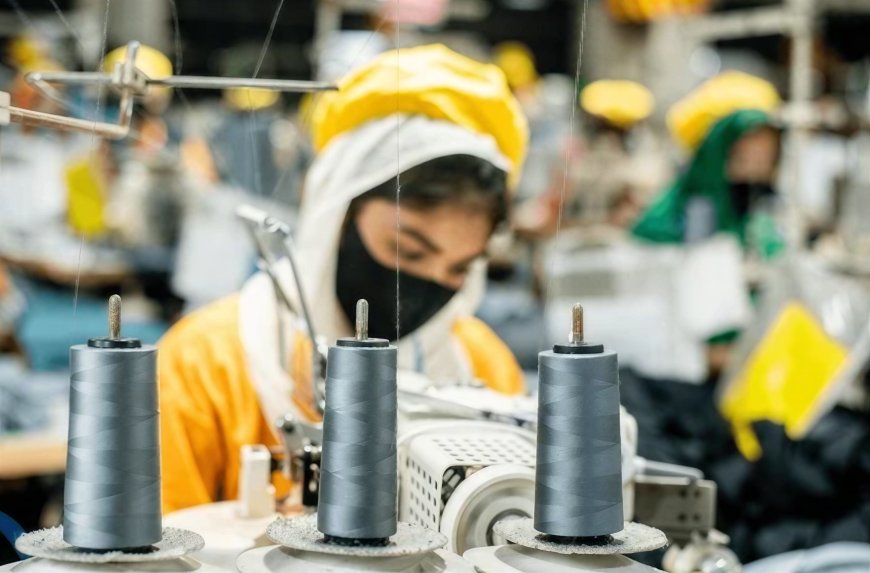
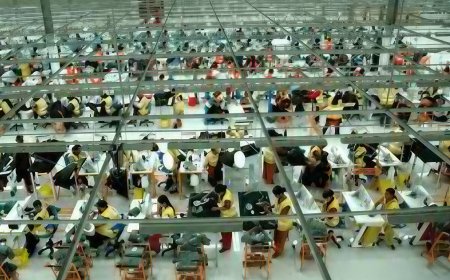
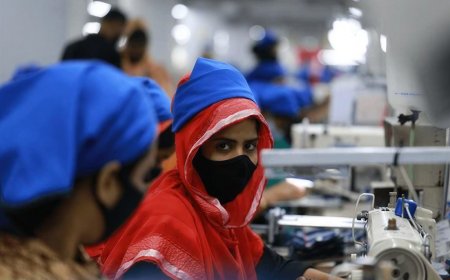
Every morning, long before the first shafts of pale winter light pierce the dense fog over the industrial corridors of Gazipur, Tongi, or Konabari, millions of weary footsteps echo across the asphalt.
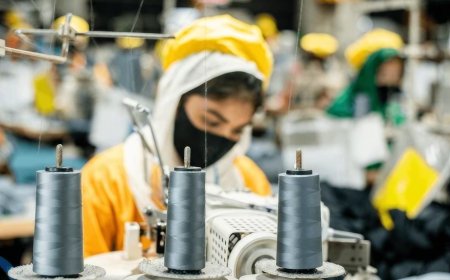
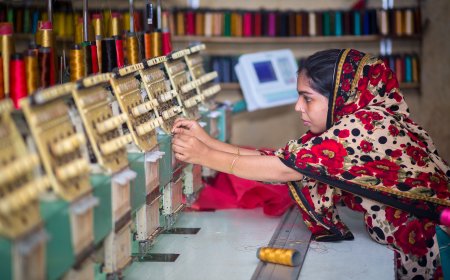
Among them is Sumaiya, clutching a worn plastic satchel containing little more than a stainless-steel water bottle, a meagre midday meal, and the silent, grinding burden of familial survival. When the heavy corrugated iron gates of the manufacturing complexes swing open at dawn, they do not merely admit a workforce; they swallow whole lives.
These are the hands that forge the physical foundation of global capital. Yet, when that same garment hangs impeccably under the luminescent display lights of a boutique on Fifth Avenue or Oxford Street bearing a forty-two-dollar price tag, the stark arithmetic of global trade reveals an appalling inversion: The actual labour compensation embedded within that retail cost has been squeezed down to a meagre three dollars and thirty cents.
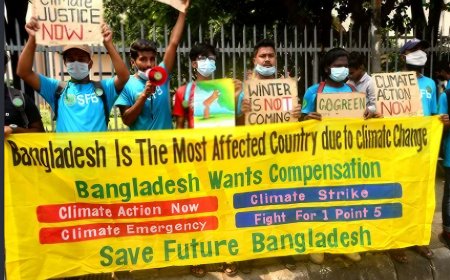
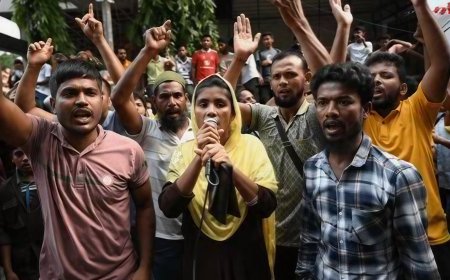
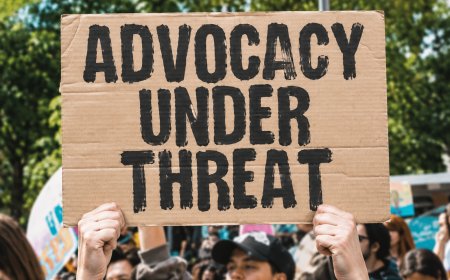
The recent eruptions of labour unrest across our industrial hubs, where hundreds of thousands of garment workers have taken to the streets demanding a living wage, cannot be dismissed as transient domestic friction or episodic workplace disputes.
This is not merely a localized wage negotiation; it is an agonizing symptom of a predatory global supply chain architecture. Within this system, capital transcends national boundaries with avian freedom, while labour rights, social protections, and human dignity remain rigidly shackled to geographic borders and legal nation-states.
Structural Extraction and Retail Hegemony
To comprehend why Bangladesh’s multi-billion-dollar ready-made garment (RMG) sector remains trapped in a perpetual cycle of low-margin vulnerability despite its soaring export volumes, one must interrogate the political economy of global sourcing.
Groundbreaking empirical research by Professor Mark Anner and his colleagues at the Centre for Global Workers' Rights at Pennsylvania State University has systematically exposed how multinational apparel brands and retailers have aggressively driven down unit production costs over the past two decades.
This dynamic exemplifies what institutional economists Daron Acemoglu of the Massachusetts Institute of Technology (MIT) and James Robinson of the University of Chicago describe in their seminal treatise Why Nations Fail as extractive economic institutions.
In an extractive supply chain model, economic surplus is relentlessly siphoned upward to apex corporate entities in wealthy nations, while local suppliers are reduced to precarious subcontractors bearing the full operational, environmental, and financial risk.
Factory owners in Bangladesh find themselves trapped within an udemandng pincer movement: On one side, relentless price-slashing by overseas buyers who threaten to shift orders overnight to more compliant or cheaper jurisdictions; on the other, soaring domestic inflation, volatile energy tariffs, and the legitimate survival demands of an impoverished workforce.
When global brands post record quarterly profits while exercising absolute monopsonistic power over supplier pricing, they externalize the cost of their profit margins onto the mental and physical well-being of workers like Sumaiya.
The tragedy of the $42 shirt is not an accidental market failure; it is the foundational design of a neo-colonial trading order that extracts maximum economic value while evading all social and legal accountability.
Constitutional Mandates Versus International Legal Disconnects
This economic subjugation directly defies both our domestic constitutional compact and international human rights jurisprudence.
The Constitution of the People's Republic of Bangladesh explicitly enshrines the liberation of peasants and working people from exploitation in Article 14, assigns the state fundamental responsibility for securing basic necessities such as food, clothing, shelter, education, and employment in Article 15, and categorically prohibits all forms of forced labour in Article 34.
Yet, when the state apparatus is compelled to manage industrial unrest under the anxious gaze of international credit rating agencies and foreign buyers, these constitutional commitments are routinely subordinated to short-term export competitiveness.
This contradiction mirrors a wider global hypocrisy. Article 23 of the Universal Declaration of Human Rights (UDHR) guarantees every worker the right to just and favourable remuneration, ensuring an existence worthy of human dignity for themselves and their families.
Similarly, Article 7 of the International Covenant on Economic, Social and Cultural Rights (ICESCR) requires fair wages, equal remuneration for work of equal value, and a decent standard of living.
Furthermore, core International Labour Organization (ILO) standards, specifically Convention No. 131 concerning Minimum Wage Fixing, which requires full consideration of workers' social needs and economic development indicators, alongside Conventions No. 87 (Freedom of Association) and No. 98 (Right to Organize and Collective Bargaining), are frequently honoured more in breach than in observance within our export processing zones.
Without robust, unhindered freedom of association, collective bargaining degenerates into a bureaucratic ritual dictated from above, leaving workers voiceless against the arbitrary whims of factory management pressured by foreign buyers.
Beyond the Race to the Bottom
If Bangladesh is to successfully navigate its impending graduation from Least Developed Country (LDC) status and secure sustainable economic maturity, we must look beyond domestic palliatives and examine progressive legislative paradigms emerging globally.
A key benchmark is the European Union’s Corporate Sustainability Due Diligence Directive (CSDDD).
The CSDDD represents a monumental paradigm shift by legally requiring large corporations operating in the EU market to identify, prevent, mitigate, and account for actual and potential adverse impacts on human rights and environmental standards across their global value chains.
Western brands can no longer hide behind arm's-length purchasing contracts; under the CSDDD framework, predatory pricing practices that make it impossible for supplier factories to pay living wages now expose them to direct legal liability.
In parallel, developing economies such as Vietnam and Cambodia have made significant strides in institutionalising supply chain transparency and tripartite wage-setting mechanisms.
Vietnam, through its robust implementation of the EU-Vietnam Free Trade Agreement (EVFTA) and progressive amendments to its Labour Code, has fostered independent workers' representative organizations at the enterprise level and integrated rigorous digital supply chain traceability.
This ensures compliance is verified not through superficial, staged audits, but through continuous, real-time data transparency.
Moreover, while Bangladesh’s RMG sector has earned global acclaim for boasting the highest number of LEED-certified green manufacturing facilities in the world- a remarkable testament to our environmental engineering capabilities- this ecological modernization remains fatally incomplete.
A factory cannot genuinely be called "sustainable" if it minimizes its carbon footprint while ruthlessly depleting its human labour capital.
Strategic Blueprint
To dismantle this architecture of exploitation and establish a humane, resilient, and globally competitive economy, a coordinated multi-stakeholder intervention is urgently required:
Empowering the State and Institutionalizing Living Wages: The newly constituted Minimum Wage Board must be granted absolute autonomy, insulated entirely from partisan political interference and narrow lobbying.
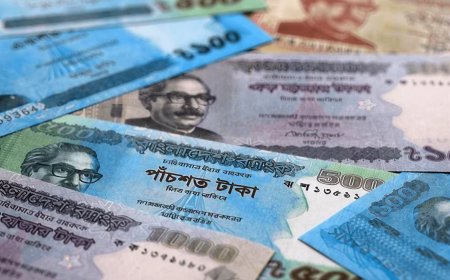
Wage structures must be legally mandated to incorporate an automatic inflation-indexing mechanism, ensuring that purchasing power erosion does not perpetually plunge workers into destitution.
Furthermore, the state must vigorously streamline administrative procedures governing trade union registration, transforming collective bargaining from an adversarial minefield into a collaborative industrial partnership.
Reforming Industry Leadership: National trade associations must transition from defensive posture-taking to courageous collective bargaining. Rather than competing among themselves in a self-defeating race to the bottom by undercutting quotation prices, factory owners must unite to demand equitable costing models from international buyers.
Labour must be legally and culturally repositioned not as a variable cost to be trimmed during market downturns, but as the enterprise's core strategic partner.
Accountability for Global Brands: Western retail brands must immediately overhaul their internal costing methodologies, abandon unilateral price squeezes and commit to long-term, predictable purchasing agreements that explicitly factor in fair living wages.
At the same time, multi-lateral financial institutions such as the World Bank and the Asian Development Bank (ADB) must condition their structural adjustment loans and macro-economic support packages not merely on traditional fiscal deficit metrics, but on verifiable improvements in worker social protection floors and supply chain transparency.
Reclaiming Human Dignity in the Fabric of Our Economy
We stand at a critical historical crossroads. The economic miracle of Bangladesh’s RMG sector was built upon the sweat, calloused hands, and silent tears of millions of women who migrated from rural hamlets to light up the urban industrial landscape. Yet, national economic sovereignty remains an unfulfilled promise so long as the architects of our prosperity are denied the fruits of their labour.
When we gaze upon the garments we wear daily, we must see beyond the immaculate stitching and stylish cuts to recognize the human pulse embedded within every fibre. If our macroeconomic achievements continue to rest upon structural inequity and human deprivation, our soaring GDP growth figures will stand exposed as a hollow moral pretence.
It is time for policymakers, industrial leaders, international buyers, and civil society to sit at a single table, dismantle the systemic machinery of exploitation, and ensure that the price of global fashion is never again paid with the tears of our working people.
Fayazuddin Ahmad is a development professional.
References
Ahmad, F. (2024). Getting the most out of work. Dhaka Tribune, Published November 14, 2024.
Acemoglu, D., & Robinson, J. A. (2012). Why Nations Fail: The Origins of Power, Prosperity, and Poverty. Crown Publishers.
Anner, M. (2015). Sourcing Practices and Labor Rights in Global Supply Chains. Center for Global Workers' Rights, Pennsylvania State University.
Constitution of the People's Republic of Bangladesh. Articles 14, 15, and 34.
European Union. (2024). Directive on Corporate Sustainability Due Diligence (CSDDD). Official Journal of the European Union.
International Labour Organization (ILO). Convention No. 131 concerning Minimum Wage Fixing, with Special Reference to Developing Countries (1970).
International Labour Organization (ILO). Convention No. 87 concerning Freedom of Association and Protection of the Right to Organise & Convention No. 98 concerning the Application of the Principles of the Right to Organise and to Bargain Collectively.
Sen, A. (1999). Development as Freedom. Oxford University Press.
United Nations. Universal Declaration of Human Rights (UDHR). Article 23.
United Nations. International Covenant on Economic, Social and Cultural Rights (ICESCR). Article 7.