





























![A Ledger of the Soul: Navigating the Allah-Bhagavant Nexus in a 19th-Century Puruṣākāra Jñāna Caupara [Gyan Chauper]](https://counterpointbd.com/uploads/images/202608/image_430x256_6a93baa3b09a7.jpg)



















The Lives Behind Your Food Delivery
Their visibility is not loud, neither in the broad daylight nor in the evening's glowing streetlights; they do not occupy any news headlines, yet they keep pedaling to meet the city's hunger. Therefore, the city we live in is not equal for all its citizens.

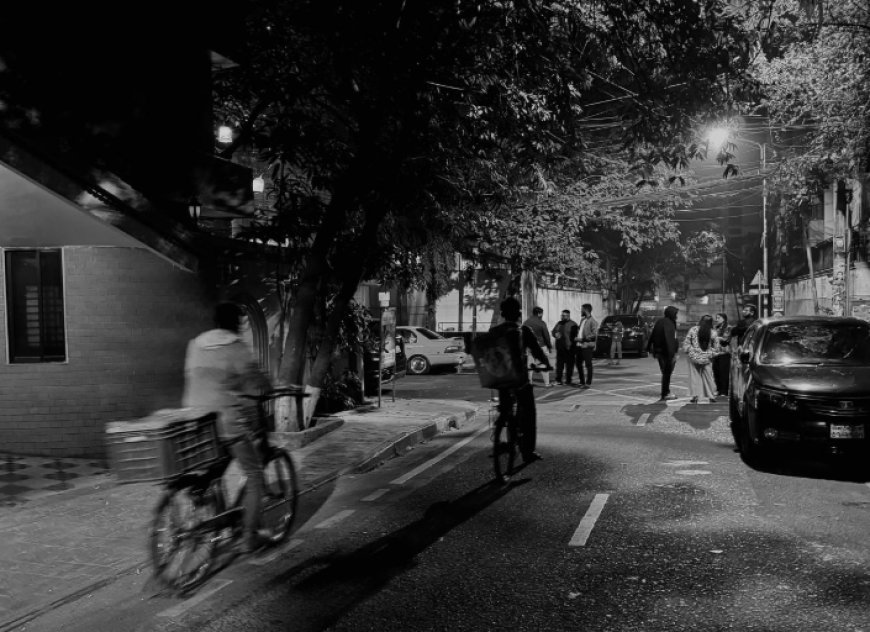
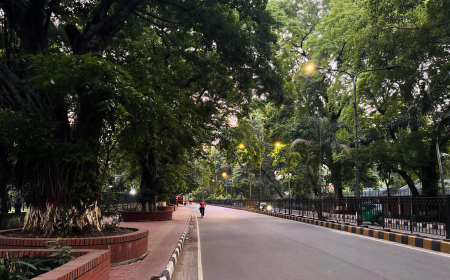
The photograph here is not loud; it is the silhouette of two sides of the same city sharing the same night. This is the city of quiet labourers constantly working to meet the city's appetites, which are always present among us yet invisible.
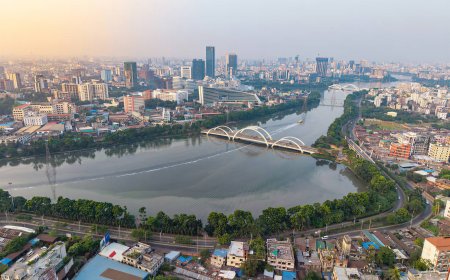
Dhaka is often described as one of the noisiest cities in the world. But after midnight, the city changes character. The same street becomes quieter. The quieter streets become a place of leisure for some and a place of survival for others.
Bicycles often pedal through the quiet city, carrying insulated boxes where food stays safe and warm, but the riders who carry them are not always secure or warm. They barely survive on the bicycle's movement. The city that creates their motion is unable to protect their economic hunger.
Their bicycles not only carry food but also carry urgency, ratings, and the hope that the next order will come quickly. Therefore, pedaling hunger is not metaphorical for them; it's economical.
The Platform Promises vs Reality
The platform calls it freedom: Work independently without supervision, earn without any pressure, and be your own boss, but in reality, the app becomes the invisible boss that decides priorities, payments, and penalties. The freedom often looks like waiting outside a restaurant and refreshing the app that determines when the income begins. For delayed orders, they may wait longer without any incentives; thus, the time passes, but the income does not.
The app promises to deliver the food fresh and warm in 30 minutes. The clock that counts down for the customers, the same clock doesn't count the waiting time for the riders. The riders only get paid for the completed delivery; the constant struggles and challenges are often invisible. There are no incentives for fuel or cycle maintenance, phone data cost, sick leave, or accident insurance.
Their wage is not a salary; it is the wage of mere survival. If the cycle breaks, the phone dies, or the account is suspended, then the income stops. The entire profession rests on two wheels and one application.
The Tip Economy
In the application, there is often an option for tipping the riders. In theory, tips are gestures of appreciation from the customers. But in practice, tips function as income stabilisers for many riders. Because the payment per delivery is very inconsistent and modest. The application does not compensate for the traffic delays or extra waiting time. In such a system, tips are not extra income; they are corrective. Therefore, a long day shift without any tips can quietly turn into disappointment.
When income depends partly on tipping, wages are entangled with emotion. In regulated employment, wages are contractual, but in platform delivery, income often feels situational.
The customer's kindness is not a policy because it fluctuates with mood, season, and personal empathy. On the contrary, labour's wages should not depend on such unpredictability. The platform secures its transaction and convenience fees, while riders absorb the uncertainty.
Invisibility as Social Structure
In the daylight, their labour is seen as commerce; at night, it forgets its labour. And the riders who are continuously working fall in between. They are visible enough to serve their labour but invisible enough to ignore. We may always notice them in the street, waiting in the restaurant, or maybe on our doorsteps; we often see their big bag but not the body that carries it. We only care about their arrival time, but we often forget their journey.
The city fulfils its appetite, but the rider is the one who absorbs the traffic jam, dust, and stray risks. At night, when we choose comfort and do not step out of our house, they continue to provide their services, thus our convenience transfers the risk of night labour to others.
Their visibility is not loud, neither in the broad daylight nor in the evening's glowing streetlights; they do not occupy any news headlines, yet they keep pedaling to meet the city's hunger. Therefore, the city we live in is not equal for all its citizens.
When the city runs on convenience, the delivery riders run on uneven generosity. Tomorrow, the city will reopen its apps, order the food, timers will start, and somewhere in the dark, two wheels will begin turning, not only carrying food but also carrying survival.
Saif Radoun is an academic based at Independent University, Bangladesh.