


































We Need To Fix Our Healthcare System. This Isn't How.
More than 50 years after independence, we should be able to do better than wait for the next crisis before fixing the part of the health system that has already failed.
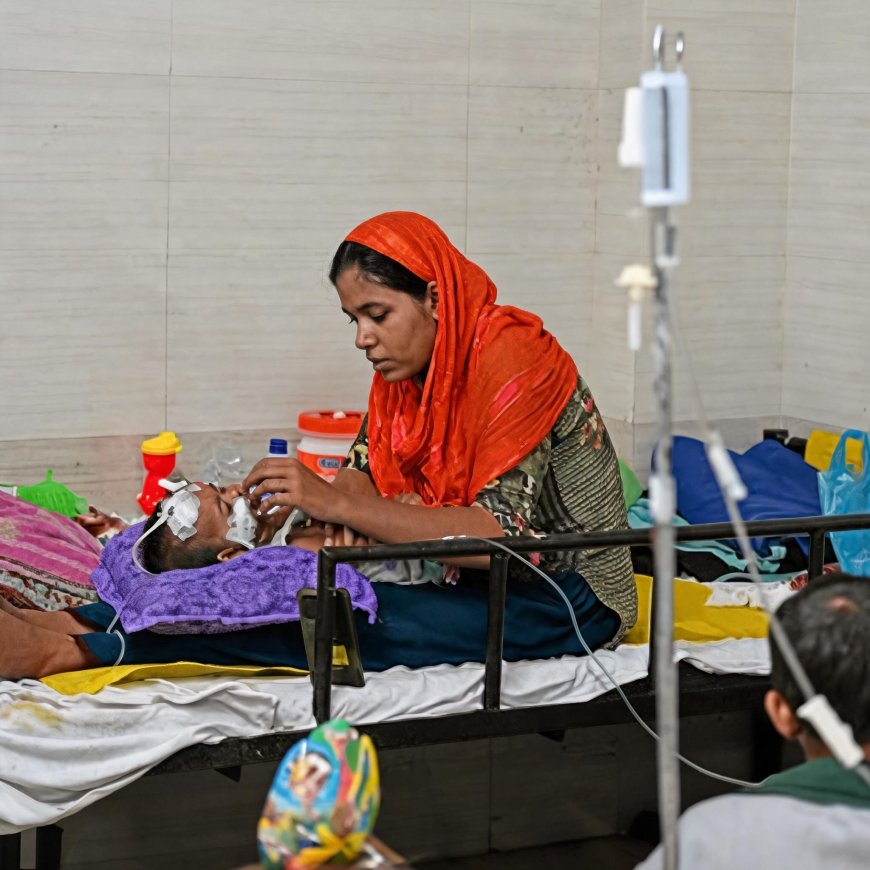
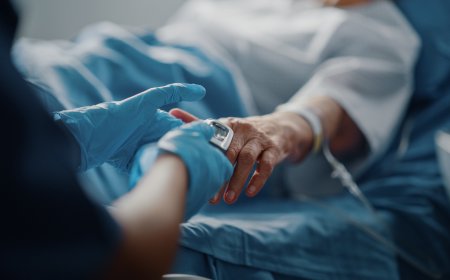
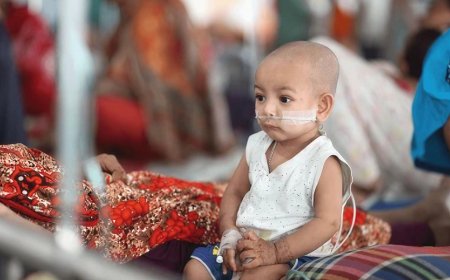
The queue for radiotherapy at the National Institute of Cancer Research and Hospital now runs into 2028. Some patients have been given dates in the last months of that year. For a cancer patient, that can mean waiting roughly two years for treatment at the country's main government cancer hospital.
The right interval between surgery and radiotherapy varies by cancer, but doctors warn that a delay of three or four months can allow some cancers to advance aggressively, while in some cases patients are facing delays of up to two years. The institute has reportedly stopped registering new patients for radiotherapy for now.
One could argue that private hospitals are available. But how many patients can afford them? Recent media reports put a course of radiotherapy at Tk 12,000 to Tk 15,000 at the Cancer Institute, against around Tk 2 lakh at private hospitals. The reason for the queue is easy to see.
The institute has six radiotherapy machines, and only two work. They run long hours and still treat only a few hundred patients a day, while a course takes about six weeks. Around 6,500 to 7,000 people are waiting.
Across the country, public and private together, there are only about 35 machines, against an estimated need of at least 180 and possibly 300. The institute's machines were bought between 2006 and 2008 with a working life of about ten years, and no replacement system was in place when they aged.
In the meantime, the interim government's time has passed, and a democratically elected government is running the country, yet the saga continues. During the campaign, Tarique Rahman, then leading the BNP and now Prime Minister, spoke about an interesting policy.
Public hospitals are overcrowded while many private hospitals have unused capacity, he said, so a BNP government would work with private hospitals to treat patients waiting in government queues, with the government paying.
In May the government decided to pursue public-private partnerships with four private hospitals, but months later its effect is hard to see. On October 7, the health minister said 17 new radiotherapy machines will be installed, six in Dhaka and eleven outside.
That is welcome news. But a machine already bought for the Cancer Institute is only expected to start working in January 2027. Cancer does not wait for the procurement process.
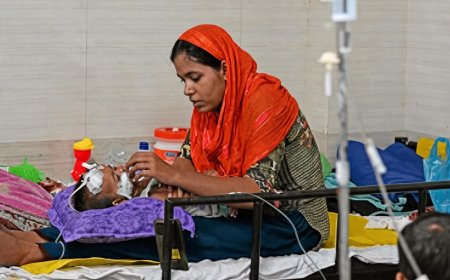
Radiotherapy is the treatment side of the failure. Measles is the prevention side. This year's outbreak is the largest on record in Bangladesh. By early September, the health directorate had reported more than 1,000 deaths linked to measles and about 187,000 cases, though only a fraction of those deaths were laboratory-confirmed.
WHO and UNICEF link the outbreak to falling routine immunisation, vaccine supply problems in 2024 and 2025, and missed nationwide campaigns, so its roots lie before this government. The emergency drive launched in April vaccinated more than 18 million children, but millions remained exposed because of years of accumulated gaps.
The lesson is that prevention works only when it is continuous, and that a vaccine given on time costs far less than responding to an outbreak after it has spread.
These two failures are one problem seen from two ends. There are broad ways to manage a country's health: Prevention, such as vaccination, screening, and primary care, and treatment, such as hospitals, machines, and surgeons.
Prevention is slow and earns little applause, because nobody counts the patient who never fell sick. Treatment is visible and unavoidable, because people do fall ill. A country needs both, and a plan that says how they fit together. We have neither the plan nor the pooled money to carry it. Patients in Bangladesh paid around 73% of health spending out of their own pockets in 2021.
That is people's money too, but when each family pays separately, there is no pooling, no bargaining power, and no capacity to plan for the whole population. Better-performing systems, including the UK and increasingly India, pay through taxes or insurance, which lets them plan equipment replacement and prevention together.
India's out-of-pocket share fell from 64.2% in 2013-14 to 43.4% in 2022-23, and the UK is funding new radiotherapy machines at 28 hospitals, with priority for ageing ones.
The same lack of coordination shows in how we train people. An investigation published on 4 October found that all 16 public medical colleges it visited were short of teachers, five had no land of their own, and 63% of senior posts in the basic subjects were vacant, yet more colleges keep being approved.
The health education director general says approvals will pause until a workforce assessment is reviewed, and that should be held to. But healthcare is not only about making doctors.
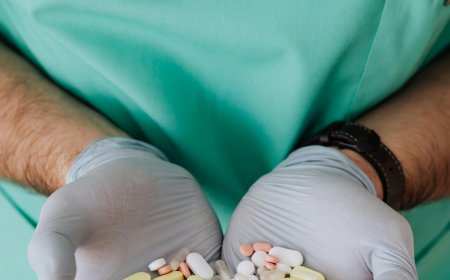
The country already meets the WHO benchmark for doctors, while the ratio of doctors to nurses to midwives is 1 to 0.75 to 0.74 against a recommended 1 to 3 to 5. When the government said in 2025 that it would appoint graduate pharmacists in public hospitals for the first time, 654 government hospitals with more than 51,000 beds reportedly had none.
A radiotherapy machine likewise needs a shielded room, technologists, medical physicists, and maintenance. Health is a coordinated, multi-professional system, and a country that produces only doctors will keep having queues.
The BNP government is doing something, not nothing, and that should be acknowledged. The 2026-27 health budget is Tk 69,409 crore, about 1.01% of GDP, the first time it has crossed 1%. Recruitment of 5,000 doctors and 100,000 health workers has been announced, and the health minister is visiting hospitals and checking attendance.
But a visit brings good reviews and a good rating, while managing the shortage of staff and equipment gives a minister harder battles to fight. A larger budget will not produce more machines and nurses if the ministry cannot implement its projects.
Here I am not questioning the government's initiative or its response. I am questioning the method, the way we address health problems in Bangladesh. We need to rethink at the policy level, and public health experts must be part of that reform. There is no single solution to a crisis this deep, but a combination of approaches could begin to change the way the system works.
We need to pool the money: Move gradually from heavy out-of-pocket payment towards tax-funded or insurance-based coverage, and let the government buy care from private hospitals at agreed prices and standards when public capacity falls short, including for treatment such as radiotherapy.
We need to manage equipment as a life cycle, with the room, trained staff, maintenance contract and replacement plan considered before a machine is bought, and with the status of major equipment made public.
We need to plan the workforce according to need, not simply by producing more doctors, but by ensuring enough nurses, midwives, technologists, medical physicists and pharmacists, and by assessing workforce needs before opening new medical colleges.
We need to fund routine immunisation and primary care steadily, so that vaccination does not depend on emergency campaigns after an outbreak has already begun.
And we need public health experts at the centre of planning and monitoring, with transparent reporting so that decisions are based on evidence and national need rather than the priorities of an individual. None of these measures alone will fix the health system, but together they could provide a more coherent way forward.
This month Biman signed an agreement for ten Airbus aircraft, after ordering 25 Boeing aircraft this year. The comparison is not about whether Biman should buy planes; it is a state company that says it takes no government subsidy. It shows what happens when the state treats something as urgent: Evaluation, negotiation, and signing, within months.
The government told voters it would not chase mega projects. But what would any big project be worth if the people meant to enjoy it are not healthy? There is money and speed for aircraft, and not enough of either for machines that were due for replacement years ago. That is the gap, and it is the ability to turn money into working services.
Less than eight months into its term, the BNP government has yet to show that it can run the health sector differently. Outbreaks and queues are still handled as emergencies in the usual way: A campaign after the outbreak, an announcement after the headline.
The larger budget, the planned recruitment and the new machines all matter, but they need to become parts of one system rather than a series of responses to individual crises.
That is the real test. More than 50 years after independence, we should be able to do better than wait for the next crisis before fixing the part of the health system that has already failed.
Mahady Tarek is a pharmacist who is working with an international humanitarian organization; he can be reached at [email protected].