








































































The Hormuz Gamble: What Washington Risks by Waging a Forever War
Iranian leadership has demonstrated remarkable resilience, shaped by the mosaic defence, the bolster policy of Iran after the death of Kashem Soleimani.

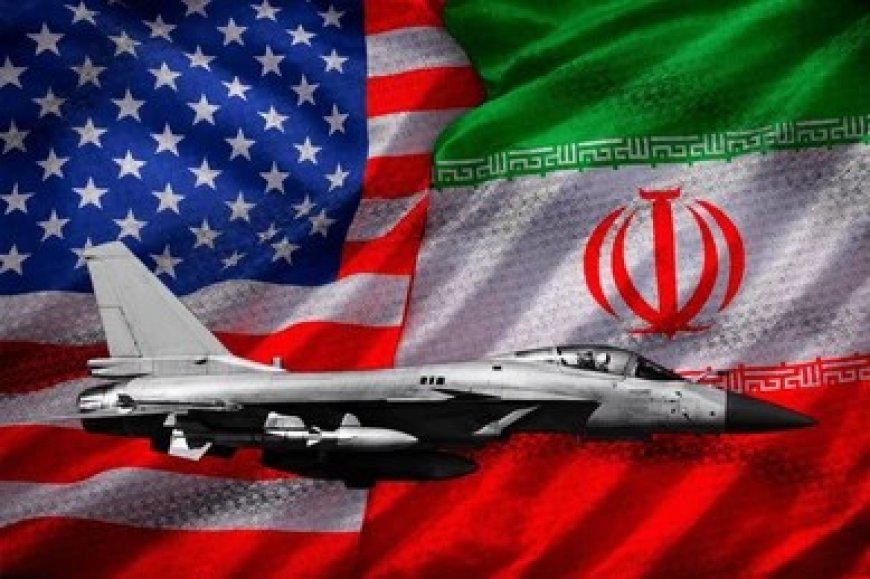
Beginning a war is a typical behavior of an imperial state, anywhere and at any time in the world,as we have already seen in the Iran warfare. Even though Iran isn’t an outright threat to the USA, it was a catastrophic mistake, with consequences far beyond expectation.
What was intended to be a war expected to conclude in just four days instead stretched into weeks, then months, and now, in the words of US President Donald Trump, has become a "forever" war.
To understand this phenomenon, we must examine how the political system functions in Washington. Particularly, US politicians are often selected by the donor class and influenced by the military-industrial complex, which benefits from prolonged conflict.
A significant portion of Congress and the Senate receives large sums from AIPAC and allied pro-Israel, pro-war contributors.The deeply entrenched Israeli Lobby not only finances its preferred politicians but also provides them with prepared materials to follow, ensuring they adhere to the Zionist narrative and position themselves as fierce opponents to anyone who challenges the lobby (Al Mayadeen).
In contrast, in the Iranian nation, very well we see a dogged relation with Islamic practical thought, especially with their Imams, a quality that is lacked by the Sunni state and the majority of people, as well as by the political thought of the Quran and Arab state leaders.
Currently, their behavior is inhumane because state policy and foreign policy are shaped by their own interests in the modern state, where there is no place for religion and nationalism except in a few cases, because they were shaped by the Bandwagoning (when a weaker state joins a stronger power for security or benefit) policy.
If we look at Iran, it is run by Wilayat al-Faqih (Guardianship of the Jurist). According to Imam Khomeini, Wilayat al-Faqih (Guardianship of the Jurist) is a system in which a qualified jurist assumes supreme leadership of Islamic society and the state in the absence of the Imam (Momen, 1985, pp. 193–196).
The Shia believe in the twelve Imams, the last of whom is Imam Mahdi; they hold that he was born, is currently in occultation, and will reappear at the appointed time. Therefore, Iran seeks to pave the way for his advent. Meanwhile, the Sunnis believe that he has not yet been born.
Regarding military strategy, the current strategy of Iran warfare is different from the 12 days' war. Previously, Iran was primarily defensive; now, it is more inclined to conduct direct attacks, employing missiles and drones rapidly and on a larger scale, and is more prepared to take risks.
According to analysts, the key aspects of Iran's new strategy include a doctrine of asymmetric warfare, relying on missiles, drones, and covert strikes instead of direct confrontation; a survival strategy that maintains the capability to absorb an initial strike and then launch a counterattack; the use of proxies such as Hezbollah to exert pressure through regional allies; and economic pressure aimed at disrupting the global economy by threatening to close the Strait of Hormuz (CSIS | Center for Strategic and International Studies).
Economists warn that disruptions in the Strait of Hormuz and attacks on energy infrastructure could reduce global economic growth by approximately 0.3% in 2026, indicating the wider economic impacts of the war and Hormuz. The Strait of Hormuz accounts for about 27% of global crude oil exports and is a major energy chokepoint. Similarly, the Bab el-Mandeb handles around 11%, and its security is influenced by the Houthis in Yemen (CFR, 2026).
Indeed, Iran is significantly weakened, as the USA and Israel have attacked vast areas such as infrastructure, oil, LNG, schools, universities, and even top-class leadership. Independent monitoring groups report that at least 1,443 Iranian civilians have been killed and many hospitals and schools damaged in ongoing U.S. and Israeli strikes, highlighting the severe humanitarian cost of the conflict (The Washington Post, 2026).
By the end of March 2026, nearly 3,461 total casualties were recorded, including more than 236 children, along with extensive damage to key civil infrastructure, leaving over 3 million displaced (HRANA, 2026). However, Iranian leadership has demonstrated remarkable resilience, shaped by the mosaic defence, the bolster policy of Iran after the death of Kashem Soleimani.
Meanwhile, the strategy of the USA and Israel is to break down the Iranian economy at any cost, along with its defensive systems, through massive airstrikes combined with sustained pressure and proper attacks. As a result, Iran would be compelled to come to the USA for negotiation.
Nevertheless, this may be akin to a daydream and was not achievable earlier. Rather, it reflects a strategy of coercive diplomacy, aimed at forcing Iran into negotiations. On the other hand, Israel wants to maintain more pressure to sufficiently weaken Iran (The Washington Post).
If the United States launches a ground invasion in Iran, it would be a catastrophic mistake in history, just like any use of nuclear weapons, and could engulf the entire Middle East, especially the UAE and Bahrain, for many reasons. Consequently, if Iran moves toward ground invasion in countries like the UAE, the resulting consequences remain uncertain.
The verdict of nuclear weapon use is also undetermined; if it comes out of the blue and leads to rapid blowback, its consequences will be rampant across the whole world. Moreover, superpowers such as Russia and China could gain a roadmap to expand conflicts in places like Ukraine and beyond.
Source:
Banafsheh Keynoush, The World Powers and Iran: Before, During and After the Nuclear Deal
Saira Khan, The Iran Nuclear Deal: Non‑proliferation and US‑Iran Conflict Resolution
The Washington Post (2026), reporting on Iranian civilian casualties and infrastructure damage.
Associated Press (AP News, 2026), article on Iran’s resilience against U.S.–Israeli strikes.
Al Jazeera Centre for Studies (2026), analysis on strategic escalation and Iran’s conflict sustainability.
Mizan Rehman is a student at the University of Chittagong.