
































































Who Should Pay for Bangladesh’s Losses?
The official agenda of COP31 must feature comprehensive reporting on the Loss and Damage Fund to track how much money was deposited, distributed, and actually delivered to affected people.

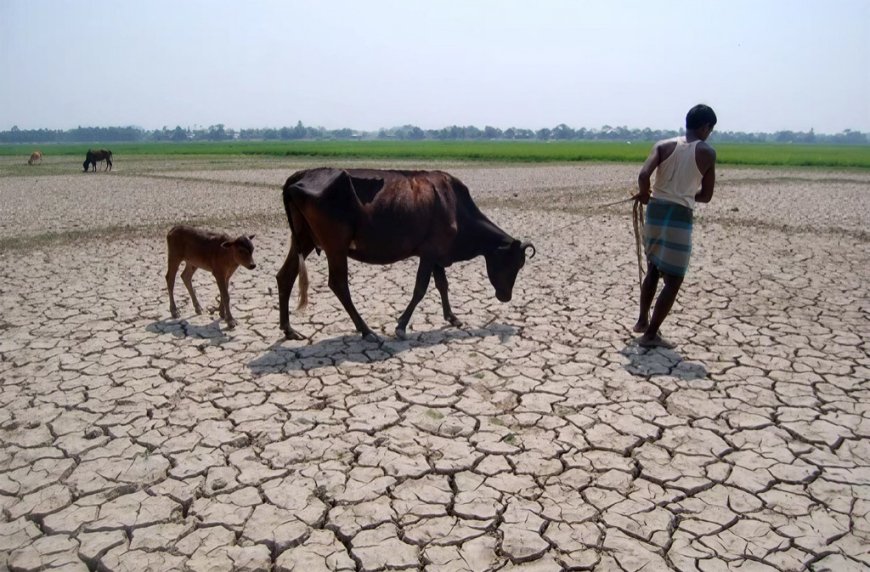
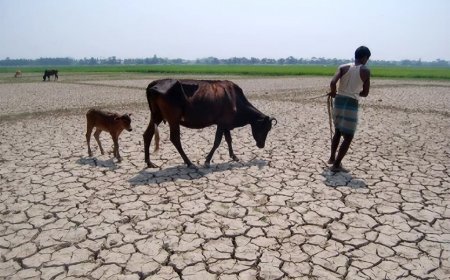
When a family in the southern coastal region loses their homestead to river erosion or is forced to abandon generations of familiar livelihoods due to escalating soil salinity, a fundamental question arises. Why must these marginalized communities bear the heaviest cost of a crisis they did not create?
Bangladesh, a riverine and climate-vulnerable nation, possesses a negligible historical contribution to global carbon emissions.
Yet, the brutal blows of warming land and rising seas strike these regions with the most destructive force.
People in Khulna and Satkhira still vividly remember Cyclone Aila from 2009. Breached embankments allowed saline water to flood homes and agricultural lands. Many former rice farmers had to become laborers in shrimp enclosures or migrate toward urban slums.
In numerous villages, women still walk exhausting distances just to secure drinking water. Research consistently highlights the severe health hazards linked with coastal salinity, particularly the alarming risks faced by expectant mothers. These resilient people have burned no coal and released no industrial smoke into the skies. Nevertheless, the entire economic and physical toll of the destruction is written against their names.
Since the dawn of the industrial revolution, advanced nations built their national economies on coal, oil, and carbon-intensive fuels. Today, developing and least developed countries of the Global South pay the exorbitant price for that accumulated growth.
The United States and European Union member states have pumped massive volumes of greenhouse gases into the atmosphere over the past century and a half. Bangladesh's emission levels remain microscopic in comparison.
Furthermore, the financial capacity to manage and recover from disasters differs drastically. Wealthy nations possess accumulated capital, advanced technology, and resilient institutional frameworks. Conversely, vulnerable countries must rebuild from scratch after every recurring flood or cyclone.
Any discussion about the climate crisis remains incomplete without addressing this historical responsibility. The wealthy world reaped the benefits of carbon-dependent development. Forcing the resulting disaster burdens onto vulnerable victims is fundamentally unjust.
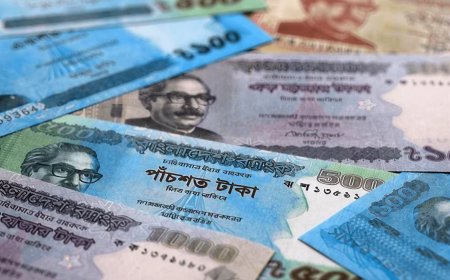
Climate finance is regularly discussed on international platforms. However, a massive gap persists between promised figures and actual funds received on the ground. According to OECD reports, the annual target of 100 billion dollars was supposedly surpassed by 2022.
Yet, a large portion of that money arrived not as grants, but as repayable loans. Nations already devastated by climate catastrophes find themselves trapped in new cycles of debt merely to survive.
On one side lies the devastation of natural disasters, while on the other lies the crushing pressure of high-interest loan repayments. This creates a double economic burden for developing economies. Transparency in financial accounting also remains questionable. In many instances, preexisting development assistance funds are simply rebranded as climate finance, leaving little new aid reaching suffering populations.
At COP29, a new collective target of at least 300 billion dollars per year by 2035 was established. How much of this will actually be allocated as grants or delivered under fair conditions remains ambiguous. This sum falls far short of what developing nations originally requested.
When financial assistance arrives in the form of loans or commercial investments, it ceases to be assistance and instead transforms into another instrument of economic exploitation. Imposing such debt burdens on vulnerable countries is entirely unacceptable.
A major share of global climate funding is channeled into emission reduction projects. Investors witness clear financial returns in renewable energy initiatives and secure guaranteed loan repayments. Repairing embankments or establishing safe drinking water networks offers no such immediate financial profits. Yet, nations like Bangladesh urgently require precisely these grassroots interventions.
Financial allocation for coastal embankments, safe water supplies, climate-resilient agriculture, and local disaster management suffers from severe deficits. For countries with the lowest emission levels, funding human survival efforts takes precedence over financing emission reduction projects.
Adaptation measures cannot fend off every single form of loss. Rivers permanently swallow agricultural lands, farming comes to a halt, and ancient village settlements are wiped out. Such losses are permanent. The fallout is not confined to the coastal belt alone.
Displaced villagers ultimately migrate to urban slums in Dhaka or other major cities, where meager wages, overcrowded living conditions, and uncertain futures await them. The heavy price of the climate crisis thus spills over into urban centers as well.
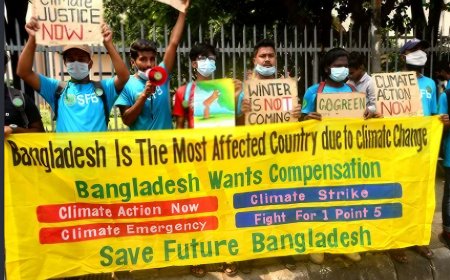
At COP31, Bangladesh must adopt a much more specific and assertive stance. The primary demand must be a clear implementation pathway for tripling adaptation finance by 2035. Both adaptation and loss and damage financing must be entirely grant-based.
Transparency in climate fund accounting is mandatory so that routine development aid cannot be falsely repackaged. The official agenda of COP31 must feature comprehensive reporting on the Loss and Damage Fund to track how much money was deposited, distributed, and actually delivered to affected people. Alongside large national projects, direct funding must flow to local government bodies and grassroots communities who understand their immediate risks best.
Climate finance is never an act of charity granted by donors. Within the context of historical emissions and systemic power imbalances, it represents a profound moral obligation and a recognized legal duty.
The success of these global efforts cannot be measured by the size of promised financial figures. Success must be evaluated based on the fairness of the conditions attached and the degree of safety and dignity secured for coastal lives. Declarations grow larger with every summit, while delivered funds remain small.
Developed nations must acknowledge their historical accountability. As a family rebuilds their shattered home along an eroding riverbank, they seek one fundamental assurance from global climate negotiations: Is anyone truly taking responsibility?
AL Sharia is a Bangladeshi columnist, environmental activist, and student of Disaster Science and Management at Begum Rokeya University, Rangpur.