









































![A Ledger of the Soul: Navigating the Allah-Bhagavant Nexus in a 19th-Century Puruṣākāra Jñāna Caupara [Gyan Chauper]](https://counterpointbd.com/uploads/images/202608/image_430x256_6a93baa3b09a7.jpg)


















Let the Students Rank Their Choice
Bangladesh’s universities have long produced political movements and political leaders. They can also become laboratories for better political institutions. A democracy willing to experiment with how it listens to voters may ultimately become better at hearing them.

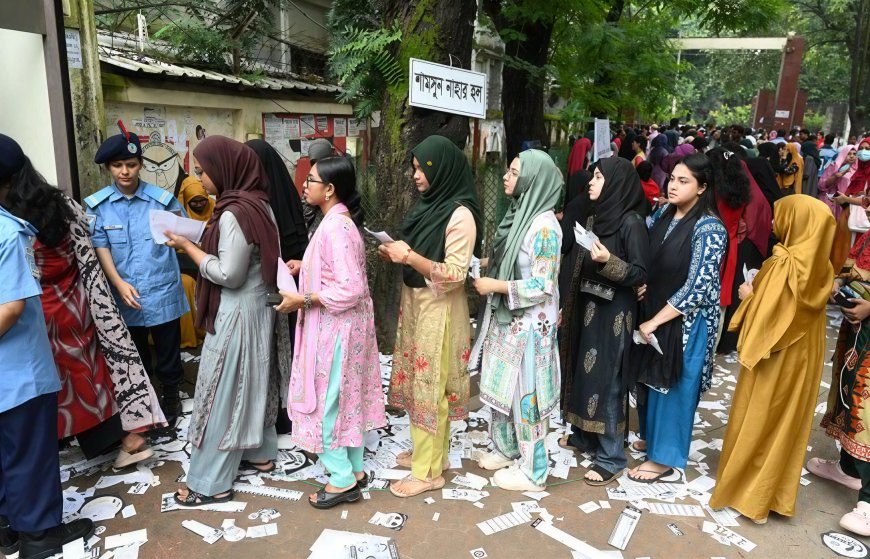
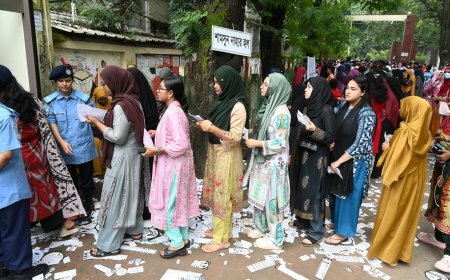
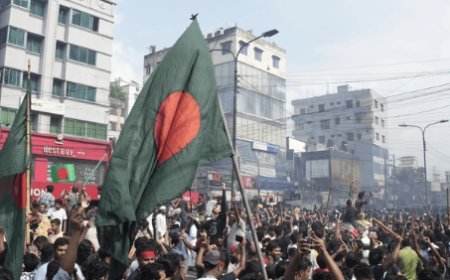
Last year, Bangladesh’s universities witnessed something that had almost faded away from our memory: The return of competitive student-union elections. Dhaka University students voted for DUCSU in September 2025.
Jahangirnagar University followed with its first JUCSU election in 33 years. Rajshahi University later went to the polls after a 35-year hiatus. The revival of these institutions matters immensely.
Universities should be places where political competition is settled through ideas, organization, and ballots, not fighting or coercion.
But restoring student elections should not mean simply restoring every feature of the electoral system we already know. Bangladesh’s universities now have an opportunity to do something more ambitious: Become laboratories for better democracy.
At the centre of that possibility is a simple question. When we vote, are we giving the electoral system enough information about what we actually want? Bangladesh elects representatives to the national assembly, local governments, and student bodies through first-past-the-post voting.
The rule is familiar: Every voter chooses one candidate, and whoever receives the most votes wins. A majority is unnecessary. Consider a three-way race. Candidate A receives 40%, Candidate B 30%, and Candidate C 30%. Candidate A wins.
There is nothing improper about that result under the rules. But those numbers leave an important question unanswered. Did the supporters of B and C prefer A to the other alternative? We do not know.
60% of voters chose someone other than A as their first preference, but the ballot tells us nothing about their second. This is not merely a hypothetical feature of Bangladesh’s electoral system.
In the February 2026 parliamentary election, 97 of the 297 constituencies with declared results, nearly one in three, were won by candidates who received less than 50% of the total valid votes.
The problem becomes even more interesting when voters begin thinking strategically. Imagine that your preferred candidate is C. You believe C would represent you best, but you also believe C has little chance of winning.
Between the two frontrunners, you strongly prefer B to A. Voting for C now carries a risk: You may express your genuine preference while surrendering your ability to influence the contest that will actually decide the winner. So you vote for B.
That is not irrational voting. It is perfectly rational behavior under the rules. But something has been lost. The ballot records B as your choice even though B was never actually your first preference. There is another way to design the ballot.
Under ranked-choice voting, voters rank candidates in order of preference: C first, B second, A third. First choices are counted initially. If one candidate crosses the 50% threshold, the election is over. If nobody does, the candidate with the fewest votes is eliminated and ballots cast for that candidate transfer to the next preference indicated by those voters.
The process continues through successive rounds. Variants of this system are not experimental curiosities. Australia uses preferential voting to elect its federal House of Representatives, while New York City uses ranked-choice voting in municipal primary and special elections.
Its attraction is not that it somehow discovers a perfect democratic will. No electoral system can do that. Its advantage is more modest, but important: It allows voters to communicate more of what they actually prefer.
The voter who genuinely prefers C no longer necessarily has to abandon C merely because B appears more viable. They can rank C first and B second. Meanwhile, candidates have a reason to think beyond their most committed bloc.
Winning first preferences remains valuable, but being acceptable enough to another candidate’s supporters to earn their second preference can matter too.
For a political culture often defined by winner-takes-all competition, that incentive is at least worth examining. None of this means Bangladesh should replace first-past-the-post in the next parliamentary election. Ranked-choice voting introduces complications of its own.
A ranked ballot demands more from voters than marking a single symbol. Some voters may misunderstand it. Others may rank only one candidate, causing their ballot to become exhausted if that candidate is eliminated.
Research from elections using ranked-choice systems has documented both voter confusion and ballot exhaustion. One study of four American elections found exhaustion rates ranging from 9.6% to 27.1%.
Another found that 16% of voters surveyed during Santa Fe’s first ranked-choice election reported at least some confusion.
In Bangladesh, where many voters are not sufficiently educated, and election results are already vulnerable to intense political contestation, introducing an unfamiliar national voting system without extensive preparation could create more distrust than legitimacy.
That is precisely why Bangladesh should not begin nationally. It should begin on campus. University student-union elections offer an unusually suitable democratic laboratory. Their electorates are bounded.
Administratively, they operate on a much smaller scale than national elections. Voters are educated. So their training can be intensive. Sample ballots, demonstrations, and mock elections can be organized. And student elections frequently feature exactly the kind of crowded candidate fields in which ranking preferences could become meaningful.
The last DUCSU election illustrates the point almost absurdly well. Nearly 40,000 students were registered to vote. 471 candidates competed for 28 central positions, including 45 for vice-president alone.
Each voter was already expected to cast votes across 41 central and hall positions. In a race with 45 candidates, it is difficult to believe that every voter has only one meaningful preference.
The student unions could therefore pilot ranked-choice voting for single-winner positions. Ranked voting would inevitably make an already lengthy student-union ballot more time-consuming. More polling booths, longer voting hours, or staggered voting could provide the additional time it requires.
That may demand greater logistical effort and financial resources, but the cost is worth bearing if it produces an electoral outcome that more accurately reflects voters’ preferences.
Then study what happens. How many are they ranking on average? How many ranked only one candidate? How many ballots became invalid or exhausted? How long did counting take? Did voters trust the outcome?
Did second and third preferences materially change results? Did candidates alter how they campaigned? Perhaps the experiment would work remarkably well. Perhaps it would expose problems that advocates underestimate.
Both outcomes would be useful. The point of a pilot is not to manufacture evidence for a reform already decided. It is to generate evidence before deciding. If ranked-choice voting proves workable in student unions, that would not mean Bangladesh should automatically extend it to parliamentary elections.
It might remain particularly suitable for university contests. Other bounded elections could experiment with it. Or, over time, a successful domestic record might justify a larger national conversation.
But Bangladesh would finally be debating electoral reform using evidence from Bangladesh rather than abstract arguments imported from elsewhere. Regular student-union elections were among the demands that emerged during the July Uprising, alongside calls to end coercive partisan control of campuses.
With the first cycle of revived unions now completing their terms, that commitment must continue. But continuity alone should not be the limit of our ambition. Bangladesh’s universities have long produced political movements and political leaders.
They can also become laboratories for better political institutions. A democracy willing to experiment with how it listens to voters may ultimately become better at hearing them.
Ishfak Farhan Siyam is an MA student in Islam and Global Affairs at Hamad Bin Khalifa University and a graduate of the School of Foreign Service at Georgetown University in Qatar.