



























































Civilization at the Crossroads of Cosmos and Catastrophe
The contrast between our technological ambitions and our moral shortcomings raises an uncomfortable possibility. What if our progress is fundamentally unbalanced? What if we have mistaken the expansion of capability for the advancement of civilization?

There is a strange contradiction at the heart of human civilization. We celebrate our ascent as a species that has stretched its curiosity beyond Earth, sending machines and dreams into the vast silence of space. Yet, in the same historical moment, we continue to perfect the language of annihilation.
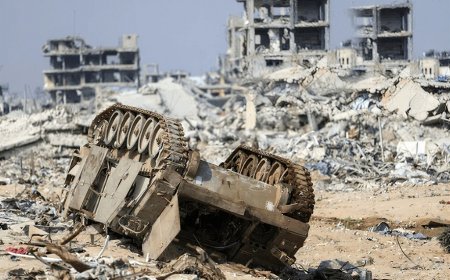
The threat to “take a country back to the Stone Age” is not merely rhetorical excess. It is a revealing fracture in our collective consciousness. It exposes a civilization that has advanced technologically without a corresponding evolution of its moral imagination.
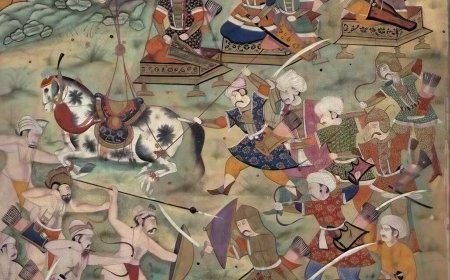
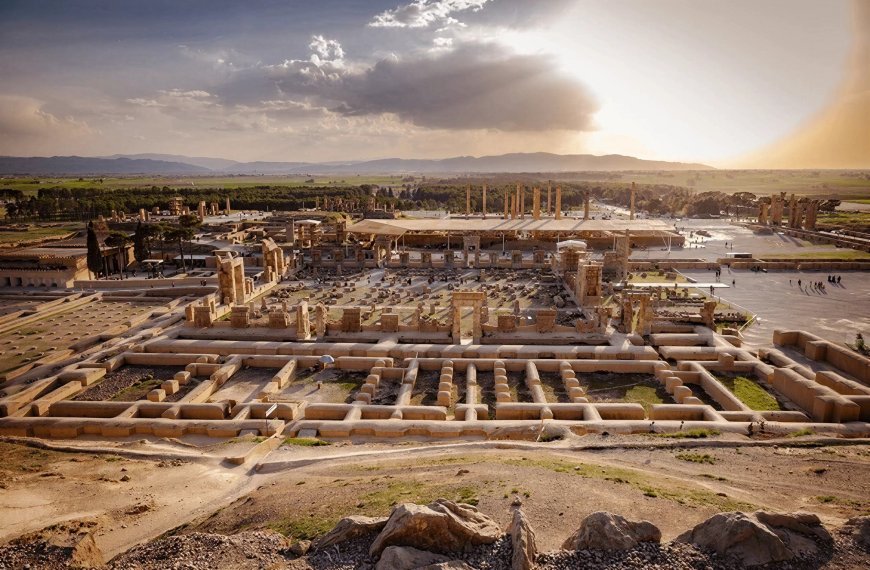
History, if approached not as a catalogue of events but as a repository of human experiments, offers unsettling comparisons. Among these, the Achaemenid Persian Empire stands as a quiet but powerful counterpoint to our contemporary disorder. Nearly two and a half thousand years ago, when political fragmentation was the norm and imperial rule often synonymous with brutality, Persia articulated a different logic of power. It was not a utopia, nor should it be romanticized beyond its historical limits.
Yet it embodied principles that feel strangely absent in today’s global order.
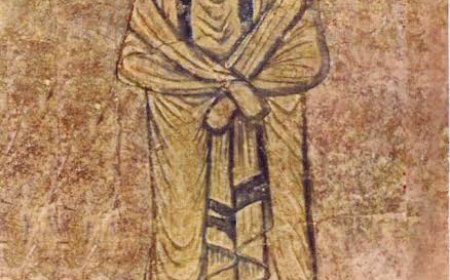
Cyrus the Great, often remembered as a conqueror, was in many ways an architect of restraint. His governance reflected an understanding that domination alone does not sustain an empire. Justice, or at least the perception of it, was indispensable. The famous Cyrus Cylinder, often interpreted as an early charter of human rights, may not align perfectly with modern liberal ideals, but it represents a remarkable acknowledgment that diversity within an empire could be a source of strength rather than a liability.
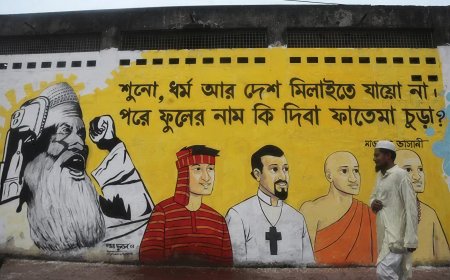
Religious and cultural tolerance were not moral luxuries. They were political necessities, rooted in a pragmatic wisdom that resonates with contemporary theories of pluralism.
This is where the Persian example becomes unsettling. In a world today marked by rising ethno-nationalism and ideological polarization, we often behave as though tolerance is a modern invention, fragile and negotiable. Yet, more than two millennia ago, a vast empire spanning multiple cultures found ways to accommodate difference without collapsing into chaos.
The sociologist Max Weber spoke of legitimacy as the foundation of authority. The Persians seemed to grasp this intuitively. Their rule was not sustained merely by coercion but by a system that, to a significant degree, was accepted by the governed.
Equally striking was their administrative innovation. The satrapy system, a form of provincial governance, allowed for decentralization within a centralized framework. It recognized the limits of direct control and the importance of local knowledge. Modern states, despite their sophisticated bureaucracies, continue to struggle with this balance.
The Persian Royal Road, facilitating communication across vast distances, symbolized more than logistical efficiency. It represented an early understanding of connectivity as the lifeblood of governance. In contemporary terms, one might see echoes of this in our reliance on digital infrastructure, though our use of such systems often amplifies division rather than cohesion.
The comparison becomes even sharper when placed against the backdrop of our technological achievements. The legacy of the space age, from the moon landing to current ambitions of interplanetary travel, has redefined the boundaries of human possibility. Artificial intelligence promises to reshape economies and societies.
Advances in genetic engineering challenge our understanding of life itself. These are not trivial accomplishments. They represent the extraordinary capacity of human reason and creativity.
Yet, as the philosopher Theodor Adorno warned in the aftermath of the Second World War, progress in instrumental reason does not guarantee moral progress. The same rationality that builds can also destroy. The bureaucratic efficiency that administers welfare can just as easily administer violence.
This duality is not accidental. It is embedded in the very structure of modernity. Our tools have become more powerful, but our ethical frameworks have not evolved at the same pace.
This tension is visible in international relations. Despite the existence of global institutions and a shared discourse of human rights, the logic of power politics remains largely unchanged. Realism, as articulated by thinkers like Hans Morgenthau, continues to dominate state behaviour.
National interest, often narrowly defined, overrides considerations of global welfare. Trust is scarce, cooperation fragile, and conflict persistent. The language of diplomacy frequently masks a deeper competition for dominance.
In such a context, the Persian model invites a provocative question. Can an empire or a state be both powerful and humane? The Achaemenid experience suggests that the answer, while not straightforward, is not entirely negative. Their approach was not driven by altruism alone. It was grounded in a recognition that stability requires a degree of consent, and consent requires respect.
This insight seems to have been diluted in contemporary geopolitics, where the pursuit of security often undermines the very conditions that make security possible.
The historian Arnold Toynbee argued that civilizations rise and fall based on their ability to respond creatively to challenges. Failure to do so leads to decline, not always through external conquest but through internal decay. If we apply this framework to the present, the challenge is not merely technological or economic.
It is fundamentally moral. We are confronted with the task of aligning our immense capabilities with a sense of responsibility that extends beyond narrow identities and immediate gains.
There is also a psychological dimension to this crisis. The persistence of violent rhetoric and destructive tendencies points to what Sigmund Freud described as the death drive, an inherent inclination towards aggression and self-destruction. Civilization, in Freud’s view, is an attempt to contain and redirect these impulses.
When this containment weakens, the underlying instincts resurface with alarming intensity. The threat of regression to a “Stone Age” is thus not only a geopolitical statement. It is an expression of a deeper anxiety about our own fragility as a civilized species.
From a sociological perspective, the current moment can be seen as a crisis of integration. Émile Durkheim emphasized the importance of social cohesion in maintaining order. As societies become more complex and diverse, the mechanisms that bind individuals together must also evolve.
When they fail, the result is anomie, a state of normlessness where individuals and groups lose their sense of direction. On a global scale, this manifests as fragmentation, mistrust, and conflict. The absence of a shared moral framework makes cooperation increasingly difficult.
It is here that the memory of civilizations like Persia becomes more than an academic exercise. It serves as a reminder that alternative models of organization and coexistence have existed. These models were not perfect, but they offer insights into how power can be exercised with a degree of restraint and inclusivity. They challenge the assumption that dominance and exclusion are the only viable strategies in a competitive world.
The contrast between our technological ambitions and our moral shortcomings raises an uncomfortable possibility. What if our progress is fundamentally unbalanced? What if we have mistaken the expansion of capability for the advancement of civilization? The ability to reach the stars does not necessarily make us more humane. It simply extends the arena in which our virtues and vices can operate.
This is not an argument against progress. It is an argument for a different conception of it. True development must involve not only the accumulation of knowledge and power but also the cultivation of wisdom. The Persian example, in its own historical context, illustrates a form of wisdom that recognized the limits of force and the value of diversity. It suggests that strength and tolerance are not mutually exclusive but mutually reinforcing.
The challenge, then, is not to replicate the past but to learn from it. This requires a willingness to engage in self-criticism, to question the narratives that justify our actions, and to imagine alternatives. It requires, in philosophical terms, a move from a purely instrumental rationality to a more reflective and ethical one.
Jürgen Habermas, building on this tradition, emphasized the importance of communicative action, dialogue aimed at mutual understanding rather than strategic advantage. Such an approach, though idealistic, offers a counterpoint to the prevailing logic of confrontation.
Ultimately, the question is not whether we will continue to advance technologically. That trajectory seems almost inevitable. The question is whether we will allow our moral and political frameworks to stagnate or regress.
H. M. Nazmul Alam is an Academic, Journalist, and Political Analyst based in Dhaka, Bangladesh. Currently he teaches at IUBAT.