





























































Jamaat's Quiet Victory
What Jamaat's 68 seats do is give the party institutional leverage to shape the answers to questions that matter far more than whether Bangladesh wakes up tomorrow under a theocracy.

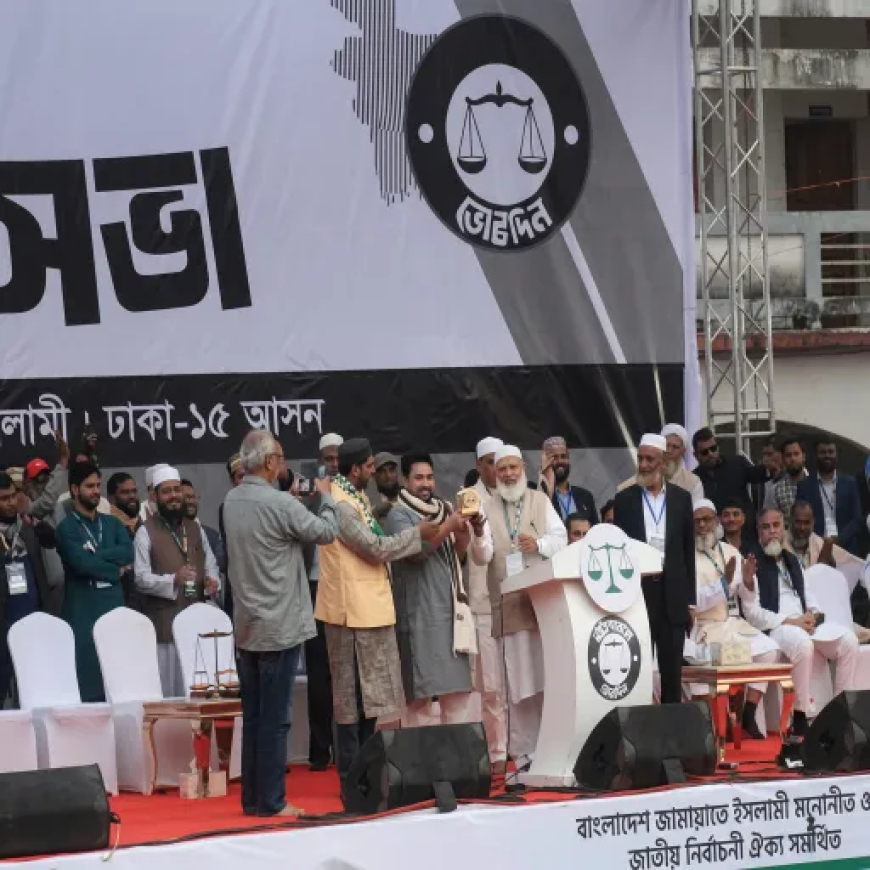
We know the story of February 12, 2026 -- heck, we were all a part of it.
BNP returns from the wilderness and from computer screens with a two-thirds majority. Bangladesh chose its government, after fifteen years, finally stepping out of the long Awami shadow.
It was a compelling narrative, and not entirely wrong. It was also incomplete. Because if you look past the victory speeches and into the spreadsheets, another story is hiding in the numbers.
Jamaat-e-Islami, a once-banned and presumed-finished party, quietly walks away with the most consequential gains of the election.
According to Election Commission data, Jamaat alone secured 68 seats, the highest tally in its history with narrow defeats in more than 50 other constituencies.
In 1991, the party won 18 seats as a junior Islamist partner; more than three decades later, it has nearly quadrupled that count and done so as the second-largest bloc in the new parliament.
For a party that was legally barred from contesting as recently as 2024, this is not a footnote. It is a structural shift.
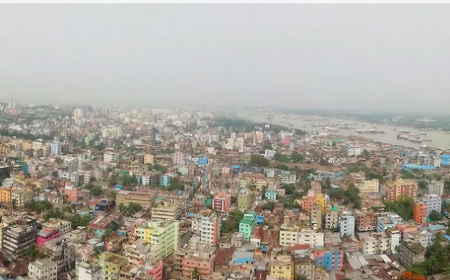
The geography of those seats matters as much as the arithmetic. As The Print and other Indian outlets have already noted with thinly-veiled anxiety, roughly three-quarters of Jamaat's parliamentary victories came from constituencies along the border belt with India.
The party's strongest performances were in Khulna, Rangpur and Rajshahi divisions: 25 of 36 seats in Khulna, 16 of 33 in Rangpur, 11 of 39 in Rajshahi. It swept all four constituencies in Satkhira, took three of four seats in Kushtia, and established itself as a dominant force in parts of Rangpur, Nilphamari, Kurigram, and Kushtia.
Nationally, BNP still controls the frontier narrative with the bulk of border-division seats. But the cartography tells its own story. In the zones where citizenship, identity, smuggling and security anxieties are already high, an Islamist party with a disciplined cadre and a long memory now has a base it had never had before.
To say this out loud is to immediately risk being pulled into someone else's caricature. In Indian television studios, the Jamaat surge has already been framed as "Taliban at the border." In our very own “non-aligned” talk shows, the party is still discussed as something we must perpetually keep an eye on, as if Mullah Omar were about to open an office in Satkhira. That is theatrically useful but analytically useless.
Jamaat is many things, but in my opinion it is not a militia waiting to impose a medieval code by decree.
Historically, the party's ideology grew out of Abul A'la Maududi's project: The vision of an Islamic order in which sovereignty belongs to God, the state is an instrument of faith, and non-Muslims live as protected but subordinate communities.
For decades, its official documents spoke openly of establishing an "Islamic system" and a shariah-based state. That language is no longer there.
In 2012, Jamaat amended its constitution: "Islamic system" was replaced with "democratic system," and its stated goal became "a society based on equality and justice through a democratic system and to achieve the pleasure of Allah Almighty."
Recent party communications speak of Islamic democracy, minority rights and women's right to work. Its leadership has gone out of its way to describe Jamaat as a "modern, liberal democratic party whose ideal is Islam."
Needless to say, they need to relax a little too. It still bars women from its top decision-making bodies, still rejects female leadership in practice, still insists on introducing Islamic norms through the "electoral process," and still sees itself as an Islamic movement as much as a political party.
But it is not a formation that can simply declare shariah by fiat, even if it wanted to. And frankly, I do not think it wants to.
What Jamaat's 68 seats do is give the party institutional leverage to shape the answers to questions that matter far more than whether Bangladesh wakes up tomorrow under a theocracy.
Committee chairmanships, influence over education and social welfare portfolios, bargaining power in local administrations; all of these are now live possibilities, even if BNP does not bring Jamaat formally into cabinet.
And here is the thing: Jamaat has been inside these systems long before BNP got its foot in the door, long before the uprising.
Like in the movies -- they were always there.
Whatever one's political disagreements with Jamaat, there is one thing its critics consistently underestimate and that is the organization.
Jamaat does not function like a conventional South Asian political party the kind built around a single family, a regional strongman, or a last-minute electoral alliance stitched together before filing day. It functions more like a disciplined cadre organization, closer in structure to a Leninist party than to anything the mainstream
Bangladeshi left, including the Communist Party of Bangladesh, has managed to sustain in decades. From the student wing Islami Chhatra Shibir to its professional associations for doctors, lawyers, engineers and teachers, Jamaat has built a layered, self-reinforcing institutional presence that operates continuously between elections, not just during them.
Its members are vetted through a tiered membership system of Rokon, Kormi, Sathi that rewards ideological commitment and organizational loyalty over connection and money.
Its local units run welfare services, educational support and community arbitration in areas where the state is absent and the mainstream parties are invisible.
This is how Jamaat holds its ground in Satkhira, in Nilphamari, in Kushtia, in Bangladesh -- not by shouting loudly during campaigns, but by being present, quietly and consistently, when no one else is. You may disagree with what it stands for. It is harder to disagree with how it works.
When the interim government was in power, "you are empowering Jamaat" was as ubiquitous as a Manchester United match. Everyone had seen it, everyone had a take, and it was playing on every screen simultaneously.
It is a line worth interrogating, because it rests on a premise the evidence does not support: That Jamaat requires external empowerment to survive.
The more you study the organization, the harder that premise is to maintain. Jamaat has not historically waited for anyone to hand it power. If anything, the traffic has run in the other direction.
Jamaat, quietly and with remarkable consistency across decades, has been a source of institutional capacity for others -- for BNP, which has relied on Jamaat's ground machinery in election after election; for the CPB and the broader left, which borrowed organisational models it could never quite replicate; for civil society formations that absorbed Jamaat-trained personnel without always asking too many questions.
And most consequentially, most ironically, for the Awami League itself, which kept Jamaat's spectre alive and threatening for fifteen years as its most dependable electoral instrument, invoking it whenever democratic accountability became inconvenient.
There is a certain reluctant admiration one has to extend to an organisation that managed to remain indispensable to everyone, including its own enemies. That is not empowerment from outside.
That is a very particular kind of institutional discipline doing exactly what it was designed to do. There is a tendency to fold Jamaat into a single undifferentiated "Islamist threat" category.
Bangladesh cannot afford that simplification. It needs to see -- and name -- exactly what Jamaat is: A far-right Islamist party trying to become centre right with a long organizational spine.
A history that includes complicity in 1971 but also a present in which it contests elections, amends its charter and tries to speak a language of rights and democracy.
BNP's landslide gives it the numbers to govern without Jamaat, at least on paper. The question is not whether the new government needs Jamaat to survive a budget vote; it is whether it is willing to keep Jamaat at arm's length in practice, in appointments, in local alliances, in legislative bargains.
Every time BNP trades a committee chairmanship, a local ticket or a policy concession for Jamaat's cooperation, it will be making a choice about the kind of political ecology it wants to inhabit five years from now.
Jamaat's quiet victory on February 12 was not that it got 68 seats. It was that it re-entered the centre of politics in an election whose headline was supposed to be someone else's redemption story.
The party has already begun presenting itself as a "clean" alternative to the corruption of older parties. A disciplined, value-driven force for order.
In a country exhausted by repression, economic crisis and elite impunity, that message will find listeners. If this election is remembered only as BNP's return, we will miss the subtler, slower shift already underway. Jamaat has come back not as a street militia or a shadowy coalition partner, but as a visible, vote-getting, border-belt power.
It is not about to turn Bangladesh into a shariah emirate. It is doing something far more familiar in democratic politics: Winning enough seats, in enough sensitive places, to make sure nobody governs without looking over their shoulder at it.
Apurba Jahangir is a writer, political analyst, and former deputy press secretary to the Chief Adviser of the Interim Government of Bangladesh.