














































The Case for Mangal Shobhajatra
If belief is so fragile that papier-mâché masks and symbolic animals can threaten it, the problem lies not with the procession, but with the insecurity of that belief.

The High Court writ seeking a permanent ban on Mangal Shobhajatra is one of those moments that future historians may revisit with a mixture of disbelief and dark irony. At a time when society is grappling with economic precarity, political fragility, and diminishing global relevance, we find ourselves litigating a word.
Not policy failure. Not inequality. Not governance. A word. One can almost imagine this period archived as The Great Anxiety over “Mangal.”
At the core of the petition lies a familiar yet profoundly flawed claim: That Mangal Shobhajatra is “artificial” because it originated in 1989, and therefore lacks legitimacy as tradition. This argument collapses under even the lightest historical scrutiny. If newness disqualifies legitimacy, then the modern nation-state, the constitution, and indeed the very legal instrument of the writ itself would stand equally condemned.
Tradition is not an archaeological relic waiting to be unearthed intact. It is constructed, negotiated, and institutionalized over time. Many practices presented as ancient are, in fact, modern creations that gain authority through repetition and symbolic power. Modern nations routinely cultivate cultural practices that gradually acquire the aura of timeless heritage.
The question, therefore, is not whether something is new, but whether it carries meaning and social legitimacy. And Mangal Shobhajatra unquestionably does.
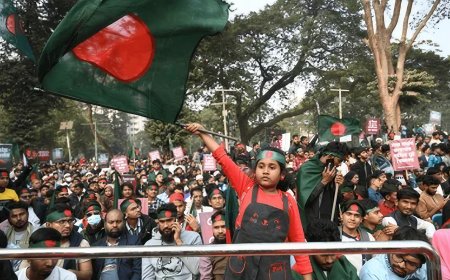
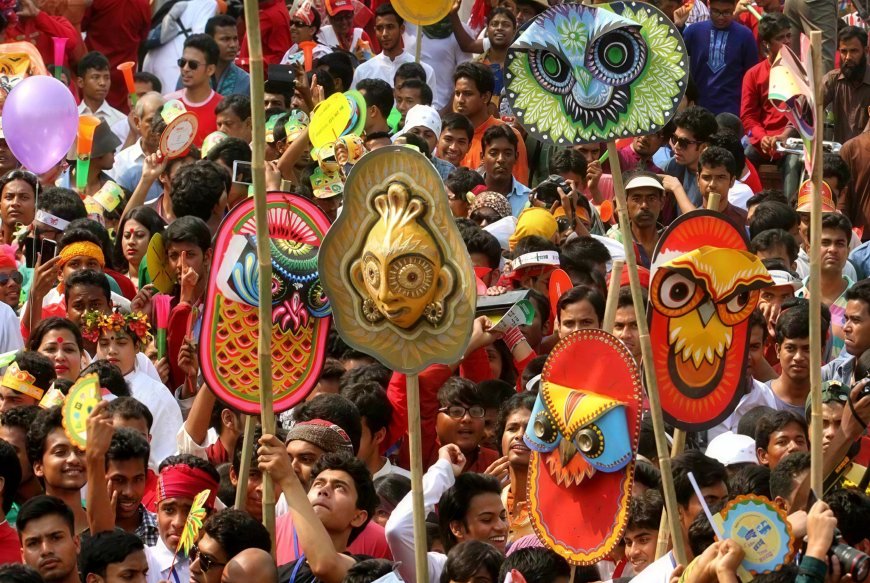
Culture is not a fossil; it is dynamic, contested, and continuously remade. What began in 1989 as Anondo Shobhajatra was not a whimsical artistic parade. It was a political act. Emerging from the anti-authoritarian struggles of the 1980s, it transformed Pohela Boishakh into a site of symbolic resistance.
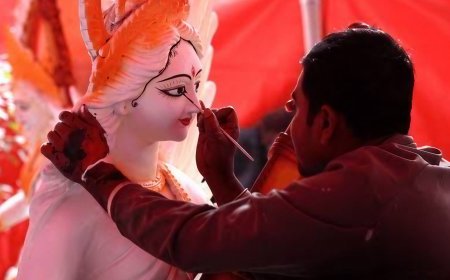
Students of the Faculty of Fine Arts at Dhaka University mobilized masks, motifs, satire, and colour as a language of dissent against dictatorship. Over time, this procession evolved into Mangal Shobhajatra, became central to the national celebration of the Bengali New Year, and was eventually recognized by Unesco in 2016 as intangible cultural heritage.
To dismiss this as “artificial” is not merely inaccurate, it is intellectually disingenuous.
But the writ is only part of the story. The state itself now appears engaged in a quieter, subtler project, renaming. Mangal Shobhajatra becomes Anondo Shobhajatra, then “Boishakhi Shobhajatra.” At first glance, this may seem bureaucratically harmless, even neutral. But neutrality here is precisely the strategy.
Because this is not just a change of name, it is a transformation of meaning.
Language is never innocent. Power operates not only through repression, but through discourse by shaping what can be said, how it is said, and what it is allowed to mean.
“Mangal Shobhajatra” carries dense layers of memory: resistance, satire, collective aspiration, the symbolic triumph of the auspicious over the ominous. Replacing it with “Boishakhi Shobhajatra” strips away that history.
The procession is sanitized, depoliticized, rendered safe. The teeth of history are pulled out; what remains is a smile without a bite.
This is not accidental. It is a deliberate project of depoliticization. Mangal Shobhajatra reminds us that culture can resist power, that celebration can carry political meaning. “Boishakhi Shobhajatra,” by contrast, suggests something benign, decorative, and forgettable.
Antonio Gramsci’s concept of cultural hegemony is instructive here: Power sustains itself not only by coercion, but by reshaping cultural meaning. If a symbol cannot be banned outright, it can be redefined until it no longer unsettles.
The petition further claims that the procession injures the faith of the Muslim majority -- a claim that is not only troubling, but conceptually incoherent. Faith, by definition, is deeply personal. How does a court measure “injury to faith”? If belief is so fragile that papier-mâché masks and symbolic animals can threaten it, the problem lies not with the procession, but with the insecurity of that belief.
The argument of violated “religious freedom” is similarly inverted. In a plural society, as John Rawls argued, the role of the state is to ensure the coexistence of diverse worldviews not to elevate one group’s discomfort into a veto over others’ cultural expression. To prohibit a cultural practice because it unsettles some believers is to transform freedom of religion into domination by religion.
Fundamental rights are not privileges granted by the majority; they are trumps against majoritarian will. If majority sentiment becomes the final arbiter, constitutionalism itself collapses.
Perhaps the most dangerous argument in the petition is the claim that Mangal Shobhajatra could incite communal conflict. This is the classic heckler’s veto, the idea that the possibility of offence or violence justifies suppressing expression. Accepting this logic sets a perilous precedent. If potential offence becomes grounds for prohibition, then anything books, art, music, ideas can be silenced.
The invocation of the “Muslim majority” itself demands scrutiny. Who speaks for this majority? Who decides that its faith is collectively wounded? As Benedict Anderson’s notion of imagined communities reminds us, collective identities are constructed often strategically. The “majority voice” is rarely as unified or organic as it is made to appear.
At its core, Mangal Shobhajatra embodies a narrative in which Bengali cultural identity transcends religious divisions; where civic belonging is grounded in shared cultural life; where celebration itself becomes a quiet act of resistance. It is precisely this narrative that appears unsettling.
Because if this were genuinely about faith, renaming would solve nothing. Removing the word “Mangal” would not suddenly render the procession acceptable. The fact that renaming is treated as a solution reveals the truth: The problem is not theological, it is political.
Language does not merely reflect reality; it actively produces it. To rename is to reframe. To reframe is to reshape memory. And to reshape memory is ultimately to reshape identity.
We thus arrive at a moment bordering on the absurd. While other societies debate artificial intelligence and planetary exploration, we argue over the religious permissibility of a word. Kazi Nazrul Islam mocked such obsessive triviality a century ago, lamenting a society trapped in hollow theological disputes while the world surged ahead.
It appears we have not travelled very far only upgraded the stage to courts and social media. If this logic continues, will “Tuesday” itself become controversial? Will language be cleansed of all historical weight until nothing remains but sterile neutrality a vocabulary without risk, without memory, without meaning?
Jawaharlal Nehru once observed that while colonialism inflicted economic damage, its deeper wound lay in cultural erosion. To weaken a society, one must first hollow out its cultural foundations.
In Bangladesh, that erosion is increasingly visible. Nabanna has faded. Jatra has declined. Jari-Sari traditions have receded. Bhawaiya and Puthi have been marginalized. Pohela Boishakh remained one of the last major cultural anchors, and now even its most powerful symbol stands accused.
So the question is deceptively simple. Is Mangal Shobhajatra truly a threat to anyone’s faith? Or is it a cultural force that unsettles a politics invested in narrowing identity?
Because if a procession made of masks, colours, and collective imagination can be framed as a threat to national stability, then the problem does not lie with the procession.
It lies with our confidence, as a society.
Dr. Lubna Ferdowsi is an Academic and Researcher based in England.