































































A Resistance Song for the New Empire
The right to live in peace is not a gift from empires. It is a demand, shouted into the barrels of their guns. It is a world, built stone by stone, in the ruins they leave behind.
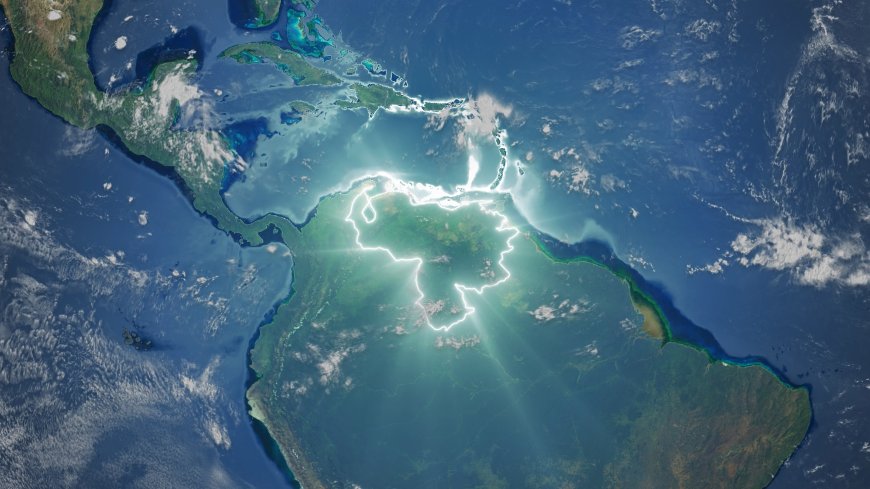
The first blasts tore through Caracas just after two in the morning, a series of concussive waves that shattered glass and shook the ground as if the earth itself were recoiling.
In the chaotic darkness, amidst the screams and the rising plumes of smoke from military installations, another sound began to echo -- not from the skies, but from the streets and smartphones of a defiant people. It was the opening chords of Victor Jara’s “El Derecho de Vivir en Paz” (The Right to Live in Peace).
This protest anthem, born in 1971 as an homage to Vietnamese resistance, has become a universal cry for sovereignty.
Its resurrection in Caracas is no coincidence. It is the instinctive response of a people recognizing an old pattern: The melody of empire never changes, only its intended audience.
Today, as the United States bombs Venezuelan soil, kidnaps its president, and declares its intent to run the nation, we witness not a new war but the oldest of tricks: Perfidy, cloaked in a modern strategic doctrine and aimed at crushing the very idea of a multipolar world.
A Doctrine Reborn in Panic
To understand the betrayal, one must first recognize the blueprint. The attack and subsequent abduction of January 3, 2026, are the violent culmination of a strategy explicitly laid out months prior.
The Trump administration’s foreign policy has executed a dramatic pivot, refortifying American dominance in its own hemisphere under what analysts term a “Trump Corollary to the Monroe Doctrine”.
This is Monroe Doctrine 2.0: Not a thoughtful policy, but a doctrine of panic drafted by an empire that feels its unipolar moment slipping away. Its objective is hemispheric reassertion, driven by fear of economic decline and strategic irrelevance.
The language of “strategic competition” and “national emergency” is a thin veneer for a desperate, violent reassertion of control. When diplomacy fails to deliver submission, this doctrine dictates that bombs must speak, and when bombs speak, soldiers follow to kidnap presidents in the night.
Why Venezuela? Why Now?
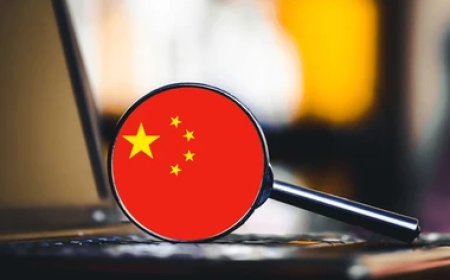
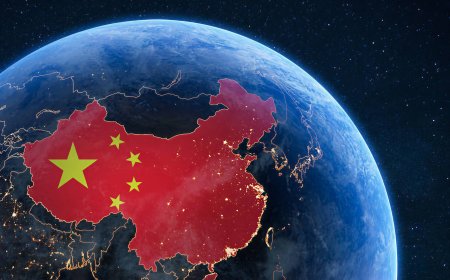
The answer lies not in the discredited pretexts, but in a ledger and a map. The true target in Caracas is the profound strategic partnership between Venezuela and China. China is Venezuela’s largest trading partner, with bilateral trade hitting $6.4 billion in 2024.
A staggering 85% of Venezuela’s crude oil production flows to Chinese refineries, servicing an “All-Weather Strategic Partnership” that has involved over $60 billion in financing.
For Washington, this partnership is an intolerable affront. It represents a sovereign nation successfully leveraging the world’s largest oil reserves to build a future with a rival power.
The mask has now fully fallen.
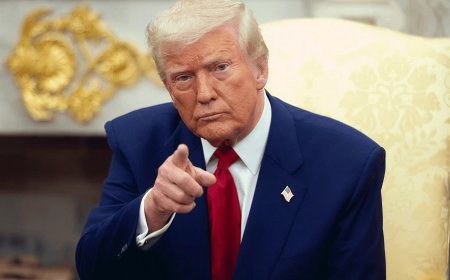
Following the operation, President Trump dispensed with all pretexts of law enforcement, declaring the U.S. would now run Venezuela and explicitly tasking American oil companies with taking control of its degraded infrastructure, stating the venture wont cost us a penny.
This is no longer implied plunder; it is declared policy.
The bombs over Caracas and the abduction of its leader are therefore a message written in fire and shrapnel: This is what happens to nations that choose an alternative path.
Kidnap as Foreign Policy
This brings us to the heart of the outrage -- the perfidious betrayal that makes this aggression uniquely cynical. In the weeks preceding the attack, channels of dialogue were open.
President Nicolás Maduro had publicly stated his openness to talks with the United States. This perfidy reached its zenith not with the bombs alone, but with the extraordinary rendition of a sovereign head of state.
U.S. Special Forces executed a raid, seizing the President and First Lady and transporting them to a U.S. warship before flying them to New York to face charges.
The Venezuelan judiciary has declared this a forced absence, with the newly appointed interim president, Delcy Rodríguez, condemning it unequivocally as a kidnapping.
Yet, Western media parrots the sanitized, operational term captured -- a semantic war to mask a war crime, a willing echo in the empire’s narrative warfare. This duplicity is the empire’s signature, a deliberate sabotage of diplomacy designed to maximize shock and strategic advantage.
Is Iran Next? The Global South on the Frontline
A logical, chilling question now echoes from the Gulf to the Straits: If Venezuela is today, who is tomorrow? The pattern provides the answer. The global response to this brazen act reveals the battle lines.
While some regional leaders, echoing colonial-era divisions, have applauded the aggression, others like Brazil’s President Lula have denounced it as an unacceptable affront to sovereignty. The UN Secretary-General warns of a dangerous precedent.
This split is the very vulnerability the empire exploits. The next target will be another nation that embodies sovereign resistance, holds strategic resources, and has built a fortress of partnerships with U.S. rivals.
It will be a nation like Iran. The assault on Venezuela is a live-fire test -- a probe of global resolve. If the response from the world, and particularly from the collective Global South, is fragmented, muted, or trapped in equivocation, then the path to the next war is cleared. Our silence would be our collective suicide.
Building the Symphony of Survival
This is why Victor Jara’s song is more than a relic; it is a blueprint for survival. He did not sing only for Vietnam or Chile. He sang for the universal right to exist free from imperial annihilation.
Our resistance today must be as multifaceted as the threat we face. We must move beyond statements of condemnation to architectures of defiance.
This means accelerating indigenous payment systems and local currency swaps that bypass the dollar’s weaponized hegemony.
It means transforming bodies like the United Nations from stages for pleading into platforms for united, prosecutorial action, as Venezuela’s call for an urgent Security Council meeting demands.
Most importantly, it means amplifying our own narratives and our own songs. We must become the authors of our story, rejecting the colonial script that labels our kidnapped presidents as captured and their plunder as democracy promotion.
The right to live in peace is not a gift from empires. It is a demand, shouted into the barrels of their guns. It is a world, built stone by stone, in the ruins they leave behind. The bombs in Caracas and the kidnapping of its president are meant to terrorize us into silence and compliance.
Our answer must be to amplify the song -- from the streets of Caracas to the ports of the Indian Ocean to the town squares of Dhaka, Dakar, and every capital that refuses to kneel.
We must build, with unbreakable solidarity, the symphony of a multipolar world. The alternative is to wait, alone, for the boots on the ground to finally march toward our own homes.
As they say in the streets of Santiago, where Jara’s music still fuels protest: El pueblo unido jamás será vencido. The people, united, will never be defeated.
Zakir Kibria is a Bangladeshi writer, policy analyst and entrepreneur based in Kathmandu, Nepal.