
































































The Manipur-Myanmar Axis
It is a multi-dimensional conflict with deep historical roots of land rights, fears of demographic weakening, and above all, transnational ethnic ties.


International focus on Myanmar’s internal civil war and Rohingya refugee crisis has caused neglect of an important South Asian geo-political flashpoint that is burning in the shadows.
The deepening crisis within Manipur, which is an Indian state, reflects a protracted period of violence. This is closely tied to the region's porous border. Geographically positioned at a crossroads of instability, Bangladesh has become a mute victim of a complex regional situation.
Sadly, the global community seems to ignore the complexity and interconnectedness of this issue, leaving Dhaka to deal with the geo-political spillover.
To truly understand the scale of the threat, we must go beyond the internal state conflict parameters.
The present violence in Manipur is not just a turf war between valley-dominant Meitei and hill-dwelling Kuki-Zo groups in Manipur.
It is a multidimensional conflict with deep historical roots of land rights, fears of demographic weakening, and above all, transnational ethnic ties.
The Kuki-Zo people are closely related, ethnically and kinship-wise to the people of Chin State of Myanmar as well as to the CHT people of Bangladesh.
As a result, ethnic polarization in Manipur has a natural tendency to cross borders, making the domestic crisis a regional security issue.
Why Lines on a Map Fail
We can employ an interpretation of "Borderland Geo-politics" that suggests a lack of respect for the borderline when there is an ethnic connection that predated the establishment of a state.
Tensions aren’t confined solely to political borders. The India-Myanmar borderlands are extremely porous and this is the main cause of regional instability.
Usually, 16km Indo-Myanmar Border Management Agreement on Free Movement Regime (FMR) allows the tribal people on either side of the Indo-Myanmar border to move freely without a visa to and fro up to 16km.
Originally aimed at maintaining familial and economic bonds of the indigenous population, the weak enforcement turned the porous border into a refuge for insurgents and transnational criminal organisations.
As authorities took a back seat owing to ethnic riots in Manipur and an anti-junta war in Myanmar, weaponization of the geography of the region was complete.
Linking Arms, Drugs, and the Illicit Economy Would Be Fine
The Spillover Effect perfectly describes Bangladesh’s predicament in international relations. The political, social and security situation in neighboring states is also affected when conflicts in neighboring regions are allowed to fester.
As a result of the Manipur conflict and the Myanmar civil war, state armories have been looted and millions of illegal small arms are circulating through un-policed routes.
At the same time, administrative controls are crumbling, fuelling the shadow economy in the region. The lack of a geopolitical presence has allowed the trafficking of meth, otherwise known as Yaba and Ice, from the “Golden Triangle” of Myanmar towards India’s Northeast and Bangladesh.
The illegal trade is not just a law enforcement issue; it is also the life blood of armed groups across the region that sustains the war economy and instability.
Violated Internal Security of Bangladesh
The geopolitical pressure on Bangladesh is direct and intense, making the country a direct victim of the situation. The Chittagong Hill Tracts have tough borders with India and Myanmar.
The level of intensity of the Kuki-Meitei conflict in Manipur, and Chinland clashes in Myanmar, impacts the psychological and strategic dynamics of the CHT ethnic minorities.
The recent emergence of militant groups like the Kuki-Chin National Front (KNF) in Bangladesh, and their cross-border mobility to India, proves that the fire from your neighbours is already burning at your doorstep.
The growing availability of small arms and the influx of drug funds is emboldening local insurgent groups, which seriously threaten the hard-won peace of the Chittagong Hill Tracts.
Bangladesh’s internal apparatus now forced stretched meant to monitor a border under attack with destabilisation not being carried out by others but by outsiders.
The Burden of Humanitarianism
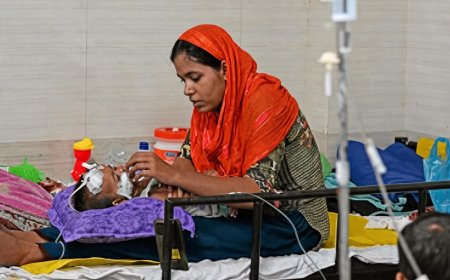
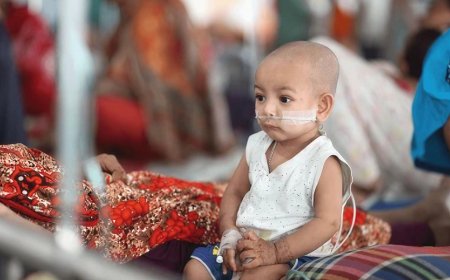
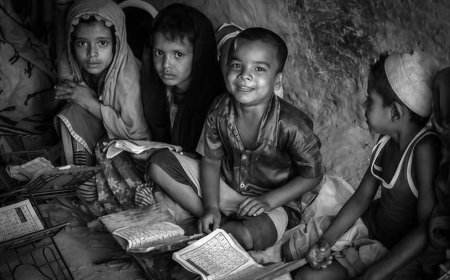
Moreover, the burden of hosting over 1.2 million Rohingya refugees is already overwhelming Bangladesh. As fighting continues between the Arakan Army (AA) and Myanmar’s junta forces in Rakhine and Chin states, many displaced people are trying to cross the border into Bangladesh.
The conflict in Manipur is only making it more complicated. As violence drives thousands from their homes in India’s Northeast, and Myanmar’s military continues to conduct airstrikes near the hinterlands, edge-of-the-spectrum groups are seeking refuge anywhere they can find.
Huge pressure is put on the border management, economy, and society of Bangladesh. Dhaka is pretty much paying for the inability of its neighbours to keep domestic peace.
Blind Spots in World Diplomacy
There is a glaring blindspot in global diplomacy despite the continued cascading threats. The international community has not understood the interlinking conflict belt of Manipur and Myanmar.
The capitals of the West, the United Nations and international media usually see the crisis in Myanmar simply in terms of restoring democracy or the Rohingya genocide.
They deliberately overlook the instability posed to the greater South Asian and Indo-Pacific security architecture by porous borderlands and the Manipur crisis.
This flawed vision could threaten diplomacy. By neglecting to acknowledge that the war is regional and not global, the international community is making it a transnational problem.
Bangladesh is a victim of circumstance due to the absence of international understanding which forces the country to tackle a multilateral geopolitical crisis with unilateral resources.
Bangladesh’s Strategic Imperatives
As a responsible state, Bangladesh has no option but to look at these regional conflicts separately any longer or always waiting for the international community to wake up late.
A very active, very robust strategic posture should be adopted by Dhaka.
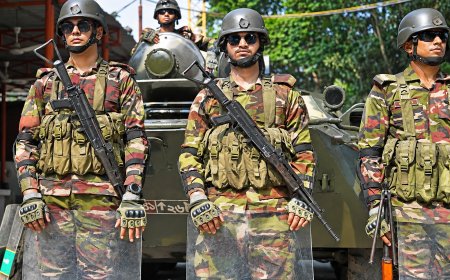
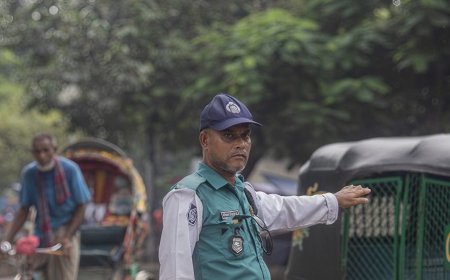
The foremost priority is border security. To impede the supply lines of arms, drugs, and people, the use of advanced surveillance technologies like thermal imaging, drones, satellite monitoring, and digital sensors, and increasing sharp border patrols by the BGB in CHT and Cox’s Bazar is crucial.
Moreover, Bangladesh needs to initiate a strong diplomatic campaign. Dhaka must always raise this interlinked border issue at the bilateral tables with New Delhi and Naypyidaw. Additionally, Bangladesh needs to use regional platforms like BIMSTEC and ASEAN to portray the regional security threats.
The final message to the world must be clear: The Indo-Pacific will not be stable as long as the Manipur-Myanmar borderlands are not stable. Countries that want a “Free and Open Indo-Pacific” should realise that maritime security is linked to the stability of the adjoining continental borderlands.
Fires do not stop at borders of civil wars. The persistent burning of Manipur and chaos in Myanmar have established that in this region of porous borders, no state can afford to be fully insulated.
As an innocent bystander, Bangladesh has already paid a heavy demographic, economic, and strategic price. We can no longer view ourselves as mere spectators.
Instead, we must become empowered, active players on the world stage. We must hold our neighbors accountable and demand that the world notice the carnage taking place on our eastern frontiers in South Asia.
Md Shihab Uddin is an independent researcher and a student of Folklore and Social Development Studies at the University of Rajshahi. He may be contacted at [email protected].