




































































Bangladesh’s Democracy Needs Institutions That Outlast Its Governments
The willingness to impose consequences within the ruling party is a welcome signal. Its lasting significance will depend on whether accountability becomes sufficiently routine that citizens no longer have to wait for intervention from the top.

A government’s willingness to tolerate criticism matters. A citizen’s ability to criticize it without depending on that willingness matters even more.
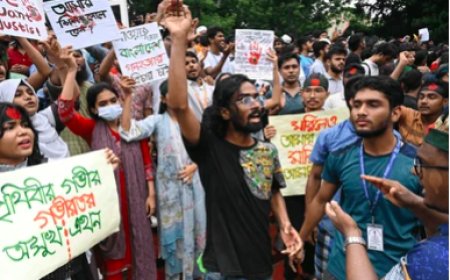
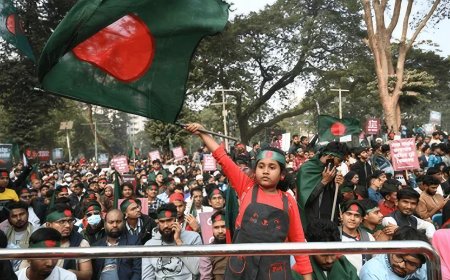
That distinction should guide how Bangladesh assesses its democratic progress after the July 2024 uprising and the February 2026 election. Greater political space creates an opportunity. The harder task is to make freedom secure when political interests change.
Recent events have brought that challenge into sharper focus. Earlier this month, reserved-seat MP Ferdousi Ahmed Misty resigned following the prime minister’s instruction amid allegations concerning an attack on a clinic in Mirpur.
On October 19, Ishraque Hossain announced his resignation as state minister for Liberation War Affairs following controversy over his participation in an anti-drug operation while carrying a firearm. Ishraque described his departure as voluntary, although reporting indicated that the prime minister had instructed him to step down.
Action against influential figures within the ruling party deserves recognition. Ishraque is a prominent younger leader whose public profile developed through opposition mobilization. Taking action against someone of his standing carries political costs. It signals that popularity and contributions to a movement do not remove the responsibilities that come with public office.
The government should build on that signal. A resignation establishes a political consequence. Where wrongdoing is alleged, impartial investigation must establish what happened and whether legal proceedings are warranted.
The credibility of these decisions will ultimately depend on whether comparable cases receive comparable treatment.
The UK Home Office’s recently published fact-finding report Report of a fact-finding mission Bangladesh: political situation, October 2026 provides a useful backdrop.
Its executive summary offers a positive assessment: “The political situation has stabilized and generally improved since the July 2024 uprising.” It also records concerns about police accountability, corruption and limited institutional reform.
The interviews informing the report predate the recent resignations. The report brings together sources’ accounts, including differing assessments, rather than independently verifying every allegation. Its value lies in identifying questions that deserve scrutiny as Bangladesh moves forward.
The most consequential of these is whether improvements in political behaviour will become dependable institutional practice.
For most citizens, that question has a practical meaning.
Will a police station accept a complaint against someone with political connections? Can a journalist question a minister without fearing retaliation? Will a public official explain why a local project was approved, who received the contract and how the money was spent?
People should be able to obtain answers without finding someone influential to make a telephone call.
This is why police accountability deserves sustained attention. Police officers need adequate resources and institutional support to perform their duties lawfully. Citizens need a credible avenue for complaints when officers fail to act or misuse their authority. Political leaders must allow investigations to proceed even when the findings may inconvenience their own supporters.
An accessible complaints process and public reporting on disciplinary action would make progress easier to assess. So would clear safeguards against interference in individual cases. Reform becomes tangible when a complainant can point to a procedure that worked.
The Ishraque controversy raises a related question about the responsibilities of elected representatives. When they believe institutions are failing to address crime, their role is to demand action, scrutinise performance and pursue lawful remedies.
Taking over an operational role risks weakening the very institutions they are responsible for strengthening.
Public frustration with crime is understandable. It makes effective policing urgent, and it makes the boundaries between political authority and law enforcement especially important.
Justice requires similar discipline. Serious abuses must be investigated, and those responsible must face fair trials. Political affiliation cannot replace evidence of individual responsibility. Nor should influence or private accommodation allow an accused person to escape scrutiny.
These principles are hardest to uphold when public anger is strongest. Yet the treatment of an unpopular defendant tells us a great deal about the independence of a justice system. Fair procedures protect the integrity of the verdict as well as the rights of the accused.
Institutional accountability matters just as much in everyday governance. Local government deserves more attention in the national conversation about democracy.
Decisions on drainage, waste collection, roads and public spaces affect people every day. When residents cannot influence those decisions or question expenditure, the distance between government and citizens grows.
My work with youth participation and local governance has made this relationship a particular concern. We should judge participation by what happens after people speak. Does a proposal receive a response? Is an agreed priority reflected in a plan? Can residents follow up when an undertaking is not fulfilled?
A meeting can begin that relationship. An official response and a visible decision give citizens a reason to remain involved.
Credible local elections are essential, alongside published budgets, accessible procurement information and functioning complaint systems. Young residents should have regular opportunities to question spending and propose priorities.
Women and people with disabilities must be able to participate through arrangements that take their access needs seriously.
Political parties have a direct role here. Their local organisations can encourage lawful participation or make public institutions harder to approach. Party discipline should therefore reach beyond nationally embarrassing incidents. A local activist intimidating a complainant may attract few headlines, but the harm to public confidence is real.
The recent action against ruling-party figures could help establish firmer expectations throughout the organisation. That would require clear standards, a fair opportunity to answer allegations and consistent consequences. Citizens should be able to expect action before a controversy becomes politically costly.
Cooperation across parties also deserves space. Political competitors can disagree vigorously while working together on a local service problem. Those working relationships may help contain confrontation when tensions rise. They also remind elected representatives that their responsibilities extend to residents who did not vote for them.
For the government, the next step should be to make its reform commitments easier to track. It should publish what it intends to implement, which institutions are responsible and when progress can reasonably be expected.
Where it rejects a proposed reform, it should explain why. Parliament should examine those decisions, with civil society and journalists able to scrutinize the evidence.
That would give the public something firmer than assurances. It would also allow the government to demonstrate achievements and explain any delays in meeting its published commitments.
Bangladesh now has an opportunity to build on a more open political environment. The willingness to impose consequences within the ruling party is a welcome signal. Its lasting significance will depend on whether accountability becomes sufficiently routine that citizens no longer have to wait for intervention from the top.
The strongest democratic legacy this government could leave is a system of trusted institutions that protects citizens’ rights and sustains the progress Bangladesh is making.
SM Shaikat is Executive Director of SERAC-Bangladesh and an international policy analyst.