







































































A Nation on a Fault Line
The recent tremors should therefore be treated not as isolated events but as a message -- a reminder that nature occasionally sends before delivering its harshest blows.


There is a peculiar habit in Bangladesh. We take disasters seriously only after they happen. Floods arrive every year, and we prepare because we have learned painful lessons from history. Cyclones once claimed hundreds of thousands of lives, but decades of investment in early warning systems and cyclone shelters transformed Bangladesh into a global success story in disaster management. Yet there is one catastrophe for which the country remains dangerously unprepared: A major earthquake.
Recent tremors across Bangladesh and neighboring regions have again reminded us of a frightening reality. Mild earthquakes have rattled parts of the country within short intervals, triggering anxiety among ordinary citizens. To many, these are isolated incidents, temporary disturbances that quickly disappear from public memory. Geologists, however, interpret these tremors differently. They are warning signs.
The earth beneath Bangladesh is not sleeping. It is accumulating energy. Bangladesh occupies one of the most precarious geological positions in Asia. The country sits near the convergence of the Indian, Eurasian, and Burmese tectonic plates.
This region contains several active fault systems, including the Madhupur Fault, the Dauki Fault, and the subduction zone stretching through Sylhet and Chattogram. Scientists have repeatedly warned that these fault lines are capable of generating earthquakes exceeding magnitude 8. This is not theoretical speculation. It is a geological reality.
The devastating earthquakes in Nepal in 2015, Türkiye, Morocco and Syria in 2023, and very recently in Venezuela offer sobering reminders of what powerful seismic events can do. The earthquake that struck Türkiye and Syria killed more than 59,000 people and caused economic losses exceeding $100 billion. Entire neighborhoods collapsed within seconds.
One uncomfortable truth emerged from those disasters: Earthquakes do not kill people; poorly built buildings do. This should alarm Bangladesh more than almost any other country.
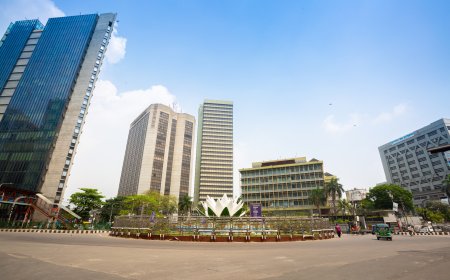
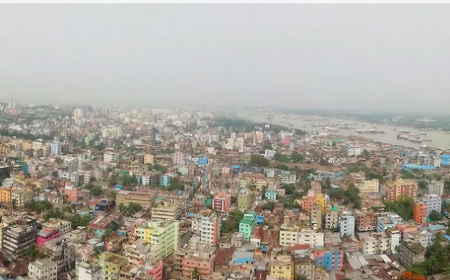
Dhaka, one of the world's most densely populated cities, has become a monument to unplanned urbanization. High-rise buildings have mushroomed across the city, often with questionable adherence to building codes.
Narrow streets and congested neighborhoods make emergency access exceedingly difficult. According to various urban assessments and government surveys over the years, a significant proportion of buildings in Dhaka are vulnerable to seismic activity.
Imagine an earthquake similar to the 7.8 magnitude disaster that struck Türkiye. Now imagine it occurring directly beneath Dhaka. The scenario borders on apocalyptic.
Researchers from various institutions, including international agencies, have warned that a major earthquake in the capital could kill tens of thousands of people and injure hundreds of thousands more. Economic losses could run into tens of billions of dollars, crippling the country's economy for years.
Bangladesh's remarkable economic growth over the past two decades has created new skylines and expanding cities. Yet economic development without structural resilience is a fragile achievement. Wealth accumulated over decades can disappear in a matter of minutes.
History offers painful lessons. In 1906, the earthquake destroyed much of the city and killed thousands. The disaster fundamentally changed urban planning and building regulations in the United States. Japan learned similar lessons from the, which killed more than 6,400 people. Since then, Japan has invested heavily in earthquake-resistant construction, emergency drills, and public awareness campaigns. Schools conduct evacuation exercises regularly. Buildings are engineered to sway rather than collapse.
As a result, Japan has demonstrated that even one of the world's most earthquake-prone nations can dramatically reduce casualties through preparation.
Bangladesh should pay close attention. The country has already shown extraordinary competence in disaster management. 50 years ago, cyclones routinely claimed hundreds of thousands of lives. Today, thanks to early-warning systems, shelters, community preparedness, and institutional learning, Bangladesh is internationally recognized as a model for climate resilience.
Why, then, has earthquake preparedness lagged so badly? Part of the answer lies in politics. Earthquakes are invisible threats. They do not occur annually like floods or cyclones. Investing in seismic resilience yields few immediate political dividends. Reinforcing buildings, conducting drills, or redesigning urban infrastructure are expensive and often unpopular policies because their benefits become visible only after disaster strikes. But responsible governance requires preparing for low-probability, high-impact events.
Another challenge is weak enforcement. Bangladesh already possesses building regulations and seismic codes. The problem is implementation. Illegal constructions continue. Unauthorized modifications are widespread. Many structures are erected with inadequate oversight, poor materials, or violations of approved designs. A law that exists only on paper is no protection against an earthquake.
Preparedness also extends beyond construction standards. Bangladesh suffers from a shortage of specialized rescue equipment, trained emergency personnel, and coordinated response mechanisms. A major earthquake in Dhaka could leave roads blocked by debris, preventing fire and rescue services from reaching affected neighborhoods.
In a city where traffic congestion can already turn a ten-minute journey into an hour-long ordeal, emergency response after a devastating earthquake would become extraordinarily difficult. This is why recent discussions among city authorities, urban planners, and disaster management agencies are encouraging. Coordination between city corporations, the fire service, and planning authorities is necessary. But meetings alone are insufficient.
The country needs a comprehensive national earthquake strategy. First, strict enforcement of building codes must become a national priority. Existing structures, particularly schools, hospitals, and high-rise residential buildings, should undergo seismic assessments and retrofitting where necessary.
Second, urban redevelopment plans should focus on widening critical roads and creating emergency access corridors in densely populated neighborhoods.
Third, earthquake drills should become routine in schools, universities, government institutions, and private offices. Japan's culture of preparedness did not emerge overnight; it was cultivated through decades of education and practice.
Fourth, Bangladesh should establish a high-powered National Earthquake Preparedness and Implementation Cell that integrates the efforts of the Ministry of Disaster Management and Relief, local governments, urban planners, engineers, and emergency services.
Finally, public awareness campaigns are essential. Citizens need to know basic safety procedures -- where to take shelter, how to evacuate buildings, and what emergency supplies to keep on hand.
The difference between catastrophe and resilience often lies not in the magnitude of the earthquake but in the quality of preparation beforehand.
The earth beneath Bangladesh does not care about politics, bureaucracy, or budget constraints. Tectonic plates move according to geological time, indifferent to human complacency. No one knows when the next major earthquake will occur. It may happen in ten years, or it may happen tomorrow. But one fact is beyond dispute: Bangladesh is living under the shadow of a seismic threat that experts have warned about for decades.
The recent tremors should therefore be treated not as isolated events but as a message -- a reminder that nature occasionally sends before delivering its harshest blows. The tragedy would not be that Bangladesh experiences a major earthquake. Geography has already made that possibility unavoidable.
The real tragedy would be if the country had been warned repeatedly, possessed the knowledge to prepare, and yet chose to do nothing until the ground finally gave way beneath its feet.
M A Hossain is a senior journalist and international affairs analyst, based in Bangladesh. He can be reached at: [email protected]