
































































Bangladesh’s Next Development Chapter Must Start with Health
Strengthening healthcare services means investing in frontline workers, improving facility readiness, ensuring reliable supplies of essential medicines, and better integrating services across the continuum of care.


Bangladesh’s health system is often held up as a quiet success story. But recent events tell a more fragile story. A measles outbreak reported by Prothom Alo has claimed the lives of at least 21 children in a single month, exposing gaps in immunization coverage and raising concerns about the resilience of routine health services.
These are warning signs. They suggest that the systems behind Bangladesh’s past health gains cannot be taken for granted.
That itself would be a remarkable shift. Over the past three decades, Bangladesh has achieved one of the most significant reductions in child mortality in the developing world.
Under-five mortality has fallen from over 140 deaths per 1,000 live births in 1990 to around 30 today. These gains were driven by a combination of sustained public investment, widespread immunization, and strong community-based delivery systems that brought services directly to households.
Routine immunization coverage remains high, reaching the vast majority of children across both urban and rural areas. Vaccines against diseases such as pneumonia and diarrhea have played a central role in reducing child mortality, while simple, scalable interventions such as oral rehydration therapy have further accelerated progress.
Just as importantly, Bangladesh built systems to deliver these interventions at scale. A dense network of frontline health workers, supported by both public and non-government actors, has enabled services to reach far beyond formal health facilities.
But the next phase of development will depend on whether Bangladesh can build on this foundation. The challenge is no longer simply expanding access. It is improving quality, closing equity gaps, and ensuring that health systems are resilient enough to respond to both routine needs and emerging risks.
Maternal mortality remains a significant concern, with recent estimates placing it at around 156 deaths per 100,000 live births. While this represents progress over time, it remains high relative to Bangladesh’s development ambitions.
At the same time, disparities persist between urban and rural populations, as well as across income groups. Women in poorer and more remote areas continue to face barriers to accessing timely and quality care, particularly during pregnancy and childbirth.
Nutrition presents another critical frontier. Despite improvements, approximately one in four children in Bangladesh remains stunted. This reflects not only food access challenges, but also gaps in maternal nutrition, antenatal care, and early childhood services.
These are more complex issues than those Bangladesh has successfully addressed in the past, and they require stronger systems, more consistent service delivery, and a sharper focus on quality.
Health as a Human Capital Strategy
At this stage of Bangladesh’s development, health must be understood not only as a social priority, but as a core pillar of human capital formation.
The evidence is clear. Children who are well nourished in early life are more likely to perform better in school, complete more years of education, and earn higher incomes as adults.
Maternal health plays a central role in this process. Healthier mothers are more likely to give birth to healthier children, breaking cycles of poor outcomes across generations.
Conversely, malnutrition and inadequate care in the early years can lead to lifelong deficits in cognitive development and productivity.
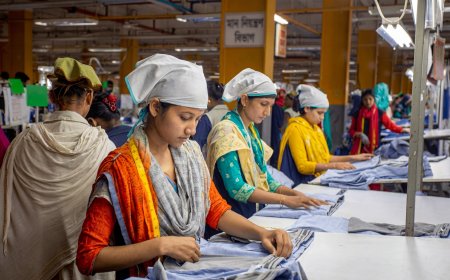
For Bangladesh, this is a defining issue. As the country seeks to diversify its economy and move up the value chain, the quality of its workforce will become increasingly important.
Investments in maternal health, child nutrition, and primary healthcare are therefore investments in future economic competitiveness.
Returning to the present, Bangladesh already possesses one of the key ingredients for success: A functioning delivery platform. Its immunization program demonstrates that high coverage can be achieved even in resource-constrained settings.
The systems that underpin this success, including outreach mechanisms, supply chains, data tracking, and community engagement, offer a blueprint for broader health service delivery.
The opportunity now is to build on these systems. The same infrastructure that ensures a child receives life-saving vaccines can be used to provide antenatal care, nutrition counselling, and early childhood services.
Community health workers can play an expanded role in supporting maternal nutrition, identifying risks during pregnancy, and ensuring continuity of care.
Facilities that serve as vaccination points can evolve into hubs for more integrated primary healthcare. At the centre of this effort must be a renewed focus on primary healthcare.
For most Bangladeshis, particularly those in rural areas, primary care is the first and often only point of contact with the health system.
Strengthening these services means investing in frontline workers, improving facility readiness, ensuring reliable supplies of essential medicines, and better integrating services across the continuum of care.
Equity must also be a defining priority. National averages can obscure significant disparities. While immunization coverage is high overall, gaps remain in hard to reach areas and among vulnerable populations.
Similarly, maternal and nutrition outcomes vary depending on geography and income. Addressing these gaps will require targeted interventions, stronger referral systems, and more effective use of data to identify and reach underserved communities.
Bangladesh’s experience with data-driven health systems provides a strong foundation for this effort. The ability to track coverage and outcomes has been central to past success.
Strengthening these systems further can help ensure that resources are directed where they are most needed and that progress is sustained.
The stakes are high. Bangladesh stands at a pivotal moment, with ambitions to build a more resilient and diversified economy.
Achieving this will require continued investment in infrastructure and industry, but also a sustained commitment to human development.
The country has already shown what is possible when it prioritizes the right interventions and builds systems that reach everyone. The next step is to ensure that these systems evolve, delivering not just access, but quality, equity, and long-term impact.
The lesson from the current vaccine shortages is not that Bangladesh’s health model has failed. It is that success cannot be taken for granted. Systems that delivered extraordinary gains in the past must now be reinforced to meet the demands of a more complex and uncertain future.
Bangladesh’s next development breakthrough will not come from new sectors alone. It will come from strengthening the foundations that allow people to live healthy, productive lives. And that foundation begins with health.
Mosabbir Hossain is an analyst at Globesight, a global development firm.