




























































Unlearning Obedience
We’re tired of being told to wait. We’re tired of being told to be reasonable. We’re tired of being told to consider the reputations of men, the stability of institutions, the sensitivities of cultures. We’re tired of the same headlines feeling like déjà vu.
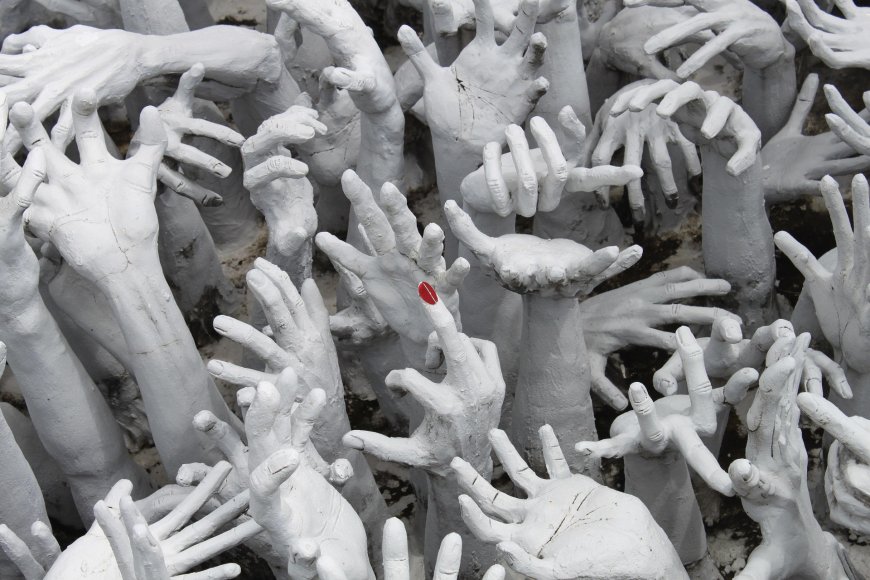
Every year, when March comes draped in the ceremonial purple of International Women’s Day, I find myself resisting the urge to celebrate, and instead, what I sit with is the uncomfortable truth that, in Bangladesh, being a woman still means navigating fear as common and routine as the evening azaan.
This year, the dissonance between the newspaper headlines and official statements has become so striking and bleak that being silent feels like complicity with the system.
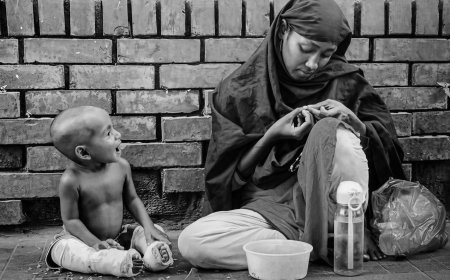
Open a newspaper on any given week, and you will find, buried between the political drama and the economic crises, the horrifying details of rape, gang rape, custodial violence, child abuse, described in a language so meek it almost apologizes for its own existence.
The pattern no longer shocks me: A seven year old girl raped and killed in broad daylight; a student sexually harassed in her own campus; a survivor shamed into silence by neighbors who would rather defend the “future” of the perpetrator than the “present” of the woman; a police complaint dismissed as exaggeration; a courtroom delay that stretches justice so thin it becomes unrecognizable. Not to mention the tradition of enforced marriage between the victim and the perpetrator in the name of religion and honour(?).
We read, we sigh, we scroll, and the next day we pretend we are not complicit in the normalization of this horror.
As a literature student, I am taught to believe that words are powerful, that words are tools that can bring down empires, or at least shine a light into the cracks. In this country though, I, like many other women, have felt that our words have been domesticated, made polite, made safe, while the world has gone berserk.
When Virginia Woolf wrote that a woman needs a room of her own and five hundred a year, she was not just advocating for the woman’s need for space and money; she was also identifying the mechanisms through which patriarchy imprisons women’s creativity.
If she were to walk through our streets today, she would probably add that the woman also needs a street that she can walk along without rehearsing escape routes or a bus ride without calculating the tension in the shoulders.
We have certainly built more rooms, but we haven’t uninstalled the surveillance that watches the woman inside the rooms.
And then there is the case of Sylvia Plath, whose rage was always dismissed as pathology, as if the woman who expressed anger was herself unstable, as if the world outside had nothing to do with the anger that burned inside. Plath’s poetry seethes with a rage that will not be domesticated, that will not be grateful, that will not be small.
Audre Lorde famously told us that the master’s tools will never dismantle the master’s house, and I shudder at how often we try and fail with the very tools that maintain the status quo.
Committees are formed, press releases issued, awareness protests held, and the investigative process crawls along, the victim’s character questioned, and the community’s response remains one of defense, while we’re invited to attend panel discussions about empowerment, and the survivors are asked what they were wearing.
The master’s house remains standing, and we get a new coat of wallpaper.
Toni Morrison wrote about the role of racism as a distraction, something that requires the individual to explain over and over again why they deserve a modicum of basic humanity. The same can be said of sexism.
We’re exhausted not only by violence but also by the constant need to justify why safety should not be negotiable, why consent should not be a cultural construct, and why dignity should not be a Western conspiracy. We’re forced to engage in a conversation that should have been settled decades ago.
This, however, is not about individual men. It’s about a culture that trains boys to inherit entitlement as birthright and women to inherit caution as destiny, and then to call this a natural order of things. We’re experts at the art of symbolic empowerment.
The same society that honors the academic success of a woman will question the character of that same woman should she report an assault; the same politicians who speak of the development of women will be the same ones to side with the patriarchal structures that diminish the seriousness of domestic violence; the same leaders who speak of “immorality” in the West will be silent about the “immorality” taking place behind doors they have walked through many times.
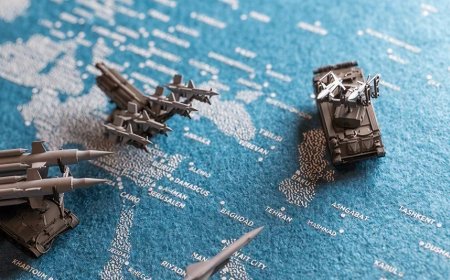
And of course, there is the global aspect of the hypocrisy, the reminder that patriarchy, no matter the guise, is the same play. When I think of Iran, I think of the paradox that unsettles me, the complex, almost contradictory emotions that surround the passing of Ayatollah Ali Khamenei a few days ago.
We, as women, can condemn the violation of the sovereignty of that country; we can grieve the suffering inflicted by invasions and sanctions; we can recognize the brutality of geo-political power games that treat countries as chessboards.
At the same time, we can also acknowledge that the Khameini regime has been a systemic attack on women’s rights, moral-policing of women's bodies, clothing, and voices, reducing faith to a disciplinary mechanism rather than a spiritual haven.
Our own contradictions in Bangladesh are no less intricate. We celebrate our women leaders, our garment workers who fuel our economy, our girls who are beating our boys in some educational statistics, and yet we are utterly, completely, and totally apathetic to the terror that haunts and shapes women’s lives.
The girl who drops out of school after being harassed is not a statistic, the survivor who drops her case because of pressure is not a coward, the mother who tells her daughter to come home before dark is not a patriarchal enforcer; they are living in a world that has made surviving more practical than seeking justice.
What makes me angry, what makes me weep, is not just the violence, but the choreography that follows it, the predictable pattern of outrage, denial, and forgetting. Social media erupts, politicians promise action, a committee is formed, some arrests are made, the news cycle changes, and the questions remain unanswered.
Why is the investigation into violence so slow? Why do survivors have to be re-traumatized by the very people and institutions that claim to protect them? Why does victim-blaming still thrive in the shadows and in the pulpit? Why do we teach girls how to defend themselves, but boys how to get consent, as if consent is a suggestion and a boundary?
Literature has taught me that narratives shape reality, and in our narrative, the “good woman” is still obedient, modest, sacrificial, and so on, while the “problematic woman” is loud, demanding, unwilling to “endure.”
A woman who complains of sexual violence is a woman seeking attention, a woman who keeps quiet about it is a woman of great dignity. But in either case, she is expected to perform a moral act.
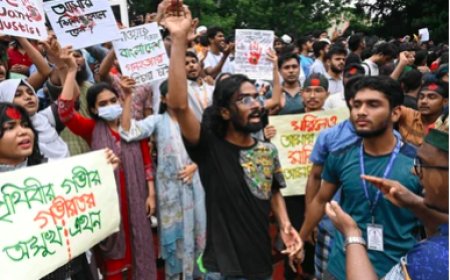
But I shall not conclude in despair, because anger, in the right direction, is not a destructive force, it is a catalyst. Those women marching in the streets of Tehran in protest of compulsory veiling, those students fighting back against the harassment of their peers on our own campuses, those lawyers fighting pro bono in the district courts, those journalists writing stories that need to be buried; these are the authors of a new narrative.
Agency is not always marked by spectacular actions; agency is also the act of filing a case against all odds, of educating one’s daughter that her body is her own, of writing an article that does not flatter power.
This Women’s Day, I don’t want flowers and platitudes; I want reform, swift justice, women-friendly legal processes, sex education that is not limited to biology lessons alone, accountability that does not fade away with the fleeting attention span of the media.
I want us to move from a place where women’s safety is a favour to one where women’s safety is a right. I want us to question not just the perpetrators of violence against women, but the systems that enabled them and the ideas that excuse them. I want us to see that feminism is not foreign to us; feminism is local and necessary, born out of the lives of our mothers, fathers, sisters, brothers, and our friends.
If this sounds angry, it’s because it is. If this sounds political, it’s because women’s bodies have always been political battlegrounds. If this sounds frustrating, it’s because patience has been exploited for too long.
But underlying all this anger is a stubbornly hopeful sense that language might be a first step towards changing the reality we see, that literature might be a first step towards changing the reality we see. Woolf’s room, Plath’s rage, the Iranian woman’s uncovered hair as a gesture of defiance, they’re all connected through a piercing voice against subjugation.
We’re tired of being told to wait. We’re tired of being told to be reasonable. We’re tired of being told to consider the reputations of men, the stability of institutions, the sensitivities of cultures. We’re tired of the same headlines feeling like déjà vu.
So let this Women’s Day be less about celebration and more about confrontation. Let it be a vicious and violent mirror held up to our courts, classrooms, mosques, parliament, and homes, to remind us all that empathy without action is mere decoration, that rights delayed are rights denied.
And let it be known, in sentences too long to be easily digested and too sharp to be politely ignored, that we are done mistaking survival for freedom.
Azeema Anhar is an English Language Instructor at ULAB and editorial assistant at Counterpoint.