







































![A Ledger of the Soul: Navigating the Allah-Bhagavant Nexus in a 19th-Century Puruṣākāra Jñāna Caupara [Gyan Chauper]](https://counterpointbd.com/uploads/images/202608/image_430x256_6a93baa3b09a7.jpg)





















BJP’s West Bengal Sweep Was Broad, But the Numbers Reveal a More Complicated Story
The BJP’s victory was structurally broad, its final scale may have been amplified by UA deletions in specific close contests, but TMC’s losses in Muslim-majority constituencies also point to a genuine political swing. A warning sign that may matter well beyond this election.


The result numbers point to a BJP victory built on four major pillars: SC consolidation, ST dominance, urban and mixed-seat expansion, and district-level sweeps in key regions.
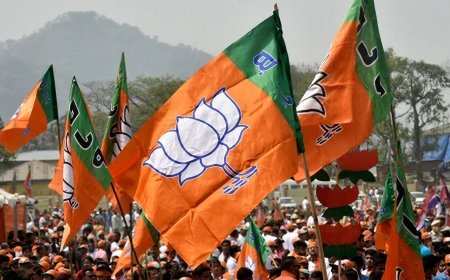
Kolkata: The West Bengal result numbers point to a decisive Bharatiya Janata Party (BJP) victory, with the party winning 206 seats and establishing a lead across multiple social and geographic categories. But beneath the scale of the win lies a more complex story. The BJP’s dominance was structurally broad, yet not uniform.
A constituency-wise reading of the result data points to a BJP victory built on Scheduled Caste-Scheduled Tribe (SC-ST) consolidation, urban gains, district-level sweeps, and a strong performance across migration zones. However, the figures also show that voter-roll deletions may have mattered in a set of close, demographically sensitive seats.
Two terms are central to the analysis. ASDD deletion refers to the removal of names marked as Absentee, Shifted, Dead or Duplicate from the Special Intensive Revision (SIR) draft voter list.
Under Adjudication Deleted (UA Deleted), or “Under Adjudication -- Not Eligible,” refers to over 27 lakh voters whose citizenship or residency status was flagged during the West Bengal SIR 2026 voter-roll verification process and who were temporarily excluded from voting until their documents were cleared by the judicial tribunal.
Here are 10 key takeaways from the initial numbers.
BJP’s 206-seat victory was decisive, but SIR may have mattered in close seats
The BJP’s tally of 206 seats reflects a commanding performance. Its average winning margin stood at around 27,939 votes, while the average margin after accounting for UA deletions was around 20,931 votes.
The most politically sensitive metric, however, is the comparison between winning margins and the number of voters deleted by placing their names in the 'UA' list.
In 25 constituencies in which the BJP managed to win, the number of voters found “not eligible UA” was greater than the BJP candidate’s winning margin.
While this does not establish that all such voters would have voted against the BJP, it does show that the scale of voter-roll deletion was larger than the victory margin in these areas, making the outcome highly sensitive to the SIR process. It is well established that the sharpest political concern around UA deletions is their concentration in Muslim-heavy constituencies.
Notably, several constituencies in which the BJP emerged victorious and the number of UA deletions exceeded the winning margin happened to be seats with large Muslim populations, particularly in Murshidabad, Uttar Dinajpur, Malda, Nadia, Purba Bardhaman and South 24 Parganas. In political terms, this makes the SIR process especially questionable because the most affected constituencies were often minority-heavy and closely contested.
Several seats illustrate this pattern. In Jangipur, the BJP’s margin was 10,542, while 36,581 UA voters were deleted. In Karandighi, the margin was 19,869 against 31,562 UA deletions. In Bhatar, the BJP won by 6,528 votes, while 17,481 UA voters were deleted.
The broader conclusion is that the BJP won decisively overall, but the final scale of its victory may have been affected by voter-roll revision in a cluster of close seats.
Minority-heavy seats remained more competitive, even as BJP broke through in 18 of them
In constituencies where the minority population exceeded 30%, Trinamool Congress (TMC) remained comparatively stronger than in much of the rest of the state, winning 56 seats. The BJP, however, still managed to win 18 such constituencies, a politically significant breakthrough in seats where minority voters form a major part of the electorate.
The BJP’s wins in these constituencies were concentrated in districts such as Murshidabad, Nadia, Purba Bardhaman, Uttar Dinajpur, Malda and South 24 Parganas. In Murshidabad, the BJP won seats including Jangipur, Murshidabad, Nabagram, Khargram, Burwan, Kandi and Beldanga.
In Nadia, it won Karimpur, Tehatta and Nakashipara. In Purba Bardhaman, it won Monteswar, Ketugram and Mangalkot. It also won Karandighi and Hemtabad in Uttar Dinajpur, Manikchak and Baisnabnagar in Malda, and Satgachhia in South 24 Parganas.
Several of these BJP victory margins are less than the number of voters deleted as a result of their UA status, including Jangipur, Nabagram, Nakashipara, Monteswar, Mangalkot, Karandighi, Hemtabad, Manikchak and Satgachhia.
This indicates that in a number of minority-heavy seats, the number of UA voters deleted was larger than the BJP’s winning margin. It is now well established that the Muslim-concentrated seats were among the most affected by UA deletion.
SIR alone cannot explain the shift in minority-heavy constituencies. There are at least 32 seats where Muslims make up more than 50% of the electorate. In these 32 seats, the total votes cast reportedly increased by 7.6% in 2026 compared to 2021. Yet TMC’s vote share fell by more than 16 percentage points. TMC had won all 32 seats in 2021. This time, it won 23.
That indicates a real political swing, not merely a turnout suppression story. The biggest chunk of the lost TMC vote appears to have moved toward the Left/Indian Secular Front (Left/ISF) and Congress, which together won three seats in this belt. In fact, the old Left-ISF-Congress alliance could have theoretically won five seats, reducing TMC’s tally in these Muslim-majority constituencies to 21.
The pattern becomes sharper in the top ten Muslim-majority seats, where the anti-TMC swing appears even larger. If that trend broadly reflects Muslim voting behaviour, then TMC’s vote-share decline may have been split roughly between Hindu and Muslim voters rather than being driven by one community alone.
This has two important implications. First, BJP appears to have gained more Hindu votes from Congress and Left than directly from TMC.
Second, Congress and Left seem to have recovered a significant chunk of Muslim votes from TMC. In other words, minority-heavy seats did not simply move toward BJP; many saw a fragmentation of the anti-BJP vote, with Left, ISF and Congress cutting into TMC’s earlier dominance.
The concern for TMC is therefore not only that BJP broke through in some minority-heavy seats. It is that the Muslim vote, one of TMC’s strongest and most dependable vote banks, appears to have fractured. Nawsad Siddiqui’s ISF and Humayun Kabir’s Aam Janata Unnayan Party (AJUP) each won two seats, while parties beyond the four main formations together claimed 4.6% of the vote, or around 2.19 million ballots.
Under a different distribution, those votes could have protected TMC in several marginal constituencies.
Contrary to the expectation of many political observers, the SIR process, which saw deletions of approximately 91 lakh voters, did not consolidate Muslim voters behind TMC.
Instead, the Muslim vote appears to have split mainly between Congress and Communist Party of India (Marxist) [CPI(M)] in several constituencies, while AJUP damaged TMC’s Muslim support in parts of Murshidabad.
At the same time, in Hindu-dominated seats in these districts, Hindu votes appear to have consolidated behind the BJP.
Murshidabad offers the clearest example of this double movement. In Raninagar, the Congress won with 79,423 votes, while TMC finished close behind with 76,722 and CPI(M) came third with 48,587. TMC had won the seat in 2021 with over 60% vote with a margin of 79,702 -- higher that what it polled in 2026. The result points to a clear split in the anti-BJP and Muslim vote.
The same trend appeared in Khargram, where BJP’s Mitali Mal won with 77,748 votes, followed by TMC with 68,415 and CPI(M) with 41,944. In Kandi, where around 76% of the population is Hindu, BJP won with 73,355 votes, TMC received 63,020, Congress got 31,160, and All India Majlis-e-Ittehadul Muslimeen (AIMIM) polled 22,976.
The district-level shift was dramatic. The BJP won nine of Murshidabad’s 22 seats, up from two in 2021. TMC, which had won 20 seats in the district in 2021, was reduced to nine.
A similar, though less severe, shift appeared in Malda, where Muslims account for around 51.3% of the district’s population. The BJP won six of the district’s 12 seats, while TMC won six. In 2021, TMC had won eight seats and the BJP four.
The broader conclusion is therefore more nuanced. SIR and UA deletions may have been electorally consequential in several close minority-heavy seats, but the larger anti-TMC swing in Muslim-majority constituencies points to political erosion within TMC’s own minority base as well.
SC-concentrated constituencies became a major pillar of BJP’s victory
The SC data shows a clear pattern. In constituencies with more than 30% SC population, BJP won around 82.7% of seats, 72 constituencies, while TMC won around 17.2%, or 15 seats.
The pattern continued in seats with 20-30% SC population, where BJP won around 69% of constituencies.
By contrast, in seats where the SC population was below 10%, BJP’s win rate fell to around 56%, while TMC’s share rose to 33%.
This suggests that higher the SC population share in a constituency, the stronger the BJP’s performance tended to be.
For Bengal politics, this is a major structural shift. It indicates that BJP’s victory was not merely a product of anti-incumbency or urban discontent. It was also built on strong performance in caste-heavy rural and semi-rural seats, especially among SC-concentrated constituencies.
For TMC, this is one of the sharpest warnings in the data. If SC-heavy constituencies move decisively away from the party, its rural electoral base becomes much more vulnerable.
Tribal-dominated areas produced an even stronger BJP sweep
BJP’s performance was even more pronounced in constituencies with high ST populations.
In seats with more than 20% ST population, BJP won around 96% of constituencies, 25 seats, while TMC won only one.
In constituencies where the ST population was between 10% and 20%, BJP won around 85% of seats. Even in seats with less than 5% ST population, the saffron party remained ahead, though the contest was closer.
The figures point to overwhelming BJP dominance in tribal belts. This likely reflects the party’s strength in regions such as Jangalmahal, parts of North Bengal and other Adivasi-concentrated pockets.
The political meaning is significant. TMC’s welfare-driven appeal appears not to have been enough to contain BJP expansion in tribal constituencies. The result in these areas looks less like a marginal swing and more like deep social consolidation.
BJP performed strongly across urban, rural and mixed constituencies
The BJP’s victory was not confined to one type of constituency. The party performed strongly across urban, rural and mixed geographies.
In wholly urban constituencies, BJP won 76.5% of seats, while TMC won 23.5%.
In mostly rural constituencies, BJP won 67%, compared to TMC’s 30.4%.
In mixed constituencies, BJP won 72.6%, while TMC won 25%.
This is important because Bengal’s political geography is often read through rural discontent, caste consolidation or regional anti-incumbency. But the numbers suggest that BJP also made major advances in urban and semi-urban spaces.
Its strongest proportional dominance, in fact, came in wholly urban and mixed constituencies. This indicates that the party’s appeal extended beyond rural protest votes and reached middle-class, aspirational and civic-issue-driven voters as well.
For TMC, the urban numbers are particularly concerning. Urban Bengal has historically included pockets of anti-BJP sentiment, minority concentration, Left influence and middle-class scepticism toward Hindutva politics. BJP’s performance suggests that those barriers weakened significantly.
Border constituencies remained more competitive than the rest of Bengal
The border-area numbers stand out because they diverge sharply from the broader state trend.
In non-border constituencies, BJP won 73.2% of the seats, while TMC won 25.6%.
In border constituencies, however, BJP’s share dropped to 53.5%, while TMC rose to 39.5%. Other parties, including INC, CPI(M) and AJUP, also picked up a few seats in these areas.
This suggests that border Bengal remained significantly more competitive than the state average.
The reasons may vary by region. Border constituencies often combine issues of migration, citizenship, land, informal trade, security, minority concentration, welfare access and cross-border social ties. These overlapping concerns can produce more complex voting patterns than in interior districts.
BJP still led in border seats, but its dominance narrowed considerably. For TMC and smaller parties, these constituencies appear to be among the few zones where BJP wave was meaningfully resisted.
Migration patterns shaped the result in important ways
The migration data adds another layer to the result.
In in-migrant areas, BJP won 74% of the seats while TMC won 24.7%.
In mixed migration areas, BJP performed even better, winning 77.6%, with TMC at 22.4%.
In out-migrant areas, however, BJP’s win rate dropped to 65.3%, while TMC improved to 31.3%.
This indicates that TMC performed comparatively better in constituencies marked by out-migration. These are often areas where economic distress, labour mobility, remittances, employment insecurity and welfare dependence are central political issues.
By contrast, BJP’s stronger performance in in-migrant and mixed-migration areas may reflect traction around identity, demographic change, citizenship concerns, local labour competition or settlement politics.
The takeaway is that migration was not merely a background condition. It appears to have shaped the political behaviour of constituencies in different ways.
District-wise results show sweeping BJP consolidation in several regions
The party recorded complete or near-complete dominance in several districts. It won 12 out of 12 seats in Bankura, 16 out of 16 in Purbo Medinipur, 9 out of 9 in Paschim Bardhaman, nine out of nine in Purulia, seven out of seven in Jalpaiguri, and five out of five in Alipurduar.
These were not scattered victories. They represented full regional consolidation.
The BJP’s strongest zones appear to include Jangalmahal, North Bengal, industrial belts and parts of South Bengal where anti-incumbency may have been high.
TMC’s strongest resistance came in fewer regions. In South 24 Parganas, TMC won 19 seats, while the BJP won 10 and AISF won one. In Murshidabad, TMC won nine, while the BJP won eight. In Howrah, TMC won nine while the BJP won seven.
The district map therefore shows a mixed but unequal contest. TMC retained important pockets, but the BJP’s regional sweeps gave it a decisive structural advantage.
ASDD deletions were widespread, but they do not appear to have hurt TMC disproportionately
The ASDD deletion data complicates any simple political reading of voter-roll revision.
In absolute terms, ASDD deletions were higher in BJP-won seats. 3,963,271 deletions across constituencies won by the BJP, compared to 1,762,022 in TMC-won seats. But this is largely because the BJP won far more seats overall.
On a per-seat basis, the picture is different. TMC-won constituencies had an average of around 21,753 ASDD deletions per seat, compared to around 19,239 per BJP-won seat.
In other words, TMC-won seats actually saw a slightly higher average level of ASDD deletion than BJP-won seats.
This suggests that ASDD deletions, by themselves, did not disproportionately damage TMC’s electoral performance. If ASDD deletion had been the main factor weakening TMC, one would expect TMC-won seats to show much lower deletion levels, or for higher-deletion constituencies to consistently move toward the BJP. The data does not show that straightforward pattern.
Instead, ASDD deletions appear to have been a statewide administrative phenomenon. TMC was able to retain many constituencies despite relatively high average ASDD deletions.
This means the political impact of voter-roll cleanup cannot be assessed simply by looking at the total or average number of ASDD deletions.
The more decisive question is whether deletions exceeded victory margins in specific constituencies. That is where the Margin-UA Deleted metric becomes more politically significant than the broader ASDD total.
The numbers therefore suggest a distinction. ASDD deletion did not appear to hurt TMC much in aggregate, but UA deletions may still have mattered in selected close contests, especially where the number of deleted voters exceeded the winning margin.
Voter-roll contraction was higher on average in TMC-won seats
The contraction from the pre-SIR voter roll adds another important qualification.
In total, voter-roll contraction was higher in BJP-won seats because the BJP won many more constituencies. The total contraction in BJP-won seats was 5,728,437, while the total contraction in TMC-won seats was 3,001,399.
But the average contraction per seat was significantly higher in TMC-won constituencies - around 37,054, compared to around 27,807 in BJP-won seats.
This complicates the argument that voter-roll contraction mechanically benefited only BJP. On average, TMC-won seats saw greater roll contraction.
However, this does not erase the significance of the close-seat pattern. BJP’s advantage may not have come from overall contraction alone, but from the fact that in certain constituencies, particularly close and demographically sensitive ones where the number of UA deletions exceeded the victory margin.
The impact of voter-roll revision, therefore, appears to have been uneven – broad as an administrative process, but potentially decisive only in selected seats.
Final Reading
The result numbers point to a BJP victory built on four major pillars: SC consolidation, ST dominance, urban and mixed-seat expansion, and district-level sweeps in key regions.
The BJP did not win through a single social bloc or one regional wave. Its performance cuts across rural, urban, caste-heavy, tribal, migration-influenced and industrial constituencies. That breadth explains the scale of the 206-seat victory.
But the data also shows the limits of the sweep. Minority-heavy constituencies, border seats, South 24 Parganas, Murshidabad and Howrah remained more competitive. These areas may form the core of TMC’s future resistance.
The most sensitive question remains the role of SIR, UA deletions, ASDD deletions and voter-roll contraction. The numbers do not support a blanket conclusion that voter deletion alone produced the BJP victory. The BJP’s social and geographic spread was too wide for that.
Yet the Muslim-majority seat data also points to a broader political shift beyond SIR. In the 32 seats where Muslims make up more than 50% of the electorate, turnout increased, TMC’s vote share fell sharply, and the Left/ISF-Congress space recovered ground. That means the anti-TMC swing in these areas was not simply the result of voter-roll deletion; it also reflected a political erosion of TMC’s minority support base.
That should be a major cause of worry for TMC. The Muslim vote, on which the party had relied on as one of its strongest electoral pillars, appears to have fractured.
The split did not automatically benefit the BJP in Muslim-majority seats, but it weakened TMC’s ability to hold marginal constituencies. Congress, CPI(M), ISF and AJUP all appear to have drawn from segments of the anti-BJP and minority vote, while in Hindu-dominated seats in the same districts, Hindu consolidation behind the BJP helped the party convert fragmented contests into victories.
The final conclusion is therefore nuanced. The BJP’s victory was structurally broad, its final scale may have been amplified by UA deletions in specific close contests, but TMC’s losses in Muslim-majority constituencies also point to a genuine political swing and fragmentation of its Muslim support base. A warning sign that may matter well beyond this election.
Aparna Bhattacharya is a journalist based in Kolkata, known for her work with The Wire. This article was first published in The Wire and it has been republished under special arrangement.