


















































![A Ledger of the Soul: Navigating the Allah-Bhagavant Nexus in a 19th-Century Puruṣākāra Jñāna Caupara [Gyan Chauper]](https://counterpointbd.com/uploads/images/202608/image_430x256_6a93baa3b09a7.jpg)




















Why the Admission Debate Misses the Bigger Crisis
In the end, the controversy is not about a mechanism. It is about a mindset. It reveals a society that remains deeply anxious about opportunity and deeply divided in access to it.

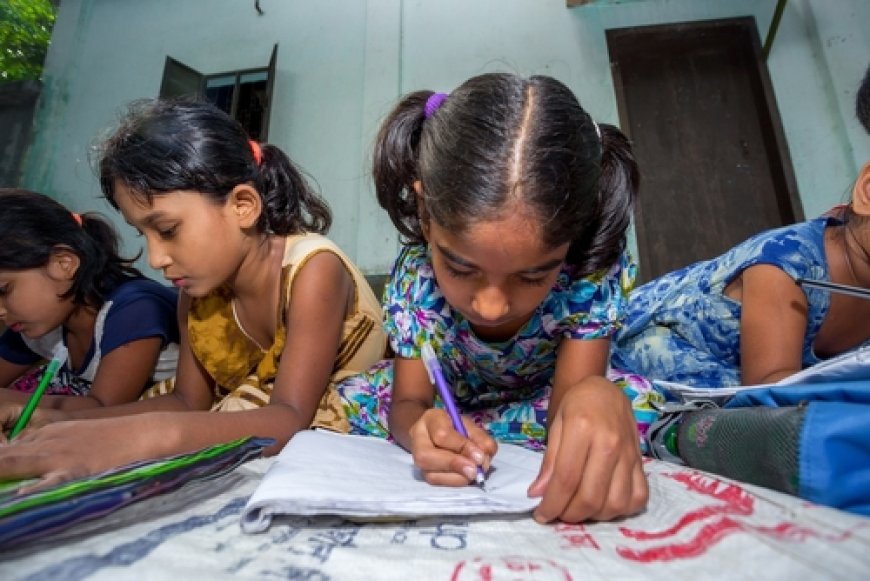
The debate over school admissions in Bangladesh has once again exposed a deeper discomfort that the country has long tried to manage rather than resolve. The decision to abolish the lottery system has not merely triggered disagreement over a policy tool.
It has reopened fundamental questions about fairness, childhood, inequality, and the very purpose of education itself.
For years, the lottery system functioned as an uneasy compromise. It was never celebrated as ideal, but it was tolerated as necessary. In a country where a handful of “good schools” attract overwhelming demand while the majority struggle with quality, the lottery offered a crude but effective shield against manipulation.
It attempted to neutralize influence, money, and networks by placing chance at the centre of access. In doing so, it acknowledged a painful truth: merit, at the entry level, is often a proxy for privilege.
Now that shield has been removed, and the anxiety is immediate and visceral. The concern is not simply about replacing one system with another. It is about what will inevitably fill the vacuum.
The reintroduction of admission tests, even in a simplified form, signals the return of competition at an age where competition is neither meaningful nor humane.
A five-year-old does not compete in any real sense. A five-year-old performs. And behind that performance stands a family’s resources, exposure, and access.
This is where the fear of a booming coaching industry becomes more than speculation. Bangladesh has already witnessed how competitive examinations at later stages have spawned an entire parallel education economy. Coaching centres thrive not because they are pedagogically superior, but because they exploit structural scarcity.
When a limited number of seats promise disproportionate social advantage, preparation becomes commodified. If admission tests extend to the earliest stages of schooling, the market will not hesitate to follow. It will adapt swiftly, packaging “school readiness” into a product and selling anxiety as necessity.
The implications are deeply unequal. Families with financial means will secure tutors, enroll children in preparatory programs, and simulate test environments long before formal schooling begins.
Those without such means will be left to rely on chance or informal preparation, entering the process already disadvantaged. The result is a system that claims to measure merit but in reality, measures opportunity.
It is precisely this distortion that made the lottery appealing, despite its obvious flaws. Critics often dismissed it as arbitrary, even likening it to gambling. Yet its arbitrariness was also its strength.
It removed the illusion that a child’s future could be rationally determined at age five. It disrupted the tendency to label children as capable or incapable before they had even begun learning.
In that sense, the lottery was less about randomness and more about restraint. It restrained the system from making premature judgments. However, defending the lottery uncritically would be equally misguided. Its existence was a symptom of a deeper structural imbalance.
The intense competition for a small number of institutions reflects a lack of trust in the broader education system. Parents do not chase certain schools out of obsession alone. They do so because they perceive stark differences in quality, discipline, and future prospects. As long as such disparities persist, any admission mechanism will become contentious.
This is why the current debate risks becoming circular. One group argues that tests are necessary to ensure merit. Another insists that tests at such an early stage are unjust and developmentally inappropriate. A third rejects both, advocating for a geographically based admission system. Each position addresses a part of the problem but none resolves the whole.
The idea of a catchment-based system, where children attend schools within their locality, is often presented as a more equitable alternative. In theory, it reduces competition and ensures access without tests or lotteries.
In practice, however, it demands something far more difficult: Uniformity in school quality. Without that, zoning risks entrenching inequality rather than alleviating it. Affluent neighborhoods would naturally have better-resourced schools, while disadvantaged areas would remain trapped in cycles of underinvestment.
The real crisis, therefore, lies not in how students are selected but in why selection is so fiercely contested. The system has created artificial scarcity by concentrating quality in a limited number of institutions.
This scarcity transforms education into a high-stakes race from the very beginning. Whether through lottery or examination, the process becomes a gatekeeping mechanism rather than a gateway to learning.
What makes the current moment particularly troubling is the shift in philosophical direction. The lottery, despite its imperfections, signaled a willingness to delay competition. It recognized that early childhood should be a period of exploration rather than evaluation.
The move toward testing, even if framed as simple or harmless, risks normalizing assessment as the foundation of education. Once introduced, such practices tend to expand, not remain contained.
There is also a psychological dimension that is often overlooked. The introduction of admission tests at an early age does not only affect children. It reshapes parental behaviour. Anxiety becomes institutionalized.
Families begin to plan, strategize, and invest in ways that prioritize performance over curiosity. Childhood gradually transforms into preparation, and learning becomes secondary to selection.
At the same time, the outright rejection of any evaluative mechanism raises its own challenges. Schools do require some method of managing demand, especially when applications far exceed capacity.
The question is not whether selection should exist, but how it should be structured and at what stage. Pushing it too early distorts development. Delaying it indefinitely may create administrative and logistical complications.
This is where policy must move beyond binary thinking. The choice is not simply between lottery and examination. It is about designing a system that aligns with the developmental realities of children while addressing structural inequities.
Such a system would likely involve a combination of approaches, including random selection at entry level, gradual introduction of assessment at later stages, and a long-term commitment to equalizing school quality.
The government’s confidence that coaching culture can be contained through regulation appears optimistic at best. Experience suggests that once demand is created, informal markets find ways to operate.
Enforcement becomes inconsistent, and the burden ultimately falls on families. It is not enough to assert that coaching will not flourish. The policy itself must not incentivize its growth.
The intensity of the current backlash also reflects a broader erosion of trust. Education policies in Bangladesh have frequently shifted in response to immediate pressures rather than sustained vision. Each change introduces uncertainty, leaving parents and educators struggling to adapt.
The abolition of the lottery system, announced decisively but without clear transitional clarity, has amplified this uncertainty.
In the end, the controversy is not about a mechanism. It is about a mindset. It reveals a society that remains deeply anxious about opportunity and deeply divided in access to it. Until that anxiety is addressed at its root, no admission system will appear fair. Each will be seen either as unjust or inadequate.
Perhaps the most uncomfortable question is also the most necessary. Why should admission to the first year of schooling be a matter of competition at all? If education is a right, its entry point should not resemble a contest.
If certain schools are seen as gateways to a better future, then the responsibility lies not in filtering students more efficiently but in ensuring that all schools offer that future.
The debate over lottery versus examination may continue, but it risks obscuring the larger challenge. A system that forces families to choose between chance and pressure has already failed in its fundamental purpose.
The real reform lies not in choosing between these two, but in building an education system where neither is necessary.
Writer: H. M. Nazmul Alam is an Academic, Journalist, and Political Analyst based in Dhaka, Bangladesh. Currently he teaches at IUBAT. He can be reached at [email protected].