



























![A Ledger of the Soul: Navigating the Allah-Bhagavant Nexus in a 19th-Century Puruṣākāra Jñāna Caupara [Gyan Chauper]](https://counterpointbd.com/uploads/images/202608/image_430x256_6a93baa3b09a7.jpg)




















How BJP Played the Bangladesh Card
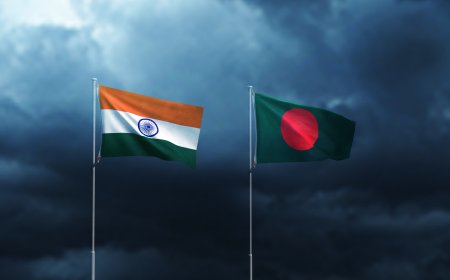
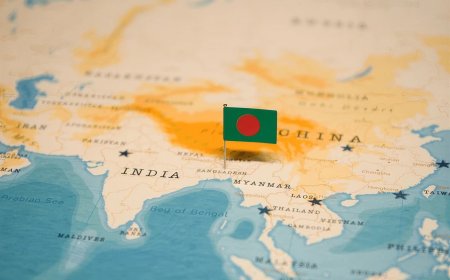
Bangladesh functioned as a mirror in which West Bengal was invited to view itself: Hindu or Muslim, refugee or infiltrator, borderland or nation, Bengali or anti-national.

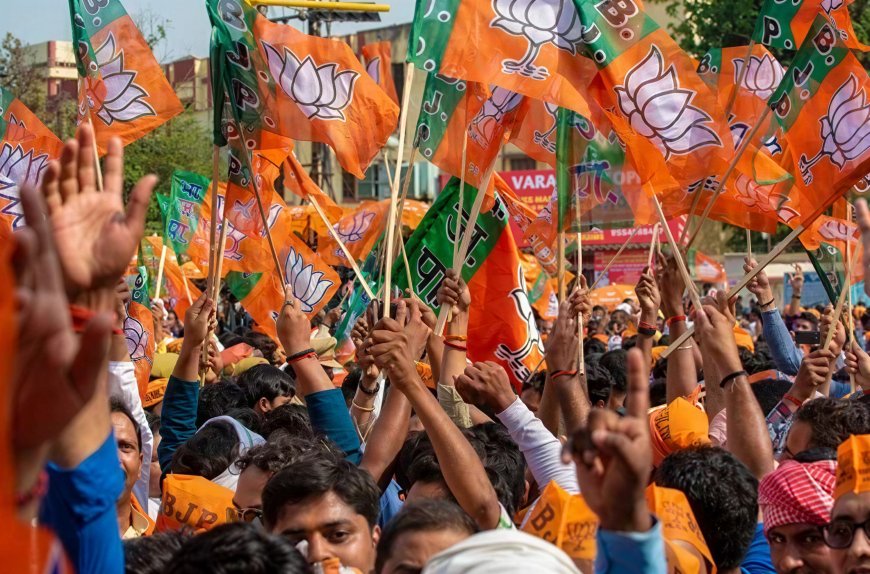
West Bengal 2026 will be remembered not just as the election in which the BJP displaced the Trinamool Congress after 15 years in the saddle, but also as the moment when a long-standing border question acquired a new electoral intensity, making Bangladesh central to the state’s internal political rhetoric.
The verdict is decisive. The Election Commission of India’s results for 293 of 294 seats show the BJP at 207 and the Trinamool at 80, even as Falta constituency is still pending because a repoll has been ordered.
This scale of victory cannot be explained by one factor alone.
The Trinamool faced an anti-incumbency sentiment, as well as allegations of corruption against its leaders and claims that women were unsafe under its watch.
In addition, the BJP had a formidable organization machine.
These scattered variables were given ideological coherence by the Bangladesh factor. It converted discontent into civilizational security.
Bangladesh functioned as a mirror in which West Bengal was invited to view itself: Hindu or Muslim, refugee or infiltrator, borderland or nation, Bengali or anti-national. This was the BJP’s most consequential achievement. It made Bangladesh the grammar with which citizenship, demography, welfare, and loyalty were read.
This was possible because Bangladesh’s political story changed dramatically after Sheikh Hasina’s ouster in August 2024. The interim dispensation under Muhammad Yunus inherited a crisis of legitimacy, reform, and law and order.
Human Rights Watch noted that after mass protests forced Hasina to resign and flee, there were attacks on shops, homes and places of worship belonging to political opponents and minorities.
This year, Human Rights Watch was still reporting mob violence and pressure from hardline groups. India’s Ministry of External Affairs repeatedly expressed concerns about attacks on Hindus and other minorities in Bangladesh.
Whether every account circulating in Bengal was accurate mattered less electorally than the political perception it produced: A sense among many Hindu voters in Bengal that the eastern border was a frontier of vulnerability.
The BJP’s campaign translated that vulnerability into three linked promises.
First, the party presented itself as the defender of persecuted Hindu refugees from Bangladesh, especially through the Citizenship Amendment Act.
This legislation offered a fast track to Indian citizenship for refugees from Bangladesh, Pakistan and Afghanistan -- except if they were Muslim.
The rules of this act were notified in March 2024, and the first citizenship certificates were issued in May 2024.
Second, the BJP framed undocumented migration as proof of the Trinamool’s alleged “vote bank” politics that favoured Muslims.
Third, it tied both issues to state power: only a BJP government, it implied, could align Kolkata with New Delhi on border security and citizenship verification.
The brilliance and danger of this strategy lay in its double address. To Hindu migrants from Bangladesh, it offered recognition. To Bengali Muslims, it extended suspicion.
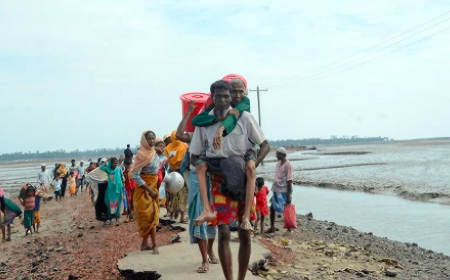
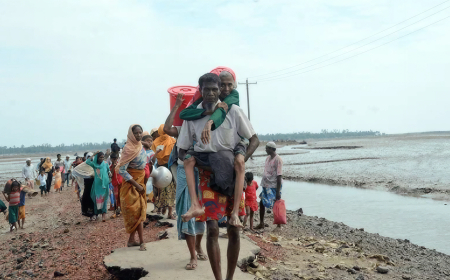
The Matua question sat at the centre of this double address. Matuas, a community of Dalit refugees from East Bengal (as the province was known before Partition) and Bangladesh, are not merely a caste bloc -- they embody the messiness of 1947.
They have long faced the intertwined burdens of caste marginalization, displacement, uncertain citizenship status, documentary precarity and uneven access to welfare and political recognition.
During the campaign, the Trinamool tried to court the Matuas through welfare and cultural recognition. The BJP offered a more existential bargain: Citizenship as a correction to the historical injustices they have faced.
This is why the voter roll controversy mattered so profoundly. The Special Intensive Revision of the electoral rolls was not simply an administrative exercise; the BJP projected it as a referendum on who belonged.
2.7 million people contested their names being deleted from the rolls. Though critics argued that the revision process especially targeted voters from minority communities, the BJP framed it as democratic purification.
Here the Bangladesh factor moved from rhetoric to infrastructure. The border was reproduced in the polling booth, in the list, in the anxious queue of citizens with a sheaf of documents in hand proving that they were citizens.
Faced with claims that West Bengal is home to millions of undocumented migrants from Bangladesh, Trinamool leader Mamata Banerjee noted -- correctly -- that the international border is guarded by the Centre and that the Border Security Force takes its orders from the Union Home Ministry. She denounced the BJP’s rhetoric as communal.
But these arguments were defensive. They answered charges but they did not remove the fear.
For 15 years, the Trinamool fused welfare populism with Bengali exceptionalism: The belief that Bengal’s political culture would resist North Indian Hindutva. The 2026 verdict suggests that exceptionalism is no longer effective. The BJP has learned to speak Hindutva in Bengali.
The Bangladesh factor allowed BJP to connect local anxieties about jobs, crime, corruption, and welfare leakage to a larger narrative of national injury. It allowed Hindu consolidation to appear not as majoritarian aggression but as self-defence.
It forced the Trinamool into the impossible position of defending Muslim citizens without being branded as a party that supported infiltrators, and defending refugee-migrant communities that crossed from East Pakistan after Partition and later Bangladesh without being accused of manufacturing voters.
Bangladesh’s instability deserves serious attention; attacks on minorities, Islamist mobilization, and anti-India rhetoric cannot be dismissed as inventions. But neither can they be used to justify presenting Indian Muslims as proxies for a foreign state.
Bangladesh has always mattered to Bengal through Partition, language, migration, rivers, labour, kinship, memory, and mourning. What changed in this campaign is the political form.
The border became an electoral weapon. The BJP won because it knows that history does not always stay in the distant past. It can be summoned to influence choices at the voting booth.
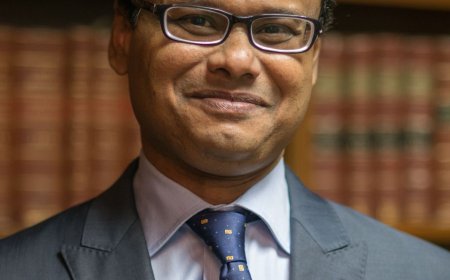
Niladri Chatterjee is a historian and senior lecturer at Linnaeus University in Sweden. This article was first published in scroll.in. Reprinted under special arrangement.