































![A Ledger of the Soul: Navigating the Allah-Bhagavant Nexus in a 19th-Century Puruṣākāra Jñāna Caupara [Gyan Chauper]](https://counterpointbd.com/uploads/images/202608/image_430x256_6a93baa3b09a7.jpg)


















The Myth of Arab Unity
The Arab world is connected, but it is not unified. Its leaders may meet under chandeliers, embrace for cameras, and issue communiqués about common destiny in a common language. But beneath that ceremonial language lie rival economies, competing ports, divergent security partnerships, dynastic anxieties, and national projects.
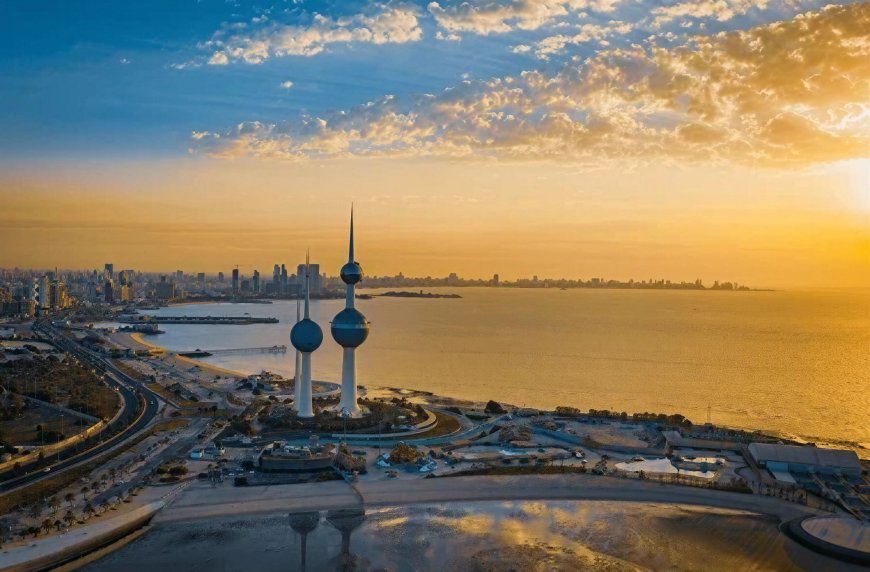
In Bangladesh, the word Arab does not usually begin as a political category. It begins as reverence, aspiration, labour, and distance.
For many Bengali Muslims, the Arab world first enters the imagination through Islam: The language of the Qur’an, the direction of prayer, the sacred geography of Mecca and Medina, and the moral authority attached to the land where Islam was born.
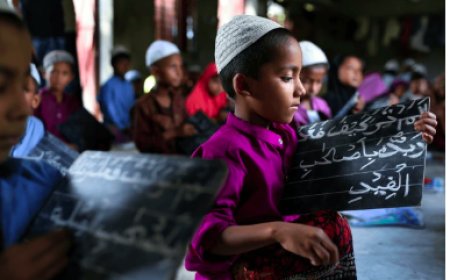
Arabic words enter Bengali Muslim life through our names, greetings, sermons, prayers, funerary rituals, and religious instruction. Even when Arabic is not understood as a spoken language, it carries symbolic authority. It is not merely foreign. It is sacred.
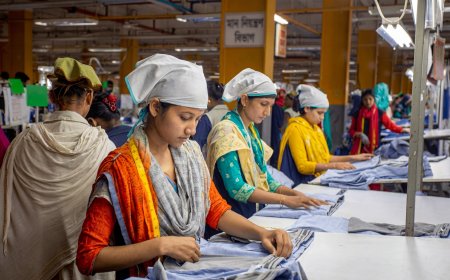
But there is another Arab world in the Bangladeshi imagination: The Gulf as workplace. Saudi Arabia, the United Arab Emirates, Qatar, Kuwait, Bahrain, and Oman are not simply dots on a geo-political map. They are destinations of departure. They are the places where fathers, sons, brothers, husbands, cousins, neighbours, construction workers, cleaners, drivers, domestic workers, technicians, and small contractors go to earn a living.
For Bangladesh’s labour market, the Arab world is not a civilizational reference point, it is a remittance corridor, a recruitment network, a family survival strategy, and sometimes a theatre of exploitation.
This economic relationship is not incidental. In 2025, approximately 81% of Bangladeshi overseas workers were employed in the six Gulf Cooperation Council countries, and Gulf employment generated 46% of Bangladesh’s remittances, according to figures cited from Bangladesh Bank and the Bureau of Manpower, Employment and Training.
For Bangladesh, therefore, the Arab world is not an abstraction. It is built into the village house, the urban apartment, the wedding budget, the school fee, the medical bill, and the monthly cash flow.
This dual image matters. From Bangladesh, the Arab world often appears unified because it is filtered through religion and migration. The distinction between Saudi, Emirati, Qatari, Kuwaiti, Omani, or Bahraini may be clear on passports, contracts, and immigration forms, but in popular imagination they often collapse into one broad idea: Arab.
The region is seen as wealthy, Muslim, oil rich, conservative, powerful, and culturally and morally authoritative. It is where Islam came from and where money now comes from. In ordinary conversation, that can be enough to create an illusion of coherence.
Yet the word Arab itself is far more complex than this perception allows. Arab identity is rooted above all in the Arabic language, but it is not a single race, tribe, state, or physical type. It describes a vast cultural and linguistic world stretching across the Middle East and North Africa, uniting people of varying ancestry and local customs through broad cultural similarities and a common language.
This geographical breadth is essential to understanding both the power and fragility of Arabism.
Arabism began in the Arabian Peninsula, long before the modern Saudi state existed, but it did not remain there. Through the early Islamic conquests, the spread of Arabic as a language of scripture, administration, trade, scholarship, and law, and through centuries of migration and cultural absorption, Arab identity expanded across an enormous landscape. It moved into older civilizations and did not simply erase them.
Egypt did not stop being Egyptian. Morocco did not stop being Amazigh, African, Mediterranean, and Andalusian in memory. Sudan did not stop being Nubian, African, and Islamic. Iraq did not stop being Mesopotamian. But each was drawn, in different ways and to different degrees, into the Arabic linguistic and cultural orbit.
For Bangladeshis, this distinction is often obscured by the twin filters of faith and migration. The Arab world is seldom understood through the long and uneven history of Arabization, or through the different ways in which Egypt, Morocco, Sudan, Iraq, and the Gulf became part of the Arabic cultural sphere.
Instead, it is often imagined as a single civilizational field: Sacred because of Islam, wealthy because of oil, and familiar because of labour migration.
From Dhaka, Sylhet, Chittagong, Noakhali, or a village in Comilla, Arabia can appear unified, Muslim, powerful, and coherent. Seen closely, however, that unity breaks apart into monarchies and republics, tribes and sects, ports and armies, ruling families and migrant labour systems, sovereign wealth funds and oil ministries, each driven by its own national priorities.
Arab unity, therefore, survives most convincingly as culture, sentiment, and rhetoric. It does not reliably survive as state behaviour.
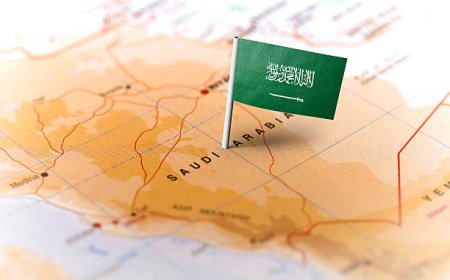
The United Arab Emirates’ announcement that it would leave OPEC and OPEC+, effective May 1, is therefore more than an oil story. The UAE framed the decision as part of its long-term strategic and economic vision, including its evolving energy profile and investment in domestic energy production. That explanation is important. It is also revealing. The UAE is saying, politely but unmistakably, that national interest now outweighs collective discipline.
Why would one wealthy Gulf Arab state break from a collective oil structure long associated with Arab and Muslim power? But the surprise comes from the illusion. The UAE is not acting as a member of a sentimental Arab family. It is acting as a sovereign state with its own production targets, investors, customers, global ambitions, and strategic anxieties.
Reuters reported that the UAE’s decision exposed deepening tensions with Saudi Arabia, including disagreements over energy policy, Yemen, Sudan, regional leadership, and different visions for the Gulf’s future. This is precisely where the language of Arab brotherhood meets the arithmetic of power. Brotherhood may be invoked at summits. Quotas, ports, military alliances, investment flows, and sovereign strategies are negotiated elsewhere, usually with a lot less poetry.
The modern idea of Arab unity has always carried romance. It imagines a people divided by colonial borders, restored to dignity through collective action. In the 20th century, this dream found its most charismatic expression in Pan Arabism, especially under Gamal Abdel Nasser.
It promised liberation from Western domination, resistance to Israel, social justice, and the revival of Arab self-confidence. But its institutional record was far less impressive than its emotional force.
The Arab League could coordinate language but rarely commanded action.
The United Arab Republic, formed by Egypt and Syria in 1958, collapsed in 1961.
The dream could fill public squares. It could not easily survive ministries, armies, egos, and bureaucracies. That failure was not accidental. Arab leaders often needed the language of unity to legitimize themselves, but they feared the reality of unity because it threatened sovereignty, dynasty, military authority, and regime survival.
A truly integrated Arab order would have required rulers to surrender power to a collective structure. Few were willing to do that. Unity was useful as theatre. It was as dangerous as architecture.
Older loyalties also never disappeared. In much of the region, political identity has long been shaped by family, clan, tribe, sect, city, region, dynasty, and ruler. Modern statehood did not erase these attachments. It often absorbed and repackaged them.
In the Gulf, the state is not simply a bureaucracy with a flag. It is a ruling family, a welfare bargain, a security apparatus, a tribal memory, an oil economy, and increasingly a global investment platform. The skyscraper and the majlis are not opposites. They are parts of the same political landscape.
This does not mean Gulf societies are trapped in the past. That would be a lazy and condescending reading. The Gulf states are among the most aggressively modernizing political economies in the world. They build airports, museums, ports, artificial intelligence campuses, financial districts, research hubs, airlines, entertainment zones, and entire new urban futures. But their modernity has not dissolved older structures of authority. It has made them more sophisticated.
The Gulf Cooperation Council illustrates the point. It brought together six neighbouring monarchies with shared security concerns, hydrocarbon wealth, and broadly similar ruling systems. If Arab unity could work anywhere, it should have worked there. Yet even the GCC has been marked by competition and fracture.
The Qatar blockade demonstrated that shared Gulf identity could not prevent hostility. Differences over Iran, political Islam, Yemen, media influence, Turkey, Israel, and regional leadership repeatedly pulled member states in different directions. Oman has often maintained its own diplomatic posture. Qatar turned isolation into resilience. The UAE developed an agile model of ports, logistics, capital, and security partnerships. Saudi Arabia, because of its size, religious centrality, and oil weight, continued to see itself as the natural centre of Gulf power.
That assumption is now being challenged. The UAE’s departure from OPEC is one sign of a broader shift in Gulf politics. Abu Dhabi is no longer content to be treated as a disciplined junior partner in a Saudi-led order.
Reuters has noted that the UAE increasingly saw OPEC as a constraint on its ambitions, especially as it sought greater freedom over oil production and pursued a diversified economy built around trade, finance, tourism, technology, and logistics. This is not merely an energy adjustment. It is a statement of strategic personality.
Qatar’s earlier withdrawal from OPEC was a warning sign. In 2018, Qatar announced that it would leave OPEC from January 2019 after reviewing ways to enhance its international role and long-term strategy. At the time, it could be treated as a special case because Qatar was focused on gas and politically isolated by its neighbours.
But the UAE’s exit suggests a wider pattern. Smaller but wealthy Gulf states increasingly prefer flexibility over collective discipline when the two come into conflict.
Trade is perhaps the most powerful solvent of Arab unity. The UAE has built its modern identity around movement: Goods, aircraft, tourists, capital, data, talent, oil, finance, real estate, and global brands. Dubai and Abu Dhabi face the Arab world, but they also face India, China, Africa, Europe, North America, and the global market.
Their airports and ports are not nationalist monuments. They are machines for circulation. Their logic is less Pan Arab than planetary.
This marks a profound transformation. The older Arab nationalist imagination was ideological and territorial. It spoke of liberation, dignity, sovereignty, unity, and shared destiny. The new Gulf imagination is infrastructural and transactional. It speaks of connectivity, diversification, market access, logistics, artificial intelligence, sovereign wealth, security partnerships, and global positioning.
The hero of the older imagination was the leader at the podium. The hero of the newer imagination is the airport, the port, the investment fund, the free zone, the data centre, and the carefully branded city.
For the outer non-Arab world, especially for non-Arab Muslims in countries such as Bangladesh, Pakistan, Indonesia, Malaysia, and Turkey, the Palestine and Israel question was long assumed to be the issue where Arab unity would finally reveal itself. If Arab states shared language, history, religion, geography, and memory, then surely Palestine would be the cause around which they would act as one.
From outside the region, Palestine appeared to be not merely a national liberation struggle, but the moral test of Arab solidarity.
Yet Palestine became one of the clearest demonstrations of Arab disunity. Arab states did not approach Israel through a single strategy. Egypt signed a peace treaty with Israel in 1979, after the Camp David Accords created the framework for the agreement. Jordan signed its own peace treaty with Israel in 1994, establishing peace between the two states.
In 2002, the Arab Peace Initiative offered collective Arab normalization with Israel in exchange for an independent Palestinian state in the West Bank and Gaza Strip.
In 2020, the Abraham Accords opened yet another path, normalizing relations between Israel and several Arab or Muslim majority states, including the UAE, Bahrain, and Morocco.
The reasons are not difficult to understand, though they are morally uncomfortable. Egypt’s peace with Israel was tied to recovering Sinai, securing American support, and stabilizing the Egyptian state. Jordan’s peace was shaped by geography, demography, security, and the kingdom’s delicate relationship with its Palestinian population.
For Gulf states, Israel increasingly became less a purely ideological adversary and more a potential partner in technology, intelligence, trade, defence, and access to Washington. For Saudi Arabia, Palestine remained central to its symbolic leadership of the Muslim world, but even Riyadh has had to weigh that symbolism against Iran, American security guarantees, investment strategy, and regional influence.
This is a hard lesson. Palestine unified the Arab populace far more than it unified Arab states. In the streets, mosques, campuses, and cultural imagination of the Arab world, Palestine remained a shared wound. But inside palaces, military headquarters, foreign ministries, and intelligence agencies, it became one file among many: Security, regime survival, Iran, America, trade, Islamism, border control, domestic unrest, and economic modernization. The Arab public could afford moral clarity, whereas Arab governments practiced strategic calculation.
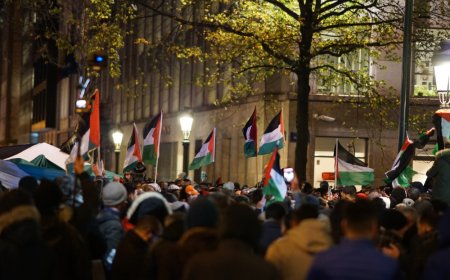
For Bangladeshis, this contradiction is especially striking. Palestine occupies a powerful place in the Bengali Muslim imagination, often understood through the language of injustice, occupation, religious solidarity, and anti-colonial memory.
Many Bangladeshis assume that Arab states, being geographically and culturally closer, would naturally act together in defence of Palestine. But proximity has not produced unity. In fact, proximity has often produced caution, rivalry, and compromise. Those closest to the conflict have also been those most exposed to its costs.
The Palestine and Israel equation therefore strengthens the central argument. Arab unity survives powerfully as emotion, rhetoric, and symbolic identification. But when translated into policy, it fragments. Some Arab states fight, some negotiate, some normalize, some mediate, some fund, some condemn, and some hedge. Palestine remains the emotional centre of Arab solidarity, but it has never been sufficient to create a unified Arab political order.
For Bangladesh, this distinction is especially important. The Bangladeshi relationship with the Arab world is layered with faith, dependence, admiration, frustration, and vulnerability. The Gulf provides employment to millions and remittances to families across the country.
But the migrant worker often experiences the Arab world not as a unified Muslim brotherhood, but as a hierarchy of citizenship, sponsorship, class, nationality, wage, and labour rights. The sacred geography of Islam and the lived geography of migrant labour do not always match. One belongs to devotion.
The other belongs to contract, bureaucracy, and power. That tension should make Bangladeshi observers especially alert to the myth of Arab unity. The region that appears from afar as one Arab and Muslim space is in reality, a series of competing states with different ambitions. The Bangladeshi worker who passes through Riyadh, Dubai, Doha, Muscat, or Kuwait City quickly enters a world of difference: Different laws, employers, bureaucracies, dialects, wages, social codes, and national priorities. “Arab” becomes less a single identity than a sequence of encounters with unequal power.
The UAE’s OPEC exit simply says the quiet part aloud. The Arab world is connected, but it is not unified. Its leaders may meet under chandeliers, embrace for cameras, and issue communiqués about common destiny in a common language.
But beneath that ceremonial language lie rival economies, competing ports, divergent security partnerships, dynastic anxieties, and national projects. The façade is impressive. The load bearing walls are elsewhere.
Arab unity, then, is not entirely false. It is real as memory, culture, language, music, literature, religion, and emotional resonance. It is real when a poem travels from Cairo to Casablanca, when a sermon is understood across borders, when a Palestinian tragedy produces grief from Rabat to Dhaka, when an Arabic phrase enters Bengali prayer, when millions face Mecca in shared devotion. But as a system of political action, Arab unity has always been weaker than its slogans.
Perhaps the myth survives because it is useful. For Arab rulers, it provides grandeur without surrendering sovereignty. For Arabs, it offers dignity beyond failed states and disappointed revolutions. For non-Arab Muslims, including many Bangladeshis, it offers a sacred geography and a civilizational centre. For migrant sending countries, it offers the image of a wealthy labour market that can absorb economic pressure at home. Everyone needs Arabia to mean something larger than itself.
But the 21st century is stripping away the romance. Gulf states are no longer merely oil monarchies wrapped in Arab solidarity. They are sovereign brands, logistics hubs, security clients, investment powers, tourism platforms, and strategic actors. They may speak the language of Arab brotherhood, but they bargain as competitors.
The myth of Arab unity endures because it contains both truth and illusion. The truth is cultural kinship. The illusion is political coherence. The Arab world is not one caravan moving across the desert beneath a single banner. It is a crowded landscape of states, dynasties, tribes, ports, armies, investors, clerics, workers, exiles, artists, citizens, and migrants, all negotiating their place in a hard regional order.
The UAE’s departure from OPEC did not create that reality. It merely illuminated it. Arabism conquered distance through language, religion, and culture. Arab unity has never fully conquered politics.
MK Aaref writes on culture, history, identity, and geopolitics from a South Asian and diasporic perspective.