


























![A Ledger of the Soul: Navigating the Allah-Bhagavant Nexus in a 19th-Century Puruṣākāra Jñāna Caupara [Gyan Chauper]](https://counterpointbd.com/uploads/images/202608/image_430x256_6a93baa3b09a7.jpg)




















The Shadow of Dhaka
West Bengal's voters may not have articulated this distinction in theoretical terms. But they felt its weight. The images from Dhaka showed them what the far end of one trajectory looks like.

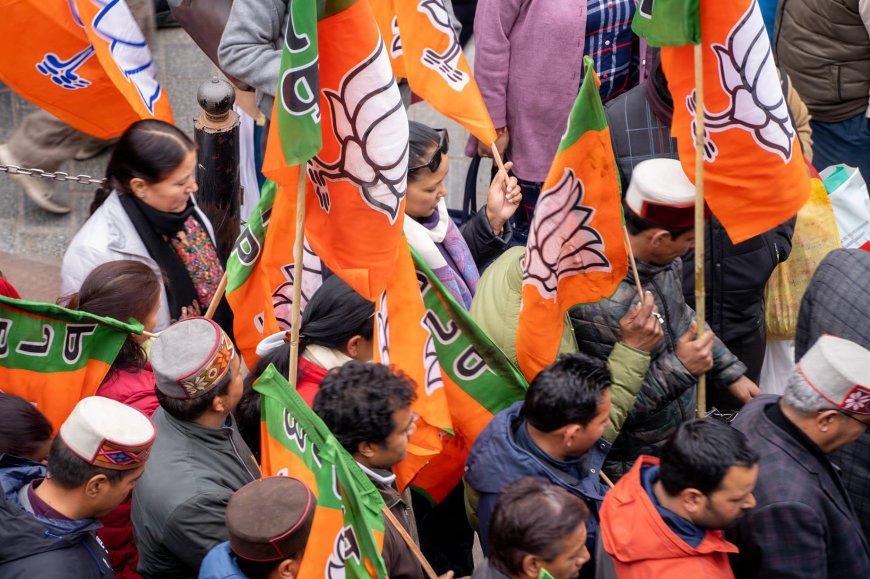
As I write this, the votes have been counted in West Bengal. The BJP has won decisively, and one thing is beyond dispute: The rise of BJP in a state long considered a liberal, pluralist bastion is now a structural political reality, not an anomaly.
West Bengal has changed. And across the border, Bangladesh's July Revolution has had more to do with that change than most analysts are willing to admit.
A Revolution That Travelled Across Borders
The fall of Sheikh Hasina on August 5, 2024, sent shockwaves well beyond Bangladesh's borders. For the Hindu communities of West Bengal -- many of whom have relatives, ancestral villages, or living memory tied to Bangladesh -- what followed was not an abstract geopolitical event. It was personal. And what followed was deeply alarming.
The Bangladesh Hindu Buddhist Christian Unity Council documented over 2,400 attacks on minority communities between August 2024 and June 2025. Hardline Islamist groups that had long been suppressed -- Hefazat-e-Islam, Hizb ut-Tahrir, Jamaat-ul-Mujahideen -- returned to public life with startling confidence.
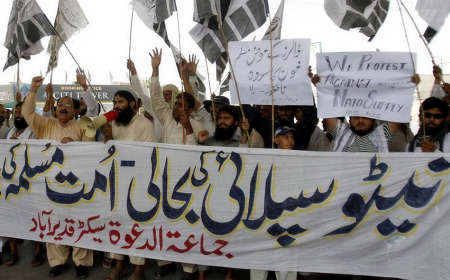
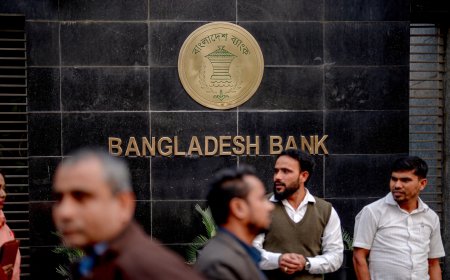
Hizb ut-Tahrir staged an open "March for Khilafah" through the streets of Dhaka. Al-Qaeda's media wing released a 12-page statement hailing the revolution as a victory for Islam in the region. ISIS and Taliban flags appeared at public rallies. In December 2025, a bomb blast in Dhaka's Moghbazar area killed a young man.
In November 2025, crude bombs were hurled across eleven locations in a single day in the capital. And in a discovery that crystallized the security collapse, authorities found approximately 250 kilograms of bomb-making materials at a madrasa in South Keraniganj.
The Yunus-led interim government, for its part, released several convicted militants -- including Jashimuddin Rahmani of the al-Qaeda-linked Ansarullah Bangla Team -- citing due process. Over 300 convicted militants were eventually freed during this period.
Islamist groups reportedly issued ultimatums to Yunus to create conditions conducive to Islamic law. Reports of Jamaat-e-Islami's leader making repeated visits to the Pakistani High Commission circulated widely.
These were not rumours confined to Indian nationalist media -- they were documented, debated, and broadly reported.
For the people of West Bengal watching from across the Padma, the message was visceral: This is what the collapse of a secular, pluralist state looks like. And many of them decided they did not want it to happen here.
BJP Calculus: Bangladesh as a Political Lever
The BJP did not manufacture this anxiety. It inherited it, amplified it, and built an entire campaign architecture around it. Border security, "infiltration," demographic change -- these are not new themes for the party in West Bengal. But post-July Bangladesh gave these narratives a live news cycle and an emotional intensity that no amount of political messaging could have manufactured from scratch.
The Election Commission's Special Intensive Revision of electoral rolls -- which removed nearly nine million voters, roughly 12% of the electorate -- became the most explosive political controversy of the season. The BJP framed it as the removal of illegal migrants and bogus entries. TMC called it targeted disenfranchisement.
But the Bangladesh backdrop made the BJP framing land more powerfully than it might have in another cycle. When bombs are going off in Dhaka, when Hindu temples are being attacked across the border, when Islamist groups are marching for a caliphate in the streets of the capital -- the idea of "infiltration" ceases to feel like a dog-whistle and starts to feel, to many voters, like a legitimate security concern.
Two Parties, Two Projects: Why BJP and Jamaat Are Not Mirror Images
There is a lazy comparison that often surfaces in both Bangladeshi and Indian political discourse: that BJP and Jamaat-e-Islami are essentially the same phenomenon, one Hindu and one Muslim, both representing majoritarian religious nationalism. It is a tempting symmetry.
But as I argued in these pages earlier this year, it is a fundamentally misleading one -- and understanding why matters enormously for making sense of West Bengal's political choice.
Hindu nationalism, even in its most assertive political form under the BJP, draws from a civilizational tradition that is internally plural, decentralized, and historically tolerant of contradiction. Hinduism lacks a single canon, a unified clergy, or an agreed-upon social blueprint.
Even under an aggressively majoritarian BJP, domains such as popular culture, markets, consumer life, art, and everyday social practices have continued to operate with meaningful autonomy.
Women's participation in the workforce, cinema, fashion, and entrepreneurship -- though contested and imperfect -- has not been structurally reversed. BJP's project has been one of hierarchization and exclusion, not total homogenization.
Radical Islamist politics, by contrast, is standardizing by design. Its ideological core seeks to collapse the distinction between men and women, believer and non-believer, public life and private life -- into a single moral, legal, and social order.
Where political Islam has achieved decisive power, the outcome has not been merely social conservatism but the systematic narrowing of cultural, intellectual, and economic space. Pluralism is not subordinated -- it is delegitimized. The goal is not dominance within diversity but the abolition of diversity itself.
The economic consequences diverge just as sharply. India under Modi paid real institutional costs -- erosion of minority protections, intimidation of dissent, politicization of courts -- but it did not experience civilizational rupture. Capital continued to flow and the economy remained intelligible to global markets. Bangladesh does not enjoy similar insulation.
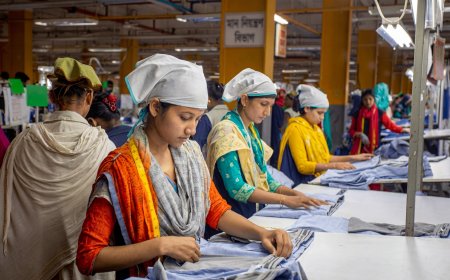
An Islamist-influenced state would strike directly at the foundations of a garment-export economy that depends on women's mass participation, cultural flexibility, and international legitimacy. This is not alarmism. It is structural.
West Bengal's voters may not have articulated this distinction in theoretical terms. But they felt its weight. The images from Dhaka showed them what the far end of one trajectory looks like. And many of them looked at that trajectory -- even in its early, chaotic form -- and chose to vote for what they perceived as the stronger counter-force.
West Bengal Chose, and the Choice Matters
This is where the freedom and liberty argument becomes genuinely interesting, and genuinely complicated. The BJP is not a liberal party. Its record on minority rights, press freedom, and institutional independence is poor by any fair accounting. A vote for the BJP in West Bengal was not a vote for a classically liberal political programme.
But it was, for a significant portion of the electorate, a vote for a particular kind of liberty: The liberty to exist as Bengalis, Hindus, and Indians without having the pluralism of their civilizational identity systematically dismantled from across the border or from within. It was a vote rooted not in ideology but in dread -- dread of what they had watched unfold in Dhaka over the previous 18 months. It was, in its own imperfect way, a civilizational reflex.
The Deeper Question
What the 2026 West Bengal election ultimately reveals is the degree to which Bangladesh has become permanently embedded in this state's political imagination -- not as foreign policy, but as a domestic mirror in which the oldest and most unresolved questions of Indian democracy are reflected back with sudden, startling clarity.
The July Revolution did not simply create a security problem. It created a visibility problem. It made legible, in real time, what the collapse of a plural, secular political order actually looks like on the ground -- the bombs, the mobs, the flags, the silenced women, the shattered temples, the released militants. And once seen, that visibility cannot be unseen.
West Bengal's voters looked across the border and chose. The choice was imperfect, contested, and morally complex. But it was a choice. And in a region where choices of this magnitude increasingly shape the entire subcontinent's direction, that matters more than any single seat count.
Muhaimen Siddiquee is a brand and communications professional with a strong interest in culture, politics, and history.