






































![A Ledger of the Soul: Navigating the Allah-Bhagavant Nexus in a 19th-Century Puruṣākāra Jñāna Caupara [Gyan Chauper]](https://counterpointbd.com/uploads/images/202608/image_430x256_6a93baa3b09a7.jpg)





















Learning from Tehran: A Warning for Bangladesh’s Democratic Future
The decision for Bangladesh is simply this: Either we recognize what is happening to our degree of liberty now, or we will soon read about it in the pages of history books as if it is a novel about something that was simply unavoidable.
It sometimes happens that the novels one reads are a function of the period during which politics seems to revolve around the same patterns and cycles.
I had read The Lion Women of Tehran by Marjan Kamali back in 2024, when I saw the people of my country unite against a greater force of evil.
I am writing this in December 2025 and processing what happened to Hadi, to Dipu, to The Daily Star, Prothom Alo, Chhayanaut, Udichi and many more names I do not have the courage to look into; the book now roars within me and I cannot stop thinking about it.
It strikes me not so much as a story out of the past, but rather as a portent for the future that the to-be elected Bangladesh government might yet prevent. Fiction is often polemical not only as evidence, but as shared memory as well.
Rather than glorifying resistance as a virtue or turning opposition into a dramatic narrative, Kamali focuses on just how freedom erodes in ideological regimes that are very controlling, and how communities, especially women, learn to live in a state that is ever-more fearful of freedom.
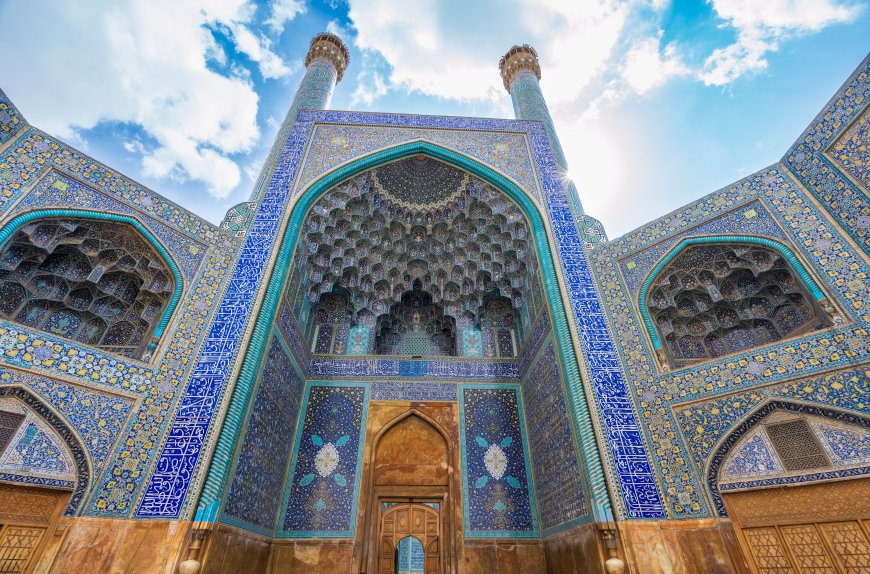
In the book, Tehran is not just an emblem; it is also a living, breathing city that is affected by government policies and people’s adaptability to such policies.
This is a tale that has relevance well beyond Iranian borders. The Iranian political transition of the later 20th century was sold as a rectification of morals and a return to national identity but instead enabled a politics of ideological purity above civil society as a whole.
After 1979, the Iranian government did not only control politics; it warped society as a whole. Most Iranian newspapers became pro-government propaganda machines and the rest were banned, universities were purged and the women’s rights were altogether deemed contradictory to the state principles.
These Iranian politics did not suppress society through one swift movement but achieved this normalization through time and intimidation. This pattern is note-worthy because it sounds all too familiar.
While Bangladesh does not have a priestly ruling class or a theocratic form of government, it appears that an ever-growing influence of radical Islamist groups is forcing a polarizing narrative in frightening ways.
Attacks on media and cultural outlets, organized mob attacks on politicians, activists, common people and threats against anything holding differing ideologies have all become rather commonplace.
It is quite evident that they are a part of a broader strategy to limit discussions and intimidate institutions, and they grow bolder each day.
The response by the interim government has been frightfully passive, and this has detrimental repercussions.
When Iran started the process of consolidating its ideological foundations, there was some similar reticence.
There was a feeling that the radical groups would shrink away once stability had been gained and that culture could advance while retaining its core freedoms. However, instead, there was a gradual erosion of those very freedoms.
The press had learned to play it safe, academics had become even more cautious, and women adjusted their lives out of self-protection. By the time people realized the extent of what had been lost, resisting this oppressive atmosphere had become very difficult.
It appears as though Bangladesh is on a similar path. The urban middle class has served as a shield for the political stability of Bangladesh. It is a support base for newspapers, universities, publication businesses, as well as cultural organizations.
The class is, however, under tremendous strain. The media is threatened, artists are under repression, and cultural engagements are perceived as ideological conflicts.
Rather than manifesting as mass arrests or blatant violence, repression to this degree may bring about a condition where people begin to alter their behavior and tone by being less vocal in their expression, more cautious about what they write and with whom they associate.
Over time, this kind of censorship can resemble consent without the individual ever actually agreeing.
What is happening in Bangladesh is also based on the same principle. Far-right parties are not merely seeking votes, they want dominance. They hold rallies and instigate riots to establish their influence.
By targeting media houses, they are undermining accountability. They are exploiting uninformed religious sentiments to frame any opposing force.
This has serious implications for the coming elections in February. Elections require more than just the votes cast; they also rely on the environment in which they are conducted.
If the journalists are reporting under intimidation, the quality of the reporting will be compromised. If the citizens are afraid to gather in social events, voter turnout will drop.
And where violence becomes part of the political discourse as a valid expression of political will, moderation will minimize. One example of how electoral mechanisms can exist even without the heart of democracy is Iran.
The danger right now is not in the sudden breakdown of democracy but in its ongoing imperceptible degradation. The effect of this trend in Bangladesh’s middle class is straightforward.
The idea of economic development has no meaning without intellectual and cultural freedom. Professional success has no value when fear reigns in society. Hence, the concern has shifted from which political group will take charge to whether any civic space will endure.
Again, women are very much at the nexus of all that is occurring.
For Iranian women, the issue of their bodies being regulated was never simple; rather, it was an overt display of power.
This control over dress, movement, and visibility was indicative of the ruling Iranian government’s strategy to embed their influence within people’s private lives. The women in the novel do not portray traditional rebellion; they portray resilience within constant surveillance and scrutiny.
In case of Bangladesh, the early warning signs are evident. Instances of public harassment, moral policing, and targeting of woman in cultural and social context clearly indicate that there is an attempt to change the political atmosphere in the worst way possible.
Religion itself has never been the problem.
The tragedy of Iran was not rooted in faith; it was the combination of belief and state power resulted in a lack of diversity, and the suppression of different views. Bangladesh is home to different religious communities, and the majority practice their religion without aspiring to govern.
Nonetheless, those who are radicals do this: They reduce plurality to one, with aggression. The government’s lack of action to this process inadvertently legitimizes and cultivates it.
This makes the role of institutions even more critical than mere words.
Law enforcement entities must protect the press consistently instead of doing so selectively. Political groups must be able to resist the temptation of siding with the extremist groups for their momentary interests.
Civil society must treat the assault on the press, culture, or any institution as a community threat, rather than isolated occurrences. The Tehran experience holds a tough lesson: A divided opposition leads to the acquisition of more power by unwanted hands.
The coming election in February will not only symbolize a contest of politics, but it will also symbolize a contest of political will. The current circumstances are a real test of whether our democratic system can resist radical ideological pressures.
Furthermore, there is a question of how committed we are to upholding our democratic values before they become only a memory.
Though we do not have to look to Iranian history to see how things may play out in Bangladesh, there are important lessons that can be derived from it.
But it is crucial to remember that history is not simply a series of repeating incidents. Without attention, context and reflection, its lessons can fade, be misread or disappear altogether.
Intimidation tactics are now a fact of life, where dissenting voices feel at risk, and consequently, we have already begun to lose our liberty.
The decision for Bangladesh is simply this: Either we recognize what is happening to our degree of liberty now, or we will soon read about it in the pages of history books as if it is a novel about something that was simply unavoidable.
Azeema Anhar Humaira is an English Language Instructor at ULAB and member of the Counterpoint editorial team.