





















































Bridging Divides: Taslima Akhter and Bangladesh’s Śromik and Nārī Andolon
Lima’s commitment to centering worker’s voices and futures, and the combination of pragmatism and integrity that drives her have been on full display in the past two decades, long before the most recent elections were announced. Equally at ease organizing in the industrial belts as in negotiating policy reform in Dhaka or Geneva, she is exactly the kind of candidate the country needs right now.

Ambivalence Behind National Pride
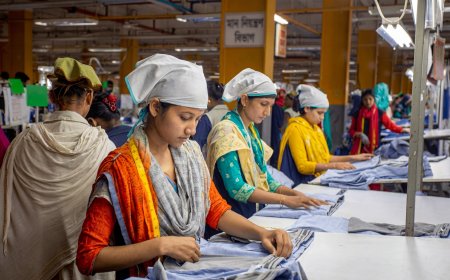
The garment industry looms large in the national imagination. “Garments” as source of nationalist pride is hardly surprising, given the story of the sector’s remarkable rise and its success in securing Bangladesh’s prominence on the global stage. Those who toil on the shopfloor, however, occupy a curiously ambivalent position in the urban middle class imaginary.
Consider that by the late 1990s, garment workers constituted nearly one in every six residents of Dhaka city (Ashraf 2022). The hyper-visible presence of working-class women in predominantly male city spaces had a dual effect.
On the one hand, this is said to have ushered in a silent feminist revolution (see Firdous Azim), eventually normalizing the presence of all women on Dhaka’s streets.
On the other, the density of female working class bodies dramatically disrupted normative social, sexual, and spatial codes (Siddiqi 1996).
The extreme hostility toward and sexual harassment of garment workers in the early days of the industry can be attributed to their being perceived as ‘matter out of place’ quite literally. Perhaps as a result, attitudes toward female workers have oscillated over the decades.
In ‘normal’ times, garment workers are often hailed as national heroines, their labor celebrated as indispensable to making Bangladesh a competitive global manufacturing hub.
In contrast, during moments of crisis, this population has generated moral panic, cast as potential agents of social deviance, as happened in anticipation of the 2004 phase-out of the Multi Fibre Arrangement (Siddiqi 2003).
Public attention to the industry tends to be episodic -- with heightened sympathy during moments of hyper-visibilized crises such as the Rana Plaza collapse, or the devastating fire in Korail in December 2025.
What tends to be ‘forgotten,’ or simply escapes middle-class consciousness are the invisible struggles and deprivations, desires and small acts of defiance that shape the everyday life of garment workers.
What we might call ‘sanctioned ignorance’ (nishpriho moddhobittota?) manifests most clearly in the sphere of cultural production, where the figure of the female garment worker is either missing or an afterthought despite the long duree of the industry.
There have been exceptions of course -- such as a powerful poem by Farhad Mazhar (1985), the 1997 film Palabi Kothay (directed by Shahidul Islam Khokon), Nasreen Jahan’s novel Krush Kathe Konnya (1998), and Rubaiyat Hossain’s 2019 feature film Made in Bangladesh. What the preceding pieces share is the depiction and undersanding of works as multi-dimensional figures, not simply bodies at work.
Below we reproduce an example of what we mean. The (selected) lyrics from Shelai Didimoni, written and performed by popular musician James over two decades ago are noteworthy because the singer does not reduce workers either to exploitative work conditions or to their value for the nation/economy.
By acknowledging workers as persons with dreams and desires, as artists and lovers, James humanizes the otherwise abstract figure of the garment worker.
Further, the garment worker is addressed as someone from the same city as James, ‘এই শহরে তোমার পাশে আমিও যে থাকি’ (In this city next to you, I too live), not a “migrant worker” -- a status category generally applied to this population, often pejoratively.
Original Bangla:
এই দিদিমনি দিদিমনি, সেলাই দিদিমনি
ছল ছল চোখে, সেই দিদিমনি
আরে দিদিমনি দিদিমনি, সেলাই দিদিমনি,
হো দিদিমনি
এই শহরে তোমার পাশে আমিও যে থাকি
ও লাল টুক টুক সেলাই দিদিমনি
আরে দিদিমনি নিও তুমি আমার ভালবাসা
তোমার চোখে দেখি আমি, রঙ্গিন দিনের আশা
লাল টুক টুক, লাল টুক টুক দিদিমনি
লাল টুক টুক, লাল টুক টুক দিদিমনি
আরে উদয় অস্ত খাটো তুমি, ঝরাও দেহের ঘাম
মহাজন দেয় কি তোমার, ঘামের সঠিক দাম
কখনো তুমি শিল্পী আর কখনো তুমি নারী
কখনো তুমি প্রেমিকা আর কখনো প্রতিবাদী
এই শহরে তোমার পাশে, আমিও যে থাকি
ও লাল টুক টুক সেলাই দিদিমনি
দিদিমনি নিও তুমি আমার ভালবাসা
তোমার চোখে দেখি আমি, ওরে রঙ্গিন দিনের আশা
লাল টুক টুক, লাল টুক টুক দিদিমনি
লাল টুক টুক, লাল টুক টুক দিদিমনি
আরে চলতি পথে তোমার সাথে যখনি হয় দেখা
ইচ্ছে করে শুধাই তোমায় মনের দুটি কথা
কার লাগিয়া ছল ছল কাজল দুটি আঁখি
কেউ কি তোমায় কথা দিয়ে কথা রাখেনি
এই শহরে তোমার পাশে আমিও যে থাকি
ও লাল টুক টুক সেলাই দিদিমনি
দিদিমনি নিও তুমি আমার ভালবাসা
তোমার চোখে দেখি আমি, রঙ্গিন দিনের আশা
লাল টুক টুক, লাল টুক টুক দিদিমনি
এই দিদিমনি দিদিমনি সেলাই দিদিমনি
Translation:
Hey sister, seamstress sister, oh! sister
I too live here, in the same city as you
O red tuk tuk seamstress sister
Hey sister, please accept my love
In your eyes, I see a desire for a colorful/multicolored future
You labor from dawn to dusk, sweat your body
Does the mohajon give you the true value of your sweat?
You are an artist at times, you are a woman at times
You are a lover at times, you are a protester at times
Whenever we run into each other when our paths cross
I want to ask what’s on your mind
Eyes brimming with tears, with lamp-black liner for whom?
Did someone not keep their promises?
[…]
(Shelai Didimoni by Mahfuz Anam James, 2003)
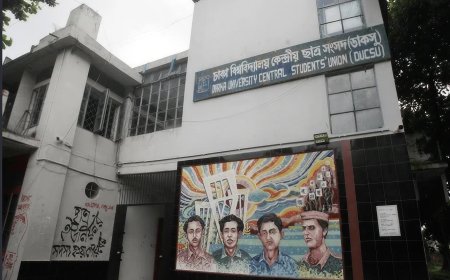
For the most part, however, garment workers remain the subject of paternalism or pity within bhodro shomaj, frequently constructed as an Other to ‘respectable’ middle class female subjectivities. So, for instance, in the late 1990s, it was widely rumored that in response to student demands to abolish colonial era ‘Sunset Laws,’ the sitting Vice Chancellor of Dhaka University accused young women in the movement of “behaving like garment workers.” Whether such words were actually uttered is moot, at least for our purposes.
It is the invocation of factory workers in the effort to undermine or discredit the movement that is instructive. The stigmatizing power of the rumor (if it was indeed ‘just a rumor’) lies in a set of unspoken but deeply classed/Bhadralok assumptions, presumably shared by its intended audience. Three decades later, garment workers occupy somewhat more ‘respectable’ place in middle class discourse, that is, when they are up for discussion.
Separate Worlds? Feminism and the Question of Class
The above analysis sets the context for a question increasingly making the rounds these days: what explains the persistent gap between the demands of the labor movement (sromik andolon) and those of the women’s movement (nārī andolon) with respect to the garment industry?
Before elaborating, we should underscore that this is an observation, not an accusation. Women’s groups have always extended moral support and sympathy toward garment workers.
The two most significant feminist organizations in the country, Mahila Parishad and Naripokkho both have or have had meaningful programs involving garment workers.
We approach the issue through the question of concrete practices of solidarity. Why, for instance, does the question of minimum wages not make it into the agenda of most feminist organizations?
After all, as we have been told numerous times, the garment workforce is not only predominantly female (even if the numbers were overstated or inflated) but also the face of women’s empowerment and national progress globally?
Might this have something to do with the tendency to reduce industrial workers to numbers and statistics, as ciphers either of elevated or tumbling economic growth and possible economic futures (see Lamia Karim 2022)?
Or is it because the category of woman in the mainstream implicitly refers to the middle-class female subject, one who embodies a highly specific set of classed demands? Is this partially an outcome of the long-term NGOization of the women’s movement that Seuty Sabur has so powerfully written about in a different context?
For that matter, should we take into account the effects of UN-style feminism so prevalent in the country, one that must assume by default a universal ‘woman’ at the center of feminist policy and analysis (Siddiqi 2022)?
These speculative thoughts are an invitation to further discussion rather than a set of definitive answers.
In mainstream culture, it has been difficult to dislodge the idea that the industrial worker is by default male. We believe that both the labor and the women’s movements would benefit from greater interaction and closer ties. Social movements are stronger when they are allied and working in coordination.
Joining Worlds: Taslima Akhter
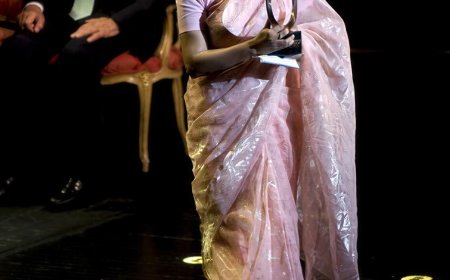
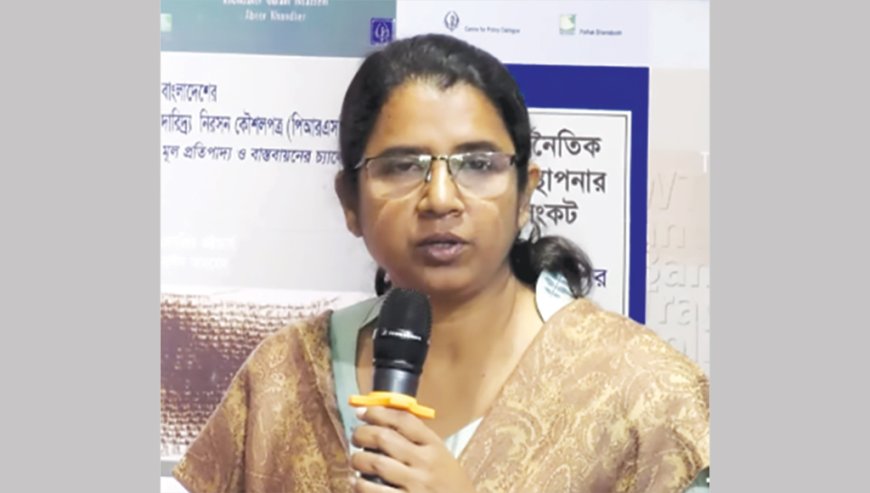
Taslima Akhter or Lima, as she is known to friends, is exemplary in this respect. She straddles the worlds of feminist and labor advocacy with the ease and confidence of someone with deep knowledge and experience behind her. Active in progressive politics as a university student, the enormity of the Rana Plaza collapse and its consequences inaugurated Lima’s entry into the world of garments.
Like many others, she immediately volunteered in rescue operations, taking some haunting photographs along the way. Unlike most people, she continued and deepened her involvement with survivors and their families, following up on health and compensation claims, building up support networks and establishing Garment Sromik Shonghoti.
A remarkable organization, Shonghoti runs entirely on donations, a conscious decision taken to avoid the compromises to organizational autonomy that invariably arise with donor funding. Shonghoti understands the categories of ‘worker’ and ‘woman’ as co-constitutive rather than as mutually exclusive.
Thus, the connections between struggles for a viable minimum wage and secure working conditions and protests against sexual harassment or for maternity leave appear self-evident.
Lima’s selection to the Interim Government’s Labor Reform Commission was timely recognition of her long-standing commitment to and experience in the realm of labor rights. Her history of mobilizing around issues such as minimum wage revisions, along with her intimate day to day relations with workers meant that she brought a wealth of insight and knowledge to the LRC proceedings.
In addition to more standard demands, she offered a series of proposals designed to ease everyday life in the low-cost settlements where most workers live. These include the introduction of amenities such as community kitchens and laundries, both of which addressed unequal gendered divisions of labor. Class consideration and labor dignity have been at the heart of even seemingly minor proposals made by her – such as the suggestion to prohibit the use of the potentially derogatory pronouns "tui" and "tumi" in workplaces, instead addressing all workers with the respectful "apni."
The resistance this simple cost-free proposal generated -- igniting national debate, inviting ridicule – gives some sense of how threatening it was to bhadralok class sensibilities, and how necessary a proposition it was.
In her capacity as member of the National Tripartite Consultative Committee (NTCC) she proposed key amendments to the 2006 Labour Law 2006, including the introduction of a wider definition of sexual and other forms of harassment and their redress at the workplace, which have since been incorporated into the Labour Ordinance of 2025.
It is to Taslima Akhter’s more intangible but equally critical contributions to the labor and women’s movements to which we wish to draw attention now. As noted earlier, the worth of garment workers -- in life or in death – tends to be measured in numbers, rendering them anonymous, faceless, and interchangeable. Lima’s work has consistently refused such framings. Nowhere is this more evident than in the magisterial collection published by Garment Sromik Shonghati in 2014, Chobbishe April: Hajar Praner Chitkar (A Thousand Cries).
The anthology brings together testimonies, recollections, and reflections by survivors, families of the dead and missing, rescuers, and activists on the ground. The chapter title, Lives, not Numbers, captures the philosophy and aim of the book. This collaborative effort (and labor of love for the numerous friends and associates who volunteered their time and skills) painstakingly reconstructed the lives of each person killed or missing at Rana Plaza.
Every name is attached to a place of origin and to a photograph.
Some are reproductions of factory IDs; others are formally posed studio images, often of a group of friends or colleagues. In place of faceless anonymity, the reader is afforded a sense of who these young women and men were in life, not death. We can begin to glimpse their dreams and aspirations as persons, not statistics.
There is much talk today about the need for establishing the dignity of labor at work. Here through practices of care and repair, Lima extends that dignity to the dead. In the process, she has also created an invaluable archive and vital historical record.
Garment Sromik Shonghati frequently organizes commemorative photo exhibitions at the Rana Plaza site itself, keeping workers’ memories alive through collective presence and political remembrance.
Garment workers are among the most researched and photographed citizens of Bangladesh. When images of workers are displayed in exhibitions – locally or globally – it is not always clear whose interests they serve. Hanging in galleries typically located in urban middle-class settings, these visual representations claim to foster connection, shape public opinion, and challenge dominant narratives.
Yet such encounters -- where viewers are rarely workers themselves -- also risk reproducing power imbalances. The subjects of the photographs can easily become objects of consumption for viewers hungry to ‘know’ the Other.
Lima’s philosophical sensibilities operate on a different register. Passionate about photography and a long-time teacher at Pathshala, she does not necessarily view her photographs as destined for exhibition in elite galleries.
Instead, she has woven them into her activist practice. She organizes what we might call open air “deyal-museums,” putting up her photographs on walls in working class neighborhoods with high concentrations of garment workers.
As workers and others walk past, most people including children slow down to linger over the colorful images plastered on walls next to them – of michil and meetings, and also of dear comrades gone too soon. This is an example of democratic practice as well as a form of community making so urgently needed at this moment.
Lima’s commitment to centering worker’s voices and futures, and the combination of pragmatism and integrity that drives her have been on full display in the past two decades, long before the most recent elections were announced.
Equally at ease organizing in the industrial belts as in negotiating policy reform in Dhaka or Geneva, she is exactly the kind of candidate the country needs right now.
We wish her the best of luck on February 12.