



























































The Metaphysics of Bangladeshi Democracy
BNP must ensure that the caretaker government system, now revived, is built to last, not as a tool of partisan advantage but as the institutional guarantee that, now and going forward, no government, can close the door on the voters' right to choose their leaders.
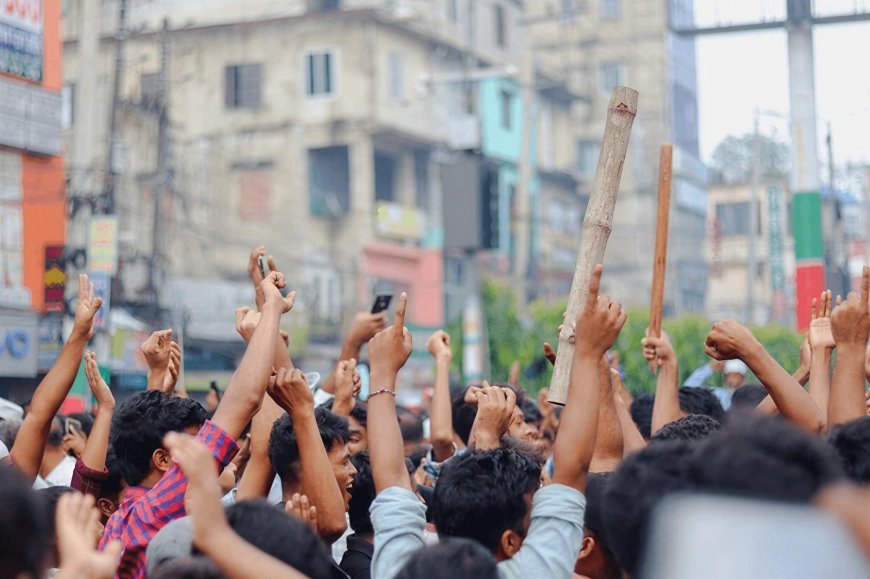
This past Eid ul Fitr, a thought lodged itself in my mind.
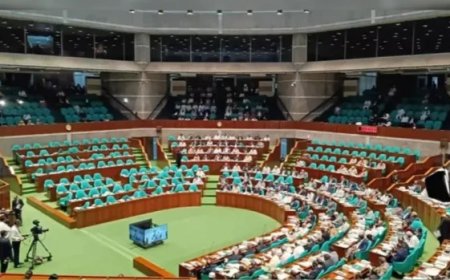
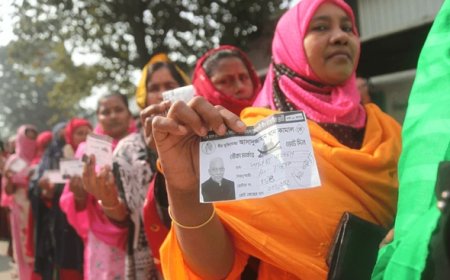
Bangladesh held a general election on February 12. BNP, led by Prime Minister Tarique Rahman, won a commanding majority, and for the first time in a generation, the country could plausibly claim to have restored electoral democracy through a competitive, multiparty vote.
I found myself silently counting: How many Eids have come and gone since Bangladesh was last an electoral democracy?
The answer, of course, depends entirely on when you believe democracy left. Did it depart on January 5, 2014, when the Awami League held a general election boycotted by every major opposition party and won 153 of 300 seats uncontested?
Or did it die on the night of May 5, 2013, when security forces cut the power supply to Shapla Square and launched a predawn assault on tens of thousands of Hefazat-e-Islam protesters, killing at least 50 by the reckoning of Human Rights Watch and far more by the claims of Hefazat and Odhikar?
Perhaps the decisive moment was June 30, 2011, when the Awami League rammed through the Fifteenth Amendment to the Constitution, abolishing the caretaker government system that had been the cornerstone of credible elections since 1996.
Or perhaps the rot set in earlier, on February 25, 2009, when mutineers of the Bangladesh Rifles massacred 57 army officers at Pilkhana and the government's response exposed a shocking callousness toward the lives of our military officers.
And then there are those who would trace democracy's departure all the way back to January 11, 2007, when the military-backed caretaker government seized effective control of the state, suspending political activity and jailing leaders of several political parties.
However you count it, it has been a great many Eids. If the question of when democracy departed is metaphysical, the question of what to do about President Mohammed Shahabuddin is altogether more tractable.
He was sworn in on April 24, 2023, for a five-year term, which means his term does not expire until April 2028. It is now April 2026. BNP commands a parliamentary supermajority.
Sheikh Hasina has fled the country and been sentenced to death in absentia. Awami League’s activities have been banned. Yet Hasina’s president remains in Bangabhaban.
The widely circulated theory is that the BNP is content to let the president serve out some months of his remaining term so that when the BNP eventually appoints its own president, that president will similarly remain in office for some period into the tenure of the next government.
This calculation is, I believe, shortsighted. Consider the limited powers of the Bangladeshi presidency. The president is a ceremonial head of state, which we have clearly seen in practice.
The current president, himself, an Awami League appointee, duly swore in the BNP government without incident. Before him, Iajuddin Ahmed, a BNP appointee, after being forcefully removed as Chief Advisor, served as president throughout the entire tenure of the 1/11 military-backed caretaker government, a government that arrested the very party leader who had placed him in the presidency.
A Bangladeshi president is not a counterweight to the executive power of the prime minister. He is a rubber stamp with a fancy residence.
If we take the 2008 election as nominally acceptable, the last three such elections in 2001, 2008, and 2026 have all produced parliamentary majorities in excess of 200 seats for the winning alliance. If this pattern holds, then the next government may well also command a supermajority.
A government with more than two-thirds of parliamentary seats can impeach and remove a president at will. This means that any president the BNP appoints during its current term could be removed by the next government at any time, regardless of how long remains in that president's term.
The supposed advantage of letting the current president stay, so that BNP's own president will continue to serve into the term of the next parliament, is therefore illusory. BNP will have tarnished itself by tolerating an Awami League president without obtaining any durable advantage in return.
I have been reading Sean Carroll's book, Something Deeply Hidden, in fits and starts. Carroll, a theoretical physicist, describes how quantum mechanics fundamentally changed our understanding of reality. Classical physics, the Newtonian worldview, told us that the world is made of particles and fields interacting in deterministic ways.
Quantum mechanics revealed that the world is described by quantum wave functions.
The question of when Bangladesh was last a democracy is metaphysical. The question of how long a president with a five-year term should serve is, by contrast, Newtonian. It is a matter of simple mechanics: The term is five years, and when the political circumstances change, the appropriate response is to replace the officeholder. There is nothing ambiguous about it.
Currently, the most successful model of physics is quantum mechanics. What might a wave function of how long governments last and what determines their stability look like?
Before 1991, the duration of a Bangladeshi government eventually came down to the relationship between the armed forces and the head of state. Sheikh Mujibur Rahman was assassinated in a military coup. Ziaur Rahman was assassinated by military officers. Hussain Muhammad Ershad, himself a military ruler, was removed by a popular uprising that the military refused to suppress.
In the pre-1991 era, just this single variable was crucial: The disposition of the army chief of staff and the senior officer corps toward the government of the day.
After 1991, when Bangladesh transitioned to parliamentary democracy, the system became more complex. The duration and legitimacy of a government came to depend on two variables simultaneously: The relationship between the armed forces and the government, and the attitude of the government of the day toward the prospect of holding a free and fair election at the end of its tenure.
The caretaker government system, introduced through the Thirteenth Amendment in 1996, was the institutional expression of this second variable. When it functioned, as it did in 2001, Bangladesh experienced credible democratic transitions. When it was abolished in 2011, the system collapsed, producing three consecutive sham elections and ultimately the July 2024 uprising that ended the Hasina autocracy.
The new BNP government must learn from this history. The Supreme Court judgment restoring the Thirteenth Amendment was a critical step. But restoration on paper is not enough. The BNP must now put in place a durable caretaker government framework that can withstand future political manipulation.
The previous BNP government had raised the retirement age of Supreme Court judges from 65 to 67, which ensured that Chief Justice KM Hasan, who had once served as the BNP's secretary for international affairs, would be on course to be the head of the next caretaker government. The Awami League rejected Hasan, and the resulting crisis led to the 1/11 military intervention.
The lesson is clear: The credibility of the caretaker system depends not just on its formal existence but on the perceived neutrality of the individuals who operate it. There must be no fiddling with retirement ages, no maneuvering to manipulate the order of judges who become chief justice, and no prospective caretaker government head who carries any disqualification, whether a past party affiliation or any other taint that would give the opposition a legitimate basis for objection.
Bangladesh has waited a long time for this moment. Whether you count from 2007 or 2014, whether you measure in years or in Eids, the interregnum has been long and painful. BNP has received an enormous mandate and an enormous responsibility. It can begin by replacing a president who embodies the old regime with one who represents the new democratic consensus.
And it must ensure that the caretaker government system, now revived, is built to last, not as a tool of partisan advantage but as the institutional guarantee that, now and going forward, no government, can close the door on the voters' right to choose their leaders.
Bangladesh deserves a political system on the solid, observable, reproducible mechanics of democratic practice. After however many Eids you count, the country has earned at least that much.
Ehteshamul Haque is a lawyer who focuses on technology transactions. He teaches corporate law at American University.
Ehteshamul Haque
Ehteshamul Haque is a lawyer who focuses on technology transactions. He teaches corporate law at American University.